Opinions

Rethinking cities as engines of a regenerative and sustainable economy

3' min read

3' min read

Civilisation was born with the first cities, over five thousand years ago, marking a radical change in the relationship between man and nature. It was only with the Industrial Revolution, however, that urbanisation began to grow rapidly, transforming the planet and the way of life. Today, more than 50 per cent of the world's population resides in urban centres, and by 2050 a further 2.3 billion people are expected to join them, intensifying challenges and opportunities related to sustainability, quality of life and environmental well-being.

In the last 50 years, global material use has more than tripled and, today, the urban system and construction consume almost three quarters of global energy, producing about half of anthropogenic greenhouse gas emissions and solid waste. Rethinking cities as engines of a new regenerative and sustainable economy could reverse the current trend and create a future where prosperity and the environment coexist in harmony.

Loading...

According to a report by SystemiQ, urban regeneration could bring economic and environmental benefits, generating between EUR 500 and 600 billion in new revenues and jobs in Europe and increasing the value of existing urban assets by up to EUR 400 billion.

Expanded urban regeneration could reduce annual construction-related emissions in Europe by 45%, counteracting uncontrolled urban sprawl by reclaiming or preserving twice the surface area of Luxembourg over the next ten years. Benefits would include a significant improvement in air quality, preventing the emission of 13,000 tonnes of particulate matter - the equivalent of the pollution produced by 12 million cars - and reducing the dispersion of contaminants from polluted industrial sites.

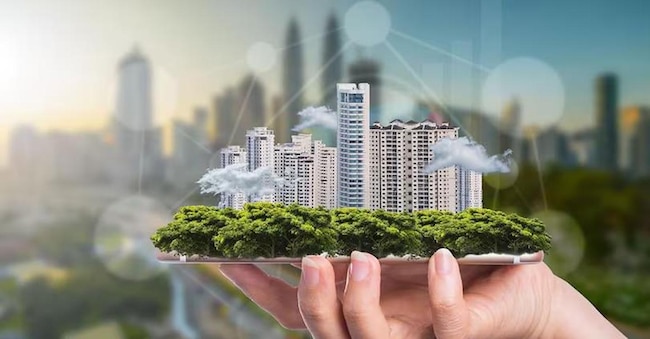
Effective urban transformation is based on the concept of biologisation, i.e. the application of principles, materials and structures inspired by nature and living organisms. Cities, like forests, are the most efficient way to organise society, create economic and social capital and optimise resources. Similarly, forests - home to our ancestors millions of years ago - have shaped our evolution and our relationship with nature.

Rethinking cities according to ecological principles means integrating nature-based solutions and using biological materials such as wood, a material that, besides being renewable, offers significant advantages in reducing CO₂ emissions. Each cubic metre of wood stores one tonne of carbon dioxide and reduces the production of more than two tonnes of CO₂ compared to the use of concrete. Furthermore, wood is characterised by its elasticity, lightness and flexibility, qualities that make it ideal for sustainable construction. In recent years, the construction sector has undergone a revolution thanks to the introduction of new materials such as cross-laminated timber (Clt) and the use of digital and industrial prefabrication technologies.

Urban forests are also a strategic resource for the cities of the future. Trees can purify the air, reduce the heat island effect and significantly reduce the energy consumption of buildings, improving their efficiency in both summer and winter. The integration of urban greenery also contributes to improving biodiversity and quality of life.

This urban transformation also represents a major investment opportunity. It is estimated that the funding needed for sustainable urban infrastructure amounts to around USD 5 trillion per year. Considering the pressure on public budgets, much of this funding will have to come from the private sector. Investments in infrastructure projects offer attractive opportunities: in addition to low volatility, these projects provide consistent and predictable returns over the long term and serve as strategic and counter-cyclical diversifiers within a financial portfolio.

Cities, which today represent the rift between humanity and nature, must be rethought in harmony with the environment to create a new regenerative economy. As Winston Churchill said: 'We shape our buildings and then they shape us'. The same applies to cities: shaping them according to ecological principles means transforming the way we live, move, consume and work.

Chief Nature Officer of Lombard Odier Investment and Chief Executive Officer of the Circular Bioeconomy Alliance

Copyright reserved ©
Loading...

Brand connect

Loading...

Newsletter

Notizie e approfondimenti sugli avvenimenti politici, economici e finanziari.

Iscriviti