Retromobile boosts classic car auctions in Paris
In conjunction with the most important European trade fair of the sector, five houses competed by offering four in-person and one online sale

Key points
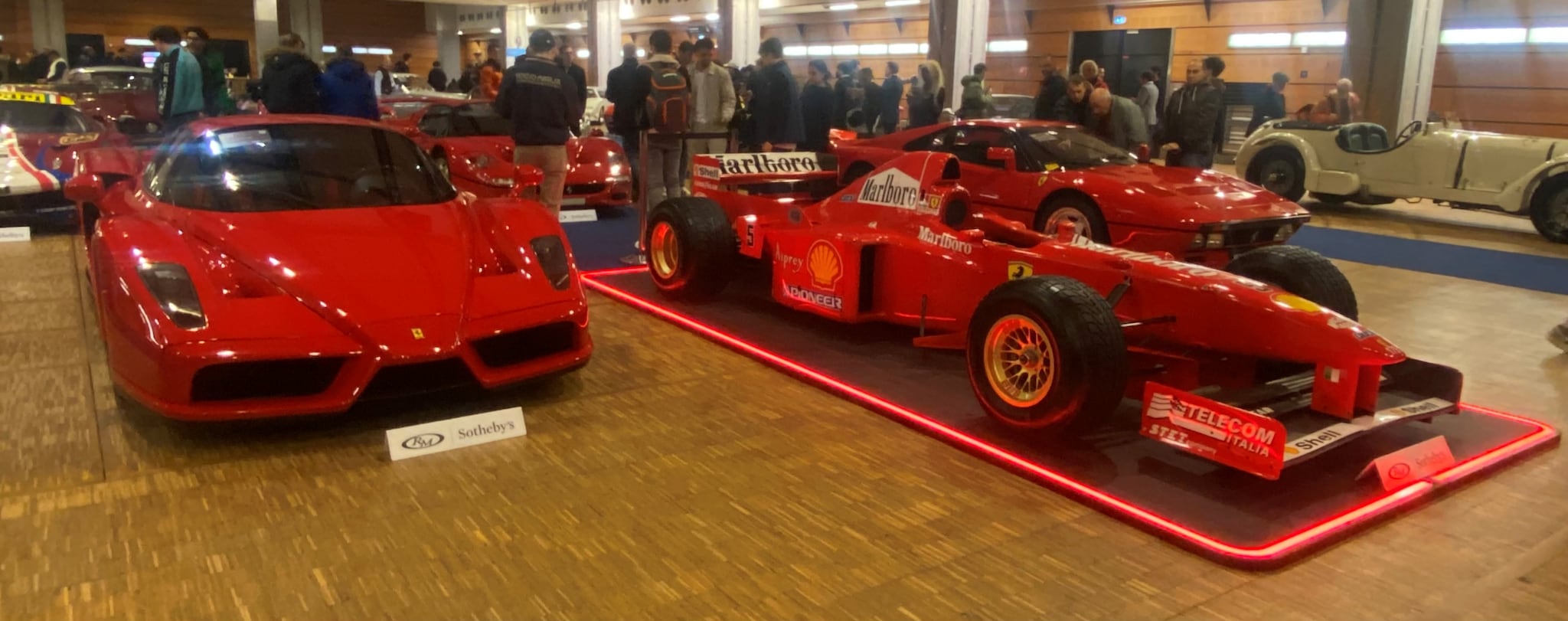
In the last week of January, the collector car market held its own in Paris. The presence of the 50th edition of Retromobile, Europe's most important trade fair for the sector, on the agenda from 3 to 7 February, saw no less than five auction houses competing by offering four live sales and one online sale, thus flattering the bidding of dealers at the fair.
The results were positive overall, with total live auction proceeds of some €155 million (including some sales that took place in the immediate aftermath of the auction, as is often the case in this field), up sharply on last year, despite the percentage of sold lots dropping to three out of four.
Eight of the ten most expensive realisations are Ferraris, half of which are less than 30 years old. The 'ageing' demographic favouring more recent models seems to be continuing, although the two lots over the €10 million threshold are classic Ferraris from 1966 and 1960, both sold by RMSotheby's. There is strong demand for the Cavallino's limited edition cars from 1984 to the beginning of the new millennium. We are therefore faced with an increasingly diversified market, in which the quality element becomes crucial, especially for older cars, where only exceptional examples in terms of history, quality and rarity attract interest.
Gooding Christie's debut at Retromobile
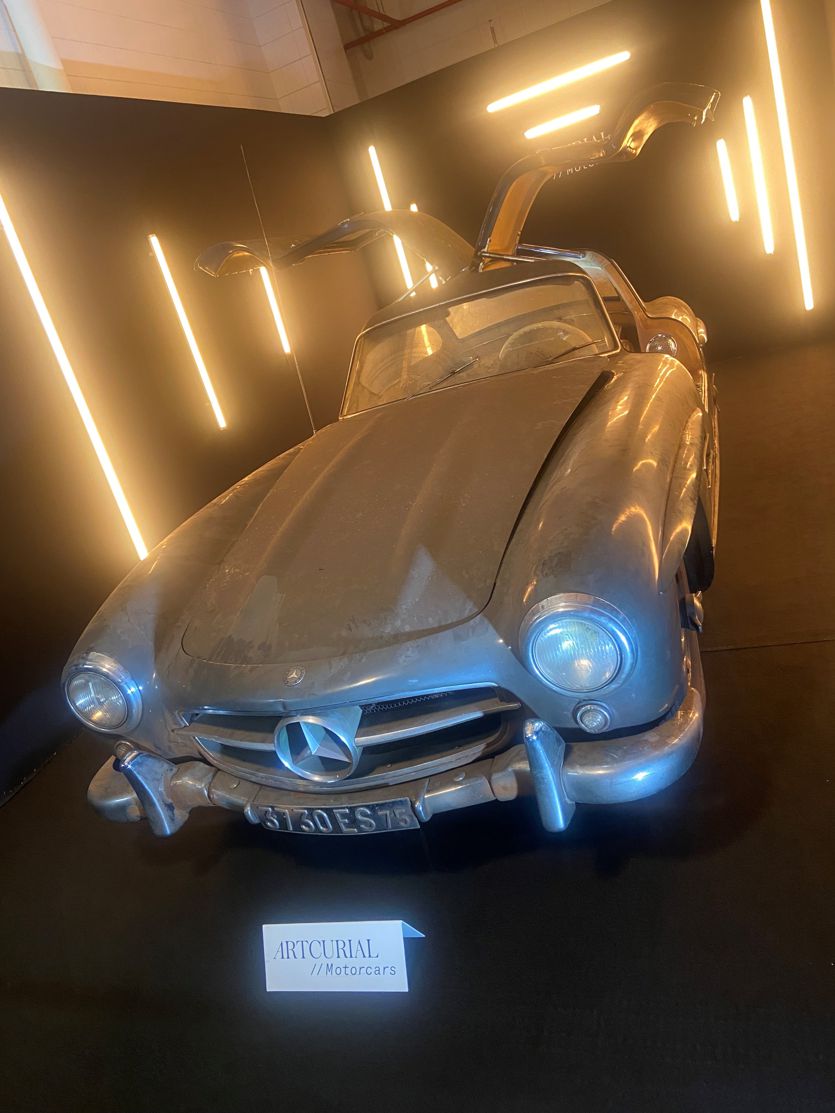
In a context that may seem unusual to art market goers, where fairs are seen as balancing the power of auction houses, the Retromobile fair is instead directly hosting an 'official' sale. The novelty is the change of partnership: after several decades, the French Artcurial had to make way for the entry of Gooding Christie's, the Californian house that entered the orbit of the international auction house owned by the French billionaire Francois Pinault.
The proposed 29 January catalogue of 80 cars (half of which were offered without reserve) brought in over 50 million euro with four out of five cars sold during a 'marathon' of some seven hours in a packed hall
.
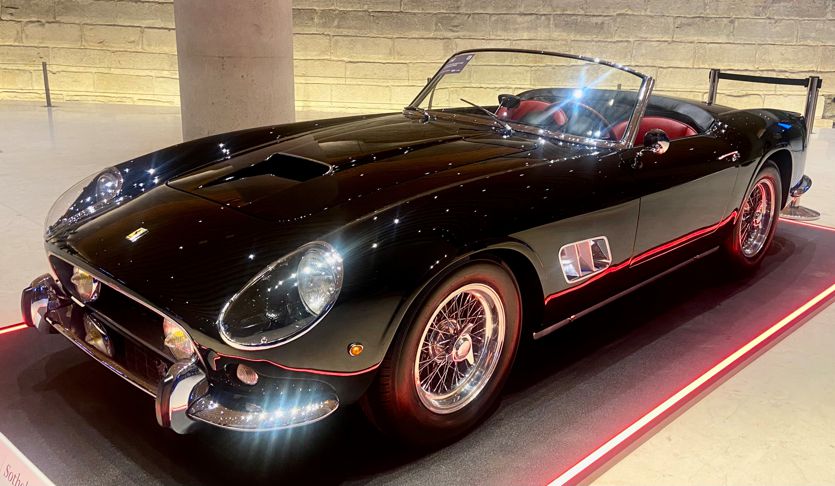
The result suffered from the failure to sell as many as three millionaire Ferraris from the classic period: a 1960 250 GT Berlinetta 'Passo Corto' (SWB) which started from an excessively high estimate of €8-9 million, only partly justified by some typical features of the model's Competizione examples, another 250 GT declination, a sought-after 1958 California Spider but in the less elegant 'long-wheelbase' (LWB) version, contended by an agent in the room for up to €4.8 million, not enough to exceed the reserve (estimate €5.5-6.5 million), and an elegant 1962 400 Superamerica coupé.
And so touching the 10 million mark was a much more recent 1984 Ferrari 288 GTO, at a record price of 9.1 million (estimate 6-7 million). Two other recent Ferraris, the sporty 2008 FXX Evo and the later 2018 FXX K Evo, realised 4.4 million (below the 4.5-5.5 million estimate) and 7 million respectively, exceeding the high estimate of 5.5-6.5 million.
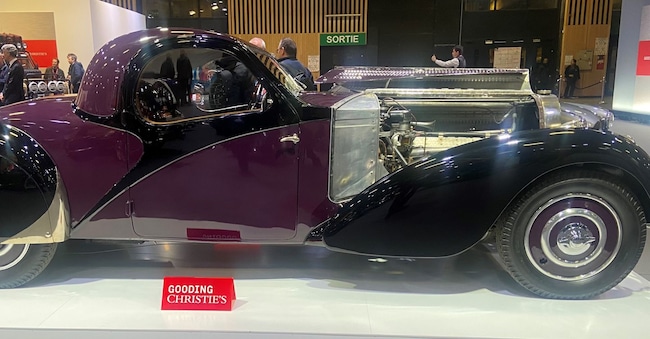
Well two cars from the 1930s, the golden age of French coachbuilding, brought in millionaire results: the Talbot-Lago coupé with its distinctive silver aerodynamic 'teardrop-shaped' bodywork created by the best 'tailors' of the time, Figoni & Falaschi, slowly contested between two telephones until it reached the reserve at 6.7 million with commissions, and the elegant, despite its two-tone black and purple livery, 1938 Bugatti 57C Atalante, which barely reached the low estimate of 2.250 million with commissions.