On the road

Dashcam review: 70Mai T800 and X800 Omni – how they work and how to fit them

We take a closer look at the Chinese manufacturer’s high-end models. The X800 offers triple camera coverage (front, interior and rear), whilst the X800 Omni features a rotating camera to monitor what is happening whilst parked, providing protection against malicious acts.

7' min read

Translated by AI
Versione italiana

7' min read

Translated by AI
Versione italiana

Summer is a time of heavy traffic and road hazards – even when your car is stationary, it may fall prey to criminals or distracted drivers. That’s why summer is also the season for dashcams.

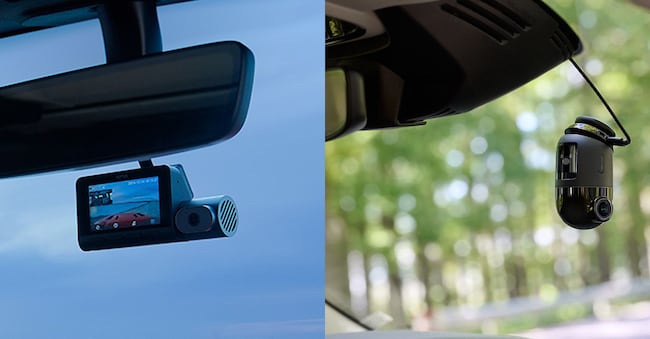
We tested two particularly interesting high-end models manufactured by 70mai: the T800 and the X800 (4K Omni). The first is a dashcam with a dual-module design, meaning it features a front-facing lens and an adjustable lens for the passenger compartment. The second, on the other hand, is the evolution of a classic from the Chinese brand: the egg-shaped rotating camera, which is essentially an ever-vigilant sentinel – an eye that keeps a watchful eye on what’s happening around the car, even when it’s parked. Both dashcams come with a rear camera that connects easily to the main unit via a long USB-C cable. This means that with the T800, you get a unique Dual 4K triple simultaneous recording system.

Loading...

Both kits include a 4G SIM module; the device sends remote push notifications and allows live viewing of the vehicle. Obviously, this involves a more complicated installation in the car, but it is certainly more reliable than the traditional USB stick plugged into a cigarette lighter adapter.

One of the common features of 70mai dashcams is their power supply system: the Chinese manufacturer uses a supercapacitor instead of a lithium-ion battery. This makes the device more stable, particularly at high temperatures, and with the heat we’ve been having of late, it’s certainly a good thing not to have a battery sitting on the windscreen. This solution actually increases the device’s temperature tolerance (operational from -10°C to 60°C) and eliminates the risk of the battery swelling or failing due to prolonged exposure to the sun.

70mai 4K T800: how it’s built and how it works

The 70mai 4K T800 is positioned at the top end of the market thanks to its ability to record simultaneously on three channels whilst maintaining native 4K resolution on both the front and rear cameras.

The system consists of a main unit (to be fitted to the windscreen, containing the front and interior cameras) and a wired secondary unit for the rear window.

The front camera offers 4K resolution (3840 x 2160 pixels) at 30 FPS, a Sony STARVIS 2 IMX678 sensor, an f/1.7 aperture and a field of view (FOV) of 146°.

The rear camera, which is the mirror image of the front one, uses the same Sony Starvis 2 IMX678 sensor with 4K resolution at 30 FPS, ensuring the same image clarity for reading rear number plates.

The interior camera, on the other hand, has a Full HD 1080p resolution, a 147° field of view (FOV) and four 940nm infrared (IR) LEDs for night-time illumination of the passenger compartment.One of the most interesting features is the exposure control, supported by HDR processing across all three channels, optimised to reduce glare from headlights or reflections and to stabilise the image during sudden changes in light (e.g. when driving through a tunnel).

The gravity sensor (G-Sensor) detects impacts. As with all dash cams, in the event of a collision, the device not only moves the footage of the incident to a protected folder, but also retrieves the footage from the continuous buffer covering the minutes leading up to the impact to ensure a complete record of the sequence of events.

Loading...

To support the transfer of high-resolution video files (an excellent U3-class MicroSD card with up to 512 GB of storage is included), the dash cam is equipped with a 5 GHz Wi-Fi 6 module, which allows data to be transferred to the mobile app at a speed of around 20 MB/s.

70mai X800 (4K Omni): what it’s like

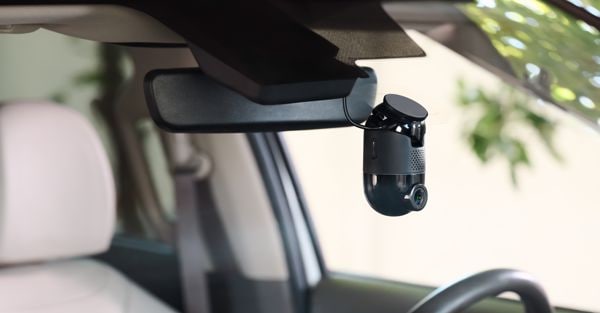
The X800 (4K Omni) is a device that stands out clearly from the traditional concept of a fixed-position dashcam. It is the latest generation of 70mai’s famous rotating camera, the first dash cam on the market to feature a motorised 360° rotating lens, designed to eliminate blind spots both whilst driving and, above all, when parked. The key feature of the new version is 4K recording.

The 4K Omni combines advanced optics with a dynamic safety system for vehicle monitoring. Thanks to the Sony STARVIS 2 sensor and a dedicated processor, it records in true 4K at up to 60 FPS (30 FPS when paired with the rear camera) and optimises night-time visibility of critical elements such as number plates and road signs.

When stationary, the device uses an internal motor to rotate and provide 360° perimeter coverage. An artificial intelligence algorithm tracks suspicious movements by physically adjusting the lens, whilst an emergency buffer saves up to 3 metres of footage prior to any impact.

In terms of hardware, the dash cam is fitted with a supercapacitor that can withstand temperature fluctuations, a 1.4-inch screen and advanced connectivity: through integration with the optional 4G module, it allows you to receive real-time notifications on your smartphone and access live video streaming remotely.

Active safety features

On the move: The built-in GPS module records coordinates and speed in the file’s metadata, whilst the ADAS algorithm generates audible alerts if the vehicle strays from its lane or in the event of an imminent head-on collision.

When parked: By connecting the dash cam to the fuse box using the dedicated wiring kit (which includes protection to prevent the car battery from draining), 24-hour surveillance is activated. The software analyses the perimeter area using AI-based motion detection, starting recording if it detects a prolonged presence.

The installation

A word of advice: it is advisable to consult a qualified vehicle electrician when installing a dashcam. In any case, there are various methods for installing a dashcam, and this applies to all models, involving two stages of fitting: the mechanical and the electrical. First of all, therefore, we need to identify where we want to position the dashcam, finding a suitable spot on the windscreen that does not obstruct the view. The 70mai dashcams come with plastic films (electrostatic sheets) in the pack to be placed on the windscreen, onto which the device’s mount – fitted with double-sided adhesive – will then be applied. It’s worth noting that, with a bit of practice and a knack for DIY, it’s possible to attach the dashcam to the cover of the wing mirror and sensors – perhaps using a 3M Dual Lock Velcro system – but you must ensure that the plastic casing is very secure.

Once you have identified the position – and it is advisable to refer to the instruction manual – you need to connect the power supply. The first option is to run the USB cable along the top edge of the windscreen (which should always be done) and plug the cable into the USB/cigarette lighter socket. However, to use the remote control features included with the two new 70mai dashcams, you will need to run the rear camera cable all the way to the main unit in any case. The best way to ensure maximum protection, particularly in Parking mode, is to connect the device to the car’s electrical system. It’s straightforward, but it’s advisable to have a professional carry out the work. This also connects the 4G module for remote connectivity.

Obviously, a dashcam is a permanently connected wireless system that constantly draws a small amount of power from the starter battery, with the risk that, after the car has been left unused for a while, the engine may fail to start.

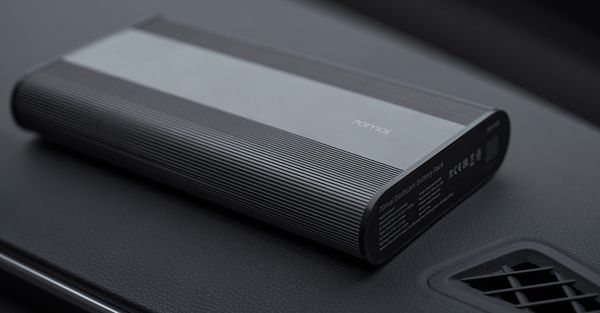
For excellent, trouble-free performance, 70mai offers a 96Wh external battery (BL96NNX) with LiFePO4 chemistry. This backup battery constantly powers the dashcam system without draining power from the starter battery; when the car is running, the battery recharges automatically. It’s a very sophisticated solution; it doesn’t come cheap (229 euros) but it’s frankly ideal, especially if you want to protect your car whilst it’s parked.

User impressions

It must be said straight away that the two dashcams work very well. They aren’t among the cheapest, but they do have a number of advantages. First and foremost is the super-capacitor power supply mentioned earlier, as this avoids any potential issues. The image quality is outstanding in all situations. It’s also advisable to get a CPL (Circular Polarising Filter), which selects the light rays entering the lens whilst blocking polarised light that causes reflections and glare.The management app is also good – it’s easy to use and offers fairly fast Wi-Fi connections with your smartphone – but you need to make sure there are no conflicts with the in-car wireless Android Auto system.

The Adasper driver assistance features are impressive and very useful, and are particularly handy if you don’t have a latest-generation car. In fact, the 70mai T800 and X800 dashcams

These include the forward collision warning, which alerts the driver to the risk of a rear-end collision, the detection of pedestrians and cyclists to prevent collisions, a lane departure warning system to alert the driver in the event of distraction or drowsiness, and a traffic jam assist function, which is useful in traffic to alert the driver when it is time to set off again.

The X800, with its mechanism that rotates the lens to frame what’s happening in front of the car, has a sci-fi feel to it. It works well and is a real technological gem.

All in all, the two 70mai dashcams pass the test with flying colours; they aren’t cheap, but they’re worth the price. Speaking of prices, here they are: the T800 kit with a rear-view camera and 4G module (RC414), a 512GB micro SD card, costs 450 euros, whilst the 4K Omni kit with a 4G module and a 128GB memory card costs 400 euros.

Copyright reserved ©
Loading...

Brand connect

Loading...

Newsletter

Notizie e approfondimenti sugli avvenimenti politici, economici e finanziari.

Iscriviti