
Ancient, revolutionary and luxurious hemp in the Opera Campi project
The company, founded in Parma in 2017, has recovered age-old techniques and developed innovative yarns by investing in technology and research: 'It is the most sustainable fibre, Europe must go back to growing it'

3' min read
3' min read
In a square in Frattamaggiore, Campania, stands a statue dedicated to the 'canapina', a woman holding a bundle of hemp stalks. This is all that remains of a district that for centuries produced textile hemp, one of the most vibrant in an Italy that until the 1950s was among the top European producers, and of the highest quality, of textile fibre obtained from this tenacious sister plant of flax, which grows wild, does not require irrigation and stores tons of CO2. The advent of cheaper synthetic fibres, and the succession of anti-narcotics laws that even indirectly affected it, decreed the disappearance of that ancient industry.
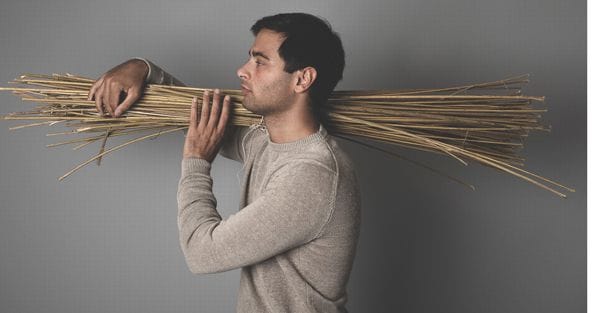
Eight years ago, 650 km away, in the Parma countryside, some young entrepreneurs decided that it was from the rediscovery of hemp in a contemporary key that their company would take shape: Opera Campi, this is its name, today proposes a collection of shirts, polo shirts, T-shirts, trousers and accessories, where hemp is the protagonist, made between Emilia Romagna, Lombardy and Tuscany in collaboration with excellent textile companies and equally excellent artisans. And thus recreating a small but efficient hemp supply chain.
"We have always aimed for the highest quality, proposing products that would enhance the virtues of hemp (including breathability, thermoregulation, resistance, ndr), but that would also be sought after and possibly unique,' explains Beatrice Corazza, who now runs the company with her husband Alberto Ziveri, its founder. We were therefore also looking for high quality fibre, which unfortunately is no longer available in Europe, and after a long search we found it in China, in the Black Lands'.
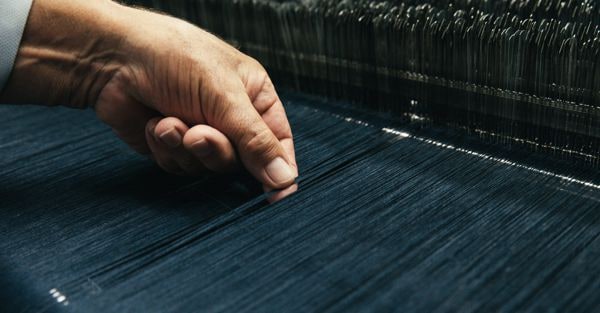
Hemp threads are processed in Prato and transformed into fabric by a company in the province of Varese. Special processing and ambitious technical research have enabled Opera Campi to obtain fabrics of unprecedented softness (hemp is usually rather tough) such as Burro Canapa (with which one of the bestsellers, the T-shirt weighing just 98 grams, is made) and to experiment with new mixes with small percentages of elastic fibres (Herotex) or with Australian merino wool (Lanapa). In June, the first 100% hemp denim arrived: 'We will soon launch a Burro Lanapa, so an even softer and lighter mix, and we are starting to experiment with cashmere,' he adds. Attention to detail even involves the buttons, which are made of a special metal alloy - zamak, composed of a high percentage of zinc combined with small quantities of aluminium, magnesium and copper - considered to be among the most sustainable in the industry, and which are buried for three days to give them a peculiar appearance that no galvanic treatment could create. And to make the garments water-resistant, they are treated with beeswax.
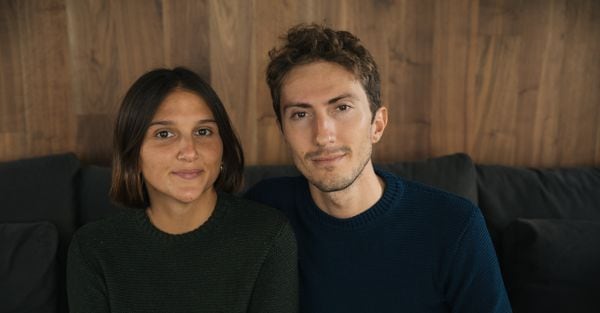
Thanks to care and research, Opera Campi is growing year after year, 'steadily but with respect for time and knowledge,' the entrepreneur emphasises. 'We only sell from our site and make the garments on demand: it takes 10 days for delivery, but this allows us to avoid the possible burden of stock'.


