
Riccardo Muti, a lone Attila hero
He no longer counts the times he has conducted in Japan, Riccardo Muti
3' min read
3' min read
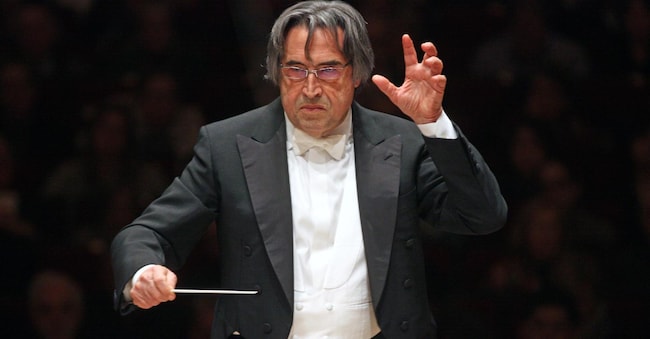
He no longer counts the times he has conducted in Japan, Riccardo Muti. And yet, once again, from this week he will fly with his Italia Opera Academy to Tokyo to experience a very special kind of silence, such as only happens to be heard there, and above all, to teach future conductors what the beauty - and mystery - of Italian opera consists of. In an exclusive text of his, tomorrow on the cover of Domenica, Muti recalls precisely that 'unique, absorbed, respectful, participating silence: because in music there are two types of silence: one dead, and one at the opposite eloquent. Alive, full of meaning'. It will be in those Japanese halls, after he brought Rigoletto in 2019, Macbeth in 2021, Un ballo in maschera in 2023, that he will now add Attila. "A particular title, less obvious, certainly also less well-known, because it is part of the production of the so-called 'galley years', long discredited and accused of superficial and hasty writing. Nothing could be more wrong. I absolutely disagree. The very first Verdi already contains all the original formulas of construction and the crystalline exactitude of the great masterpieces. Score in hand, at the piano and on the podium, I will demonstrate this to the young conductors (selected from an impressive number of applications) who will attend these lessons. Where we will be lucky enough to have an exceptional vocal protagonist, the bass Ildar Abdrazakov'. It is about narrating the leader of the Huns, a 'loser on all fronts', writes Muti. Not only that. "Attila is not the barbarian of the old school books, the one summed up in the motto: where he passes, no grass grows. No play could have stood up to such simplification, and Verdi was a fine dramatist, demanding, very careful in his choice of subjects. Attila is a man of war and power, muscular and gigantic; a Michelangeloesque figure, marked by love, betrayed by all those in whom he had placed his trust. Theatre in music sees an endless series of betrayals, but here several pile up. He is surrounded by them. He dies in the loneliness of the hero'.
Muti's project is to help young conductors discover Italian opera, from the inside. "Who certainly come from renowned schools but where Italian opera is not taught. In its specific language, in its fundamental principles'.
Loading...
And of principles speaks Carlo Ossola, historical contributor to La Domenica and freshly appointed by the Head of State to the presidency of the Treccani Encyclopaedia. His article tomorrow, almost a manifesto, captures the differences between transferred and incorporated knowledge. "We witness, more and more, a transfer of data, operations, skills and memory from our mind to other bodies outside us, databases". But the "foundation of the Encyclopaedias," writes Ossola, "was not so much in the extension of aggregation, in the channelling of data, as in tracing the circle of what could 'be incorporated': from the eyes, from reading, from memory, from individual existence. Today, knowledge is increasingly being "unpacked" by transferring it to a literally elusive elsewhere". We need to 'take up that critical lesson: the centre of man is man, his dignity, his existence which, unlike things and digital memories, is unique - and brief'. An outline for his work in such a prestigious Italian institution that is so dense with collective meaning, for which we wish him all the best.
Copyright reserved ©


Brand connect
Loading...
