
Richemont snaps in Zurich on higher-than-expected sales and US tariffs agreement
The group recorded an organic increase in sales of 14% to EUR 5.2 billion in the second quarter, double the +7% forecast by analysts

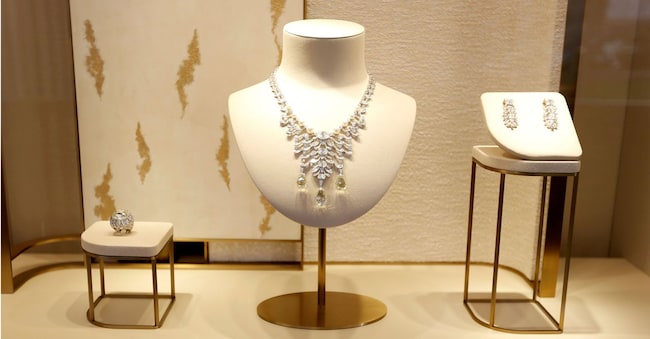
(Il Sole 24 Ore Radiocor) - Richemont shone on the Zurich Stock Exchange on the back of better-than-expected quarterly revenues and thanks to statements by chairman and main shareholder Rupert Murdoch, who said he was confident about an agreement in principle between Switzerland and the United States on tariffs (the agreement was announced, reducing US tariffs from 39% to 15%). The stock of the luxury group that owns Cartier and other iconic brands such as Mont Blanc and Piaget gained about five points, the most in the Smi index (-1%) and among the best in the Stoxx Europe 600.
Richemont reported an organic sales increase of 14% to EUR 5.2 billion in the second quarter, double the +7% analysts' forecast. The group stressed that it had successfully overcome an unprecedented period characterised by currency fluctuations, rising gold prices, and US tariffs. At real exchange rates, growth reached 8%, held back by the weak dollar. The half-year ended with sales of EUR 10.6 billion, up 10% at constant currencies and 5% at actual levels. Operating profit improved 7% to EUR 2.35 billion, with a margin of 22.2% from 21.9%. Net profit quadrupled to 1.8 billion from 457 million. The group benefited in particular from strong demand for jewellery, a sector that includes Cartier, Buccellati, Van Cleef & Arpels and Vhernier, with sales up 9% at current rates and 14% at constant rates (+17% in the second quarter), and an operating margin of 32.8%.
"After 18 difficult months," the decline in the watch industry slowed to -6% at real rates and -2% at constant exchange rates in the first half and -2% and +3% in the second quarter respectively. Most geographic regions had 'a strong performance in the first half of the year, led by double-digit sales growth in Europe, the Americas, and the Middle East,' the company points out. In addition, 'China, Hong Kong and Macau as a whole together with Japan returned to growth in the second quarter'. Group President Johann Rupert stated during a conference call that there are "some initial signs" of improving demand in China, but it is still too early to speak of a full recovery. With regard to the 39% US tariffs that came into effect in August, the company indicated in the statement on the accounts that 'in the first half of the year the impact was limited', thanks to pro-active stock management, and is estimated at around EUR 300 million for the year.
During a meeting with the press, Rupert had anticipated the outline of the agreement between Switzerland and the United States to reduce tariffs on Swiss exports, which at 39% were among the highest among Western countries. The agreement in principle has since arrived but it could take months before it is signed. Rupert, who met with President Donald Trump at the White House last week along with a delegation of Swiss business leaders, believes these tariffs stem from a "misunderstanding" between Washington and Bern, which should be cleared up as soon as possible. "Swiss and Americans are very similar: independent, reluctant to accept heavy-handed government. So I think this misunderstanding will be resolved this week,' Rupert said.
On Thursday in Washington, Swiss Economy Minister Guy Parmelin met with US Trade Representative Jamieson Greer on tariffs and Switzerland's trade surplus with the US. "We have clarified practically everything," Parmline said on his return to Switzerland. According to Rupert, a reduction of tariffs to 15% would stabilise the Swiss economy and prevent job losses. "We are not the only ones affected," Rupert added, adding that at current levels the tariffs "are potentially devastating for the whole of Switzerland." The 39% tariffs had been imposed by the US following a stormy phone call between Trump and Swiss President Karin Keller-Sutter in July. Swiss industry recorded a 14% drop in exports to the US in the three months ending September, the Swissmem association reported on Friday. Machine tool manufacturers, in particular, saw their shipments fall by 43%.

