
G20: Proposed tax on the super-rich, Gentiloni supports first steps but US holds back
G20 discusses Brazil's proposal for a tax on the super-rich, with Gentiloni supporting the idea of first steps in this direction

3' min read
Key points
3' min read
The aggregate wealth of the wealthiest one per cent of the planet grew, in real terms, by 42 trillion dollars in the decade from 2013 to 2022: an increase equal to 34 times that recorded, in the same period, by the poorest half of the world's population. This is what emerges from an analysis by the Oxfam association released on the day on which the G20 meeting of finance ministers opens in Rio de Janeiro with Brazil's proposal for a tax on the super-rich.
Oxfam: wealth of 1% rises by 42 trillion in 10 years
Oxfam explains that the average wealth of a representative of the wealthiest 1% on a global scale has increased by almost 400,000 dollars compared to 335 dollars (just 9 cents a day), which is the average wealth of a representative belonging to the poorest 50% of the planet. Oxfam's analysis was released today, on the occasion of the summit of G20 Finance Ministers and Central Bank Governors, scheduled in Rio de Janeiro until Friday. The summit, explains a note, 'represents an important test case to verify the degree of convergence among the world's largest economies on the proposal put forward by the Brazilian G20 presidency - and supported by South Africa, France and Spain - for the definition of a new global standard, aimed at increasing the tax burden on the ultra-rich'. "The call to increase taxes on the richest is supported by a substantial part of world public opinion. - Said Misha Maslennikov, policy advisor on tax justice at Oxfam Italy - concerned and indignant, citizens are demanding fairer tax systems, more incisive action against the growing concentration of wealth and power at the top of the social pyramid, and certain and adequate resources to counter the advancement of poverty, the widening of economic gaps and the ongoing climate crisis'. Over the past 40 years, the association emphasises, "global billionaires have, on average, paid the equivalent of 0.5 per cent of the value of their assets to the exchequer on an annual basis. Over the same period, their assets have recorded a nominal annual gross return of 7.5 per cent.
Gentiloni: tax on billionaires difficult but there is first step
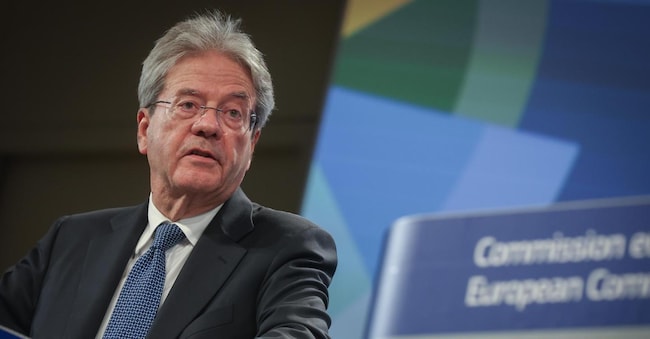
"On the Brazilian proposal for a tax on the super-rich, we are all aware that this is a competence of individual countries, which is difficult to overcome with global schemes, but I think that the difficulties do not undermine the common commitment, in fact in the conclusions document of this G20 there will be a common willingness to consider first steps in this direction," explained European Commissioner, Paolo Gentiloni
Complicated global mechanism
."First steps," Gentiloni went on to explain, "could be to initiate mechanisms for exchanging information between the various countries, particularly on the real estate chapter. We must not hide the difficulties of individual countries in matters such as these, which are typically a national competence, and the fact that if you want a mechanism for taxing these people, either the mechanism is global, or the country that introduces measures of this kind would only see these immense riches move elsewhere'. "But I believe," he adds, "that the Brazilian presidency deserves credit for not only having put on the table this new challenge that I believe the enormous increase in some individual's wealth has become stratospheric justifies."
Yellen: on tax to the super-rich, each country goes it alone
That a global taxation mechanism is not easily grounded is confirmed by statements of US Treasury Secretary Janet Yellen. The US "supports appropriate taxation," Yellen said at a press conference at the G20 in Rio de Janeiro, "that ensures that people with high incomes pay their fair share. With President Biden, we have envisioned' taxing the rich and we support 'progressive taxation. We are happy to work with Brazil to promote this idea of taxing the super rich, but we believe it is difficult to coordinate globally and preferable for each country to deal with its own tax system'.

