
Waste: Italia excels at recycling, but too many products go unused
Annual Report ‘L’Italia che Ricicla 2026’, by the Unicircular section of Assoambiente, Ref: up to 40 per cent of recovered aggregates remain unsold

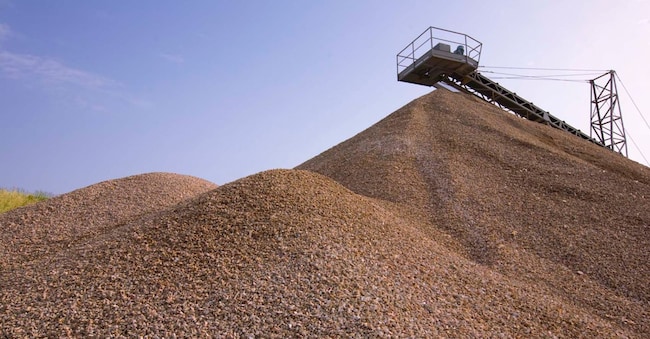
Of the recovered aggregates, up to 40 per cent cannot be sold in Italia and remains unsold. Yet this material – derived mainly from the processing of rubble but also from heavy ash and steelworks slag – accounts for more than half (57 per cent, rising to 65 per cent if asphalt aggregate is also taken into account) of the flow of recycled products that cease to be classified as waste and which, in 2025, according to data from Rentri (the national electronic register for waste traceability), represented a total of 79.4 million tonnes for Italia.
This trend is highlighted in the annual report *L’Italia che Ricicla 2026*, presented by the Unicircular section of Assoambiente and produced with the support of the research and consultancy firm Ref. And it epitomises an Italian paradox: a high recycling capacity on the one hand, but difficulties in finding subsequent markets for the recycled materials on the other. The material circularity rate in Italia has risen to 21.6 per cent (latest official ISPRA data for 2024), outperforming Germany, France, Spain and the EU average, which stands at 12.2 per cent (only the Netherlands and Belgium rank higher than us). Specifically, the rate of aggregates sent for recovery has risen to 82.4 per cent (ISPRA data, 2024), exceeding the European target of 70 per cent. This situation is also common to other recycling sectors, such as plastics, which are struggling due to competition from virgin raw materials.
“When it comes to aggregates, recycled material costs less than virgin material, whilst offering the same performance,” emphasised Paolo Barberi, president of the Unicircular section of Assoambiente. “ However, up to 40 per cent of production periodically remains stockpiled on company sites, finding a use only when a new public or private construction project begins nearby. It is a highly local market, as aggregates do not travel far due to their low economic value. The lack of consistent demand – which would ensure stable revenues and protect companies from potentially exceeding storage time limits – is a problem for the plants’. Barberi also outlined the priorities: ‘Green public procurement must be implemented by all contracting authorities, and the minimum environmental criteria must be applied in full to public works in the construction and road sectors, whereas at present a large proportion of local authorities fail to comply with them. There is also a need for training to enable the drafting of tender specifications that allow for the use of these materials.”
“Recycling is not merely an environmental issue, but a strategic component of the country’s industrial policy. Italy possesses a wealth of expertise and production capacity that we must harness, particularly at a time when security of supply and independence from foreign raw materials have become priorities for Europe. The Circular Economy Act (a European proposal expected shortly, Ed. ) represents an important opportunity to build a more robust and competitive European market for recovered materials. A change of pace is needed: supporting recycling means strengthening our country’s competitiveness and economic security,’ emphasised Chicco Testa, president of Assoambiente.
To this end, the association has already put forward a number of proposals, including recognition of the environmental benefits of recycling, with compensation for higher energy costs, and tax incentives for recycled products. The calls also extend beyond Italy’s borders: European harmonisation of end-of-waste criteria, the removal of barriers to the movement of recovered materials, and the establishment of a level playing field between European and non-EU operators.


