
Rigopiano: the tragedy could have been avoided – risk prevention was lacking
The grounds for the second appeal judgement have been filed: the civil claimants will be able to use them to claim compensation from the Abruzzo Region

Key points
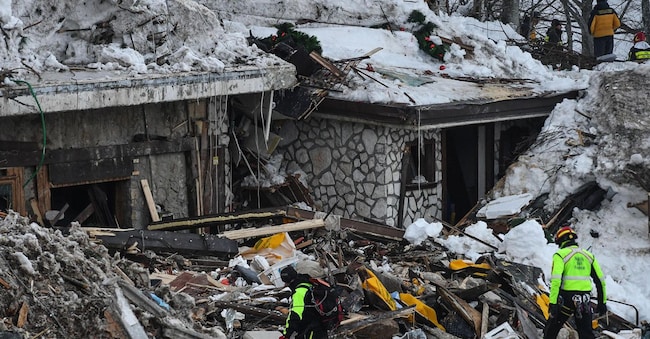
Without a chain of omissions in the risk assessment, the Rigopiano tragedy could have been avoided . ‘The absence of the Probable Avalanche Location Map (CLPV) stands as a definite causal factor in the disastrous consequences of the avalanche’. The judges of the Perugia Court of Appeal have filed the reasons for the second appeal judgement, by which, on 11 February, they sentenced three former regional executives to two years’ imprisonment for the Farindola hotel disaster, which was swept away by an avalanche on 18 January 2017. Twenty-nine people died beneath the rubble of the hotel. However, as the Court emphasises, what happened was not merely the result of a natural disaster but also of a chain of omissions in risk prevention.
Compensation to be determined in civil proceedings
Romolo Reboa, counsel for the civil claimants, explains: “The judgement confirms what I have stated on numerous occasions, namely that it is that Region which will have to bear the cost of compensating the victims”. This is because – the criminal lawyer continues – ‘the Perugia Court of Appeal, in overturning the civil rulings of the first-instance judgement in favour of the Abruzzo Region and the Province of Pescara, used wording which, having been pronounced in the presence of the two local authorities, constitutes a decision that every relative of the victims will legitimately rely upon in civil proceedings’.
The judgement, which runs to approximately one hundred pages, also focuses on the distinction – previously highlighted by the Court of Cassation – between ‘danger’ and ‘risk’. The former refers to the natural event itself and retains a predominantly naturalistic dimension; the latter, on the other hand, concerns the consequences that event may have on people and property and is linked to human decisions, and is therefore ‘generally manageable’.
Should access to the high-risk website be banned or restricted?
Rigopiano should have been identified as an ‘avalanche-prone’ site. It was necessary to prohibit, restrict or regulate access to the area. It was also on the basis of this reasoning that the Court ruled out criminal liability on the part of the former mayor of Farindola and the head of the Technical Office. In the judges’ view, their powers to intervene could not have been properly exercised in the absence of the general predictive measures provided for by regional law, starting precisely with the CLPV.
The responsibilities of the Region and the Province
Mr Reboa, the lawyer, then adds: ‘The Court stated in its judgement that within the organisational framework of the Abruzzo Region, the principal grounds for liability in relation to the dramatic events at the heart of the trial arose; these grounds are all the more evident in light of thethe victims’ expectation that their civil claims will be recognised’ and that the negligent conduct of the officials of the Province of Pescara is ‘also a consequence of organisational shortcomings within that body’. According to Mr Reboa, in accordance with prudential guidelines, the Region should set aside funds in its budget for the compensation amounts to be determined in civil proceedings. “The compensation,” the lawyer states, “must be paid to family members and survivors in accordance with the Milan Tables. Roughly speaking, this could amount to around 30 million euros, at the lower end of the scale.”

