
The risiko of discount stores now aims at conquering the city centre
In a metropolitan market crowded with supermarkets, the upstarts use the weapon of convenience to capture a customer base cornered by loss of purchasing power

3' min read
3' min read
The risiko of the large-scale retail trade is now being fought in metropolitan areas, aiming directly at the city centre, the most residential districts, even the middle-class ones where discount stores are now opening.
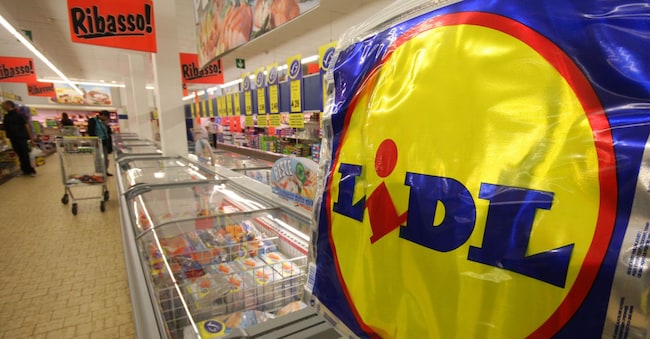
One example for all: in Milan, Lidl will open a City by the end of the year, city centre format, at 5 Via Solari, a few dozen metres from the 'inner ring road' also known as the 'Cerchia dei Bastioni'. It will be a medium-sized market with a sales area of about one thousand square metres, which previously housed the shop of a Euronics partner. To all intents and purposes it will be a proximity supermarket serving residents and those who work in the area. Recently, the German discount chain announced a plan to better service the city centre.
Also in the game is rival Aldi with Michael Gscheidlinger, the chain's country managing director in Italy, who warns: 'We will open in the near future, evaluating all opportunities also in the central areas of cities, understood as both large urban poles and smaller provincial capitals'. The route is always the same: start in the suburbs, with shops in transit locations, and then aim for the city centre. "If we consider the Lombardy region, out of 70 shops, 27% are in capitals," continues the country managing director. "In our development plan we intend to continue in this direction, maintaining a focus that sees most shops in more decentralised areas and opening in urban areas that favour our visibility and recognisability.
This expansion on the city's chessboard faces many obstacles. The first among them is the availability of large premises. The way is twofold: entering a large property of 700 to 1,000 square metres and adapting it to a neighbourhood market, or taking over a shop of another chain and changing the sign.
Then there is the issue of oversupply and the overcrowding of signs. In a central area such as Porta Venezia, again in Milan, there is an Esselunga, currently undergoing renovation and expansion, two Unes proximity shops, three to.market (proximity shops), one Pam Local, five Carrefour with the Express and Market formats. This list could go on while remaining in a central area because extending the radius there are more Aldi, Lidl, Carrefour, to end with another supermarket, probably an Esselunga under construction at the former Splendor cinema. Not to mention signs specialising in household and personal care products such as Tigotà and dm-markt.

