
Rita Montagnana and her unwavering loyalty to the party
Aldo Agosti and Marina Cassi recount the turbulent life of this Turin-born woman, from her political career alongside Togliatti to her grief over her son Aldo, from her activism in the UDI to her years of solitude. Throughout it all, one constant remained: her communist ideal

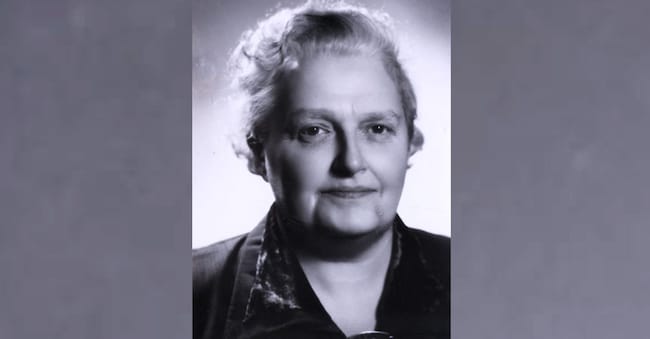
There had been no monograph dedicated to Rita Montagnana, nor to several others amongst the twenty-one women elected to the Constituent Assembly. This gap has gradually been filled in recent years: one need only think of Giulia Vassallo’s essays on Bianca Bianchi and Benedetta Sceresini’s on Maria Maddalena Rossi (both published by Biblion).
For this reason alone, then, the book by Aldo Agosti and Marina Cassi is most welcome; it recounts the turbulent life of this Turin-born communist, rich in unique experiences. It is the biography of a woman who lived through the 20th century (born in 1895, died in 1979), pieced together through research in archives and family papers. The essay’s surprising title, La moglie del Partito, may raise some questions, but reading it explains the reasoning behind this choice – a choice confirmed to this writer by her grandson Manfredo Montagnana five years ago: for Rita, ‘the Party is always right’ (The Mothers of the Constitution, 2021), even when it decided to remove her from the political arena, effectively sealing her marginalisation.
Is this book, then, a partial redress for the obscurity into which she had fallen? Is it a form of redemption following her political isolation, exacerbated by the illustrious career of Nilde Iotti, Palmiro Togliatti’s partner from 1946 onwards? If anything, it is the restoration to the public memory of a leading figure in the anti-fascist struggle, a pillar of the Turin branch of the Italian Communist Party (and beyond), a figure beloved by activists and working women even when she was no longer in the limelight. And of a mother grieving for such an unfortunate son, afflicted by a debilitating illness.
Agosti and Cassi shed light on the early years of the young protagonist, about which little is known because Rita Montagnana has a reserved nature and a down-to-earth, pragmatic disposition; she does not get lost in words, not even in writing (and therefore often leaves no trace), whatever activity she is engaged in. Coming from a large socialist family – her brothers and sisters were also committed to the anti-fascist cause – Rita took part in the workers’ struggles that shook Turin between 1919 and 1922. Her decision to join the Italian Communist Party (PCI) following the founding congress in Livorno in 1921 was a firm one (and soon led her into the party’s clandestine leadership). It was a choice that shaped her life and one she would never renounce: not even after the Soviet crackdown in Hungary in ’56, nor after the Prague Spring of ’68, which was brutally suppressed.
We follow Togliatti, who married in 1924, on his travels to Moscow, to France, to Spain during the Resistance against Franco’s forces, and then back to her beloved USSR, where her political convictions had taken shape on the ground whilst conducting a healthcare survey with colleagues such as Teresa Noce, and had been strengthened through her studies at the Leninist School. She spoke Russian, catalogued documents, managed funds and went on missions for the party. When she returned to a finally liberated Rome in 1944, she seemed set for a prominent career (even though her relationship with Togliatti had already soured due to his affair with Elena Lebedeva). She joined the leadership bodies of the Italian Communist Party (PCI) and was one of the founders of the UDI, the women’s organisation that would play a decisive role in engaging Italian women and raising their awareness of their right to vote. Her commitment to the newspaper *Noi donne*, as Agosti and Cassi recall, came to public attention on this occasion: the Turin native even received an award for selling 200 copies in forty minutes; she authored three pamphlets in which she urged her readers to become involved in political life (this could be done ‘without neglecting one’s duties as a wife and without losing any of one’s femininity’, she wrote). Montagnana saw her long and at times troubled journey culminate in her election (68,722 votes, a triumph) to the Constituent Assembly in 1946.


