
Rixi: ‘With the port reform, acquisitions at foreign ports’
At the event organised by the Customs Authority, in collaboration with Confindustria, *Il Sole 24 Ore*, ISPI and SRM, Rixi (MIT) spoke about expansion into other continents. Alesse (ADM): “No corridor can function if the authorities are unable to cooperate”

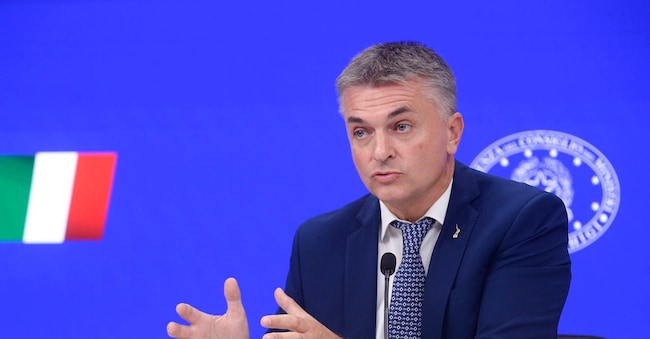
A public port company capable of establishing a presence in ports outside Europe, setting up services of national interest there and forging partnerships with local operators. This is the international vision that the Deputy Minister for Infrastructure Edoardo Rixi associates with port reform and the establishment of Porti d’Italia spa. He reiterated this yesterday in the Chamber of Deputies during the conference ‘The Hormuz Crisis and the New Eurasian Trade Routes’, organised by the Customs and Monopolies Agency, headed by Roberto Alesse, together with Confindustria, Il Sole 24 Ore, ISPI and SRM. Seated at the table in the Parliamentary Groups’ Chamber were senior customs officials from Europe, the United States and the Gulf.
“The quality of a trade route depends not only on ports, roads or logistics infrastructure, but increasingly on the quality of the procedures involved in the movement of goods,” explained Alesse.
Rixi took a similar line. He called for standardised procedures at Italian airports, more pre-clearance and integrated IT systems, and highlighted the importance of cooperation with India and Egypt. The aim, he said, is to ‘mitigate the effects of the two geopolitical crises currently affecting the European continent’ and to ‘consolidate stable relations with certain fast-growing markets, in which the Italian and European presence is still often marginal’.
The figures, which come from international research centres and are used by the Agency itself, help to put the situation into context: in September, 15 ships passed through the Strait of Hormuz each day, compared with 123 a year earlier. The freight rate for a container from Shanghai to Genoa rose to an average of $4,217 in the first nine months of 2026, up 19 per cent year-on-year. In August, the punctuality of container services fell to 49.9. For Italia, CREA estimates a cost equivalent to 0.42 per cent of GDP, whilst in July the energy deficit rose to 5.5 billion, up from 4.1 a year earlier.
Following the Russian gas crisis in 2022 and the clash between the United States and Iran, the virtual paralysis of the Strait of Hormuz and the instability in Yemen – the gateway to the Red Sea – have forced European governments to rethink their trade policies. According to Andrea Mazzella, Minister Plenipotentiary and Director of International Relations at the ADM, what is needed is ‘a European Customs Agency which, acting as a single entity, is capable of concluding agreements from which everyone can benefit’. The first test case is the Gulf States, moving beyond the era in which each state pursued its own customs diplomacy.


