The interview

Roccella: 'Work, for the reconciliation challenge better incentives than obligations'

The minister acknowledges the persistence of die-hard stereotypes, but closes to equal leave. And claims action against violence

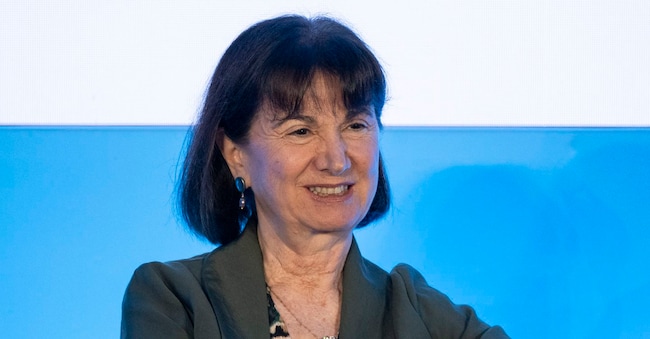
by Manuela Perrone

EUGENIA ROCCELLA, MINISTRA PER LA FAMIGLIA, LA NATALITÀ E LE PARI OPPORTUNITÀ

6' min read

Translated by AI
Versione italiana

6' min read

Translated by AI
Versione italiana

It claims laws against male violence against women and the latest allocation for 2025 of '105.7 million, the highest amount ever' for centres, shelters, training and victim empowerment. He calls for a 'less ideological debate' on consent. He points to the 'recovery of the value of parenthood' as the goal for the end of the legislature and to reconciliation as the challenge for female employment, which is held back by 'stereotypes that die hard'. But she closes on equal leave: 'Better incentives than rigidities'. The Minister for Family, Birth and Equal Opportunities, Eugenia Roccella, with Il Sole 24 Ore, takes stock of the work for women in Italy's first female-led government.

Let's start with combating male violence against women. Has enough been done?

Loading...

Nothing is enough as long as even one woman is killed. However, the small but significant drop in feminicides in 2025 (97 women killed compared to 118 in 2024, ed.) encourages us. Clearly, the path taken is the right one. In this legislature there has been a doubling of investments, awareness-raising activities, and above all two very important new laws, one to strengthen the Code Red in terms of prevention, the other introducing the crime of feminicide.

The political debate has been ignited by the Valditara bill that introduces compulsory prior informed written consent by parents for sexual and affective education in middle and high schools. Aren't you afraid that, in view of the increase in youth violence, it will be a brake on the spread of prevention projects

But the educational crisis arises precisely from the progressive weakening of the role of families! The school can do much, but it must act in alliance with the family. In short, the educational task of parents must be supported, not emptied. And to those who believe that the introduction of sex education at school can reduce violence against women, I would remind them that in countries where there are such courses the data are not comforting at all, far from it.

A central point remains training. In 2024, the technical-scientific committee of the National Anti-Violence Observatory churned out the first White Paper for the training of all actors, from magistrates to health workers. Valuable guidelines, but how well followed? Are there the resources for a turnaround?

In both laws against violence promoted by the government there are specific rules on the training of operators, starting with magistrates. Catching the warning signs in time means saving lives. We are also widely distributing the White Paper and have signed protocols with professional associations, from dentists to pharmacists, because prevention also comes from daily life.

The White Paper indicates in the absence of free consent the distinctive feature to integrate the crime of sexual violence. But the Bongiorno bill replaces this requirement with 'the will against the sexual act', igniting the clash between majority and opposition. What do you think? Is a compromise still possible?

It is a parliamentary initiative bill on which there is an ongoing debate in Parliament, as there was on the feminicide law. Among other things, I recall that feminism, internationally, is by no means united on this issue. I think we need a more serene and less ideological debate if we really want to seek convergence.

At the beginning of February, the decree was published with the allocation of funds for the fight against violence for 2025. Shall we clarify the figures involved?

For centres, shelters, training, victim empowerment, etc., it allocates the highest amount ever, 105.7 million euro.

At the last meeting on 25 February with the regions, a commitment was shared to re-discuss the agreement of 14 September 2022 that changed criteria and requirements for anti-violence centres and shelters. What is the design?

Our goal is to ensure high quality standards but also to avoid the closure of anti-violence centres and shelters, which, according to the alarm raised by the regions, would have happened if the requirements of the 2022 agreement, signed at the end of the last legislature, had come into force. We are seeking a mediation that ensures both requirements.

The family in the woods has been divided, and the chronicles from the courts bring us dramatic stories in which mothers, even victims of violence, have their children taken away by the judges' decision. What happens?

The removal of minors must be an extreme decision, justifiable only by a very serious and immediate danger. And then there is the problem within the problem, that of women having their children taken away even in cases of violence. This is an issue that is very close to our hearts. There is a government bill on its way to Parliament that will help to bring order with a constant flow of data. The case of the forest family is neither unique nor isolated, but it is a striking symptom of a system that is sometimes hostage to ideology and corporatism. A system whose imbalances are paid for by children.

Violence is also economic violence, intertwined with the node of a labour market that remains marked by deep imbalances. Women are less employed, poorer and with more discontinuous careers. Are bonuses, albeit enhanced, enough?  

Bonuses and decontribution for working mothers are one aspect, alongside which there is the very important challenge of reconciliation. Because laws and contracts do not distinguish between the sexes, but maternity and care work too often translate into a penalisation for women and the world of work is still built on a male basis. That is why we are investing so much in leave, services, nurseries and tuition reimbursements, summer centres and the summer opening of schools, and we are working with companies to spread a new sensitivity. Work organisation must accommodate those who are also parents, especially those who are mothers. Because equal opportunities does not mean treating different situations in the same way, but putting everyone in a position to engage and fulfil themselves.

At the 10-year anniversary of Alley Oop Il Sole 24 Ore in the Chamber of Deputies you launched an appeal to the oppositions to join forces on issues concerning women. On equal leave and double surnames do you see the possibility of an agreement?

I believe that opportunities work better than constraints. Beyond the problems of economic sustainability, I do not believe in dirigisme. I think that the sharing of care work between mothers and fathers can be better stimulated through incentives and rewards, which adapt to the different situations of families, than through obligations and rigidity. On leave we have invested a lot, increasing from 30 to 80 per cent the remuneration three months of parental leave, doubling the annual days for children's sick leave, and raising the age for the use of both instruments. And the result is that take-up has increased a lot, also by fathers.

The Constitutional Court in May 2025 declared the non-recognition of the intentional mother for the children of two women born by means of Planned Parenthood performed abroad to be illegitimate. Don't you think the legal vacuum should be filled?

In Italia one is a parent either by natural filiation or by adoption, and every child enjoys full rights, whichever way he or she came into the world. Without prejudice to the protection of children, which is fully ensured, and respect for court rulings, I do not think it is a sign of progress to consider 'intentional' parenting that voluntarily cancels out the mother or, in this case, the father.

About progress: 80 years have passed since the vote for women and you rightly pointed out that it is democracy that is 80 years old, yet the turnout figures show signs of a decline in female participation in particular. How can this be reversed?

In that first vote 89% of eligible women went to the polls. There was enthusiasm, a desire to count. For some time now, a similar turnout in Italia has seemed a mirage. But I believe that the return to politics, to a sometimes too heated but vital debate, after the long season of technical governments, can remind us all that the heart of democracy is precisely the vote, participation.

We are one year away from the end of the parliamentary term and the demographic collapse will not stop. What are the priorities you intend to focus on?

Demographic curves do not reverse in the short time of a legislature, not least because decades of denatality have reduced the number of women of childbearing age. We will continue to work until the last day on the pillars followed so far: direct economic support to families, services and work-life balance, female employment. To give concrete help to those who give a future to society, and to encourage the recovery of the social value of parenthood.

Copyright reserved ©

Brand connect

Loading...

Newsletter

Notizie e approfondimenti sugli avvenimenti politici, economici e finanziari.

Iscriviti