
Roma cost the Friedkins more than a billion: Champions League and a new stadium to save the investment
The Friedkin family has invested over one billion euros in Roma, with the goal of qualifying for the Champions League and building a new stadium. Despite financial losses and debt, the club is working to balance the books and realise the new stadium project

4' min read
4' min read
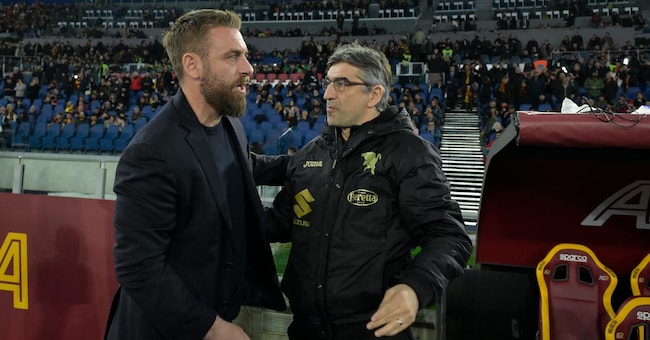
Daniele De Rossi has paid, beyond his responsibilities, for the impatience of an ownership that, after the uncommon financial commitment lavished in these four years, expected a different start, as a team capable of immediately hooking the Champions League train and not letting go until the end of the championship. An indispensable train to balance the books and satisfy the sporting ambition of the square.
Since the purchase in August 2020, the Friedkin family has invested around one billion in the management of the Giallorossi club. At the height of 30 June 2023, with the last approved consolidated financial statements, the US ownership's exposure was around 850 million, of which 199 million was for the acquisition of the club, 26 million for the takeover bid and delisting, and 622 million to meet the Giallorossi's financial needs. In fact, Roma is a club that burns cash and needs to rebalance revenues and costs, although the financial statements as of 30 June 2023 showed some substantial improvements with a deficit of 103 million against the monstrous red of 220 million in the 2021/22 financial year.
Decreasing losses
.In the first three seasons, the Friedkins, also due to the crisis caused to the football system by the pandemic, faced losses of more than half a billion (the club was coming from a red of 204 million on 30 June 2020 when James Pallotta passed the buck). Roma chose, in the financial years ending 30 June 2021 and 30 June 2022, to take advantage of the possibility offered by the Covid decrees to defer the settlement of losses until the fifth subsequent financial year and thus to 30 June 2026 and 30 June 2027, respectively.
In the budget as of 30 June 2024, a further loss is announced, which should, however, follow the positive trend of the 2023 budget and be more contained (Roma has just been fined two million by UEFA for failing to meet the intermediate targets of the four-year return plan set in the settlement agreement signed in August 2022).
The 2023 accounts
.In 2023, the club's turnover was 277 million compared to 206.4 million in 2022. A growth of more than 70 million, the result of various items: participation in the Uefa competitions brought direct revenues of 32.5 million thanks to the Europa League final (compared to 20.7 million in the previous season, which ended with victory in the Conference League); national TV rights brought in 71.7 million; player trading ensured 56 million with (15 in the 2021/22 season), of which 47 million in capital gains; the Mourinho effect with the Stadio Olimpico almost always sold out has allowed match revenues to double to 49 million compared to 25.5 million in the previous year; finally, commercial revenues have risen from 38.6 to 48.6 million, thanks to agreements with Toyota, Auberge Resorts Collection and New Balance. And in the 2024 budget that is in the process of being approved, the effect of the agreement in October 2023 signed with sponsor Riyadh Season, which gives Roma 25 million annually, will be felt. In 2023, total costs fell from 402 million to 348 million, with the cost of FIGC registered personnel down by 6.5 million to 144 million and amortisation for players' registrations reduced by 22 million to 55 million. In the 2024 summer transfer window, for an expenditure on players' registrations that exceeded 100 million, thanks to shrewd disposals and 'divestments' of athletes now extraneous to the technical project, Roma should achieve further cost savings of around 30 million (even if De Rossi, after the recent renewal, will remain on the payroll until June 2027, for a potential expenditure of around 10 million in total).


