
Romaeuropa: the capital’s international festival returns. A double opening ceremony featuring dance and music
It kicks off on 8 and 9 September, followed by nearly three months of theatre, dance, music, digital arts and creative activities for children

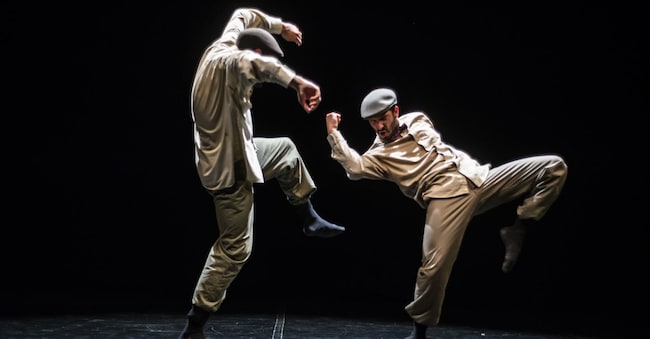
Romaeuropa, the capital’s international festival, returns with a programme that weaves together generations and artistic languages, structured as a dialogue spanning over two months between music, theatre, dance, digital arts and children’s performances. The opening of the 41st edition of the festival, chaired by Guido Fabiani with Fabrizio Grifasi as general and artistic director, will take place over two evenings. On 8 and 9 September, at the Auditorium Conciliazione, the opening of this edition will take place over two evenings, organised with the support of Banca Ifis and dedicated to two Italian artists who are leading figures on the international scene and who represent some of the most interesting trajectories of Italian creativity worldwide.
First, dance (8 September) with Sofia Nappi and her company KOMOCO; then music (9 September) with Caterina Barbieri, ONCEIM – Orchestra for Musical Creation, Experimentation and Improvisation – and Christian Marclay. And in the spirit of dialogue between these two disciplines, the Festival’s opening week continues at the Auditorium Conciliazione with the French choreographer Benjamin Millepied, who, on 14 September, as part of the celebrations marking the 70th anniversary of the exclusive Rome–Paris twinning, will present the Italian premiere of *Summerland*, a new creation for the dancers of Paris Dance, born out of a collaboration with the French singer-songwriter November Ultra, whose voice and musical universe straddle bedroom pop, R&B, folk and electronic music. From 15 to 17 September, the Festival then moves to the Auditorium Parco della Musica Ennio Morricone, thanks to a collaboration with the Accademia Nazionale di Santa Cecilia, featuring three major concerts: On 15 September, Fatoumata Diawara, one of the most prominent voices on the contemporary African scene, will perform her latest album *Massa* live; on 16 September, music meets cinema with the masterpiece *Powaqqatsi* by Godfrey Reggio and Philip Glass, presented with the Philip Glass Ensemble performing the famous score live in sync with the film’s images; finally, on 17 September, *The Trip To Vega* by Jeff Mills and Kety Fusco takes the audience on a sci-fi journey through electronic music, the harp, spaceships and distant stars.
The grand finale
The Romaeuropa Festival runs for over two months across 18 venues, presenting 100 performances in Rome – totalling 240 shows – and featuring around a thousand artists from Italia, from Europe and around the world, culminating on 15 November in its grand finale with a whole day dedicated to music, which will culminate in Enrico Melozzi’s Classical Rave Party. A special project that begins in the morning with the 100 Cellos, founded by Melozzi and Giovanni Sollima, and continues into the night with the Orchestra Notturna Clandestina and a host of musicians, artists and guests: from Niccolò Fabi to Alessandro Baricco, from Giovanni Sollima to the Italian Army Band alongside Giuseppe Andaloro, Alessandro Carbonare, Gloria Campaner, Marta Sollima, Miriam Prandi and Carlotta Dalia, right through to appearances by Elsa Lila, Anastasio, Fasma and many others. A grand celebration rooted in classical music yet transcending its boundaries, blending concert, rave and performance to transform music once again into a space for gathering, energy and sharing, in the spirit that has characterised Romaeuropa for forty-one years.
An opening that blends dance and music
On 8 September, at the Auditorium Conciliazione, Sofia Nappi will open the Festival with the national premiere of Chora – Il vuoto all’origine and DODI, one of her very first creations. Having already featured at the Romaeuropa Festival in 2021 with her piece *Wabi Sabi*, presented as part of the *Dancing Days* section dedicated to new European dance, Nappi has rapidly established herself as one of the most interesting voices in contemporary Italian choreography on the world stage. As artistic director of KOMOCO, a company she founded in Florence alongside dancers Adriano Popolo Rubbio and Paolo Piancastelli, she has built an international career recognised by major awards and collaborations with prestigious theatres and companies, ranging from the Venice Biennale to the Nederlands Dans Theater, from the Scottish Dance Theatre to Introdans, and including Ballet BC and the Leipzig Ballet.
Now performing in theatres across the world, she returns to Rome with two works that offer a glimpse into her artistic journey and the questions that have always underpinned her creative exploration. In DODI (2021), one of her earliest creations, the choreographer presents two bodies that seek each other out, mirror one another, support one another and test one another, navigating tension, desire, fragility and abandonment. The relationship thus becomes a space for listening and discovery, in which the presence of the other can become an opportunity for change and freedom. The duet marked a significant milestone in the early stages of Nappi’s international career and was honoured in 2021 with the Partner Introdans Award at the Rotterdam International Duet Choreography Competition and with First Prize and the Critics’ Award at the International Choreography Competition in Hanover. Chora – The Void at the Origin (co-produced by Romaeuropa and the Festival Oriente Occidente, of which Nappi is an associate artist and where it will be restaged on 10 September), brings that same focus to empty space, understood as a generative entity capable of defining and moving the individual in their form and primary essence. Conceived for seven dancers, the piece stems, in fact, from a profound listening to space. The bodies appear and disappear, supporting and brushing against one another, constructing ever-changing landscapes. Emptiness thus becomes a fertile space where presence and absence coexist and in which creation can continually begin anew.

