
Romania on the vote, poised between sovereignism and the European Union
The annulment of the November result caused social rifts and instability: Simion, an anti-European, is favourite. Challenger Dan, progressive, has recovered positions

3' min read
3' min read
A presidential election in a peripheral European country, at least in reference to the balance of the 'big boys' in Brussels. Yet the runoff being contested today in Romania carries significant weight, in domestic and international politics. A hard-fought election that should have taken place last November. Yes, because today's election in Romania is a repeat of the presidential elections, after the Constitutional Court invalidated the victory of pro-Russian candidate Calin Georgescu: Russian interference through TikTok. Months of political instability and heated internal debate ensued. Georgescu described the decision to repeat the elections as 'a fraud orchestrated by those who have made deception the only state policy'.
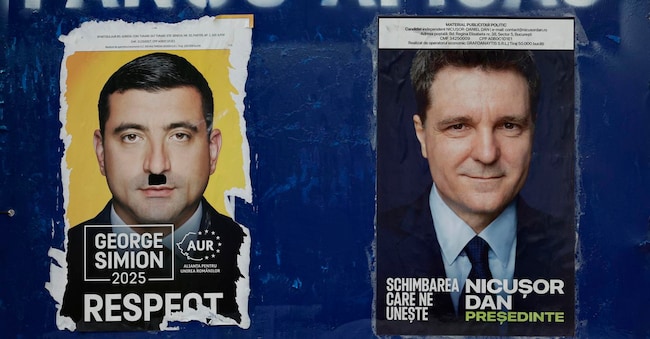
Among the two candidates, the favourite is George Simion, 38 years old, Eurosceptic, right-wing, who in the first round, 15 days ago, took 41% of the vote. Simion is the leader of the Alliance for the Union of Romanians (Aur) party. The challenger is the mayor of Bucharest, Nicusor Dan, 55, an independent candidate, who obtained 21% of the vote. A moderate, pro-European.
The twenty-point gap between the two candidates, according to the polls, does not seem to reflect the voting intentions of the citizens; there would be a recovery of support for the challenger Dan. Beyond the polls - which have always resoundingly failed in the last six months - there are profoundly different views on society, foreign policy and the economy.
Dan is a pro-European, Simion wants to nationalise companies considered strategic. Known for his sovereignist positions and his 'no' to military aid to Ukraine, he has promised a 'Simionisation' of the European Union, while assuring loyalty to NATO and the maintenance of the American presence in the country. "I am the only candidate capable of guaranteeing the permanence of US troops in Romania". Simion hurled harsh criticism at the European Union, 'an entity that restricts Romania's decision-making and economic freedom'.
Dan went so far as to define the challenge with Simion as follows: 'It will not be a clash between two people, but between a pro-Western and a hostile, anti-Western orientation of Romania. That is why I ask all Romanians to be part of this battle',

