
Rome waste-to-energy plant, final yes to Acea: building sites by summer
The final contract to build the Santa Palomba plant has been awarded. The Municipality signed the concession contract

3' min read
Key points
- 33-year concession contract signed
- The single regional authorisation process will start soon
- Sites will open by summer
- Four auxiliary plants and minimised environmental impact
- Billion dollar investment, savings of around 40 million annually
- Palermo (Acea): 'It will be the most advanced infrastructure in Europe'
- Gualtieri: "Decisive step forward for autonomous waste management"
3' min read
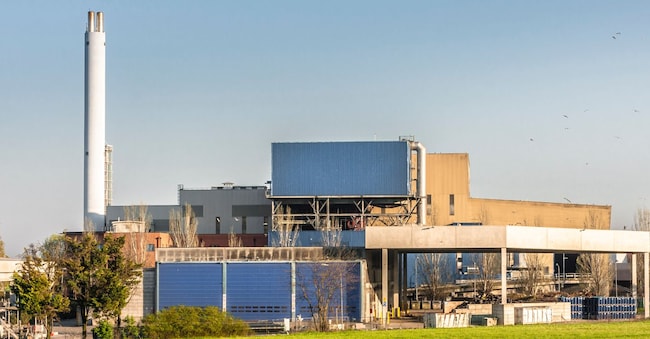
The award has arrived. Yesterday Roma Capitale announced that it had definitively awarded the contract to the group of companies led by Acea Ambiente with Suez Italy, Kanadevia Inova (formerly Hitachi Zosen), Vianini Lavori and Rmb for the construction of the waste-to-energy plant in the Santa Palomba industrial area on the border with Pomezia. The green light, greeted with satisfaction by the mayor Roberto Gualtieri and Acea's CEO, Fabrizio Palermo, came after the technical validation of the project by the appointed certification company.
The 33-year concession contract was signed
.The Capitoline administration and RenewRome, the company that will manage the plant for the next 33 years (composed of Acea Ambiente with a 57% share, Suez with 30%, Kanadevia Inova with 9.9%, Vianini Lavori with 3%, and Rmb with 0.1%) and which is led by Barbara Maccioni in the role of administrator, have signed the concession contract.
The single regional authorisation procedure will start soon
.After much anticipation and a few stumbles, starting with the appeals to the judiciary, all of which have so far been rejected - a strand that does not seem destined to end, with the municipalities of Pomezia, Ardea, Marino and Ariccia announcing their intention to appeal to the European Court of Justice -, the process is now getting underway. The single regional authorisation procedure (Paur), which will be managed by the commissioner structure, will soon be launched, because the mayor of the capital, as extraordinary commissioner for the Jubilee, has also been given the power to adopt the city's waste management plan and approve projects for new plants.
The construction sites will open by summer
.Construction is scheduled to open by the summer and, if the schedule is adhered to, the waste-to-energy plant could be ready by the end of 2027. According to the project, which was illustrated on 14 October by Gualtieri together with Palermo, the plant - part of the waste plan launched in 2023, which also envisages reaching 70% separate waste collection by 2035 - will be able to treat up to 600,000 tonnes of undifferentiated and non-recyclable waste each year, will be powered by rail transfers, and will include a circular economy park, an area equipped with research and coworking spaces, a greenhouse, a public garden, and a panoramic tower over 70 metres high.
Four auxiliary plants and minimised environmental impact
Together with the main facility, four auxiliary plants will be built for bottom ash recovery, photovoltaic production, a district heating network and an experimental system for Co₂ capture. The promise, anticipated in October, is that of a waste-to-energy plant with a very low environmental impact: emissions will be well below the limits set by European directives and Best Available Techniques (Bat) and the pollution caused by road traffic. The plant will produce thermal and electrical energy (65 MW in total) sufficient to supply about 200 thousand households and will allow the recovery of about 10 thousand tonnes of steel, 2 thousand tonnes of aluminium and 1,600 tonnes of copper each year.


