
Rome, Forte Aurelia reopens: it will be a cultural centre
Commander General of the Guardia di Finanza, Andrea De Gennaro: 'It was decided to continue to believe and invest in Fort Aurelia and a restructuring and redevelopment plan was launched. Work that has led to a "new chapter in the life of the Fortress as a cultural centre"

Key points
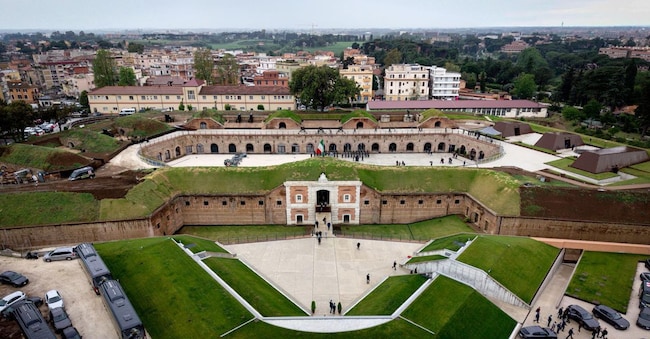
From place of memory to cultural rebirth. The Guardia di Finanza returns the Aurelia Fortress to the Capital for the conclusion of its 'birthday': not only an act of monumental conservation and restoration, but a gift to the citizenship on the days when Rome's roots are celebrated.
The complex, one of the 15 forts of the entrenched camp built between 1877 and 1891 to defend the new capital of Italia, was reborn after restoration work carried out by the Corps.
Bond between Guardia di finanza and Forte Aurelia
"The bond between the Guardia di Finanza and Fort Aurelia has distant roots," said the commanding general of the Guardia di Finanza, Andrea De Gennaro, opening the inauguration ceremony after the redevelopment. "In recent years, it has been decided to continue to believe in and invest in Fort Aurelia, and a restructuring and redevelopment plan has been launched, the first result of which is the consecration of its historical and scenic relevance. A work that has led to a "new chapter in the life of the Fortress," explained De Gennaro, "as a cultural pole
Gualtieri: 'We are working to recover others, such as the one in Boccea and Forte Bravetta'
The ribbon-cutting ceremony took place on the occasion of the 'Christmas of Rome' celebrations together with the mayor of Rome, Roberto Gualtieri, and the ministers for the Economy, Giancarlo Giorgetti, and for Culture, Alessandro Giuli. 'You have made a beautiful gift to the city of Rome,' said Gualtieri. 'We are working on recovering others, such as the one in Boccea and Forte Bravetta, but this is the most spectacular and most accomplished work'.
Giorgetti: 'Duty to provide resources for the protection of artistic and cultural heritage'
"When public resources are allocated to historical and cultural heritage, the state budget is enriched with identity and beauty. Allocating resources to the protection of artistic, cultural and architectural heritage is a duty of those who administer public affairs and our Constitution tells us so. it is not a superfluous expense but a far-sighted one," said Economy Minister Giancarlo Giorgetti speaking at the ceremony.

