Film and Media

'Romería', a film about memory with an uneven performance

Spanish filmmaker Carla Simón tells an intimate, autobiographical story that half works

3' min read

3' min read


There was undoubtedly great expectation at the Cannes Film Festival for 'Romería', the third feature film by Spanish director Carla Simón, after the good results obtained with 'Summer 1993' (2017) and 'Alcarràs' (2022).

Loading...

The latter had won the Golden Bear at the Berlin Film Festival and, also for this reason, expectations for 'Romería' were among the highest in the entire competition.

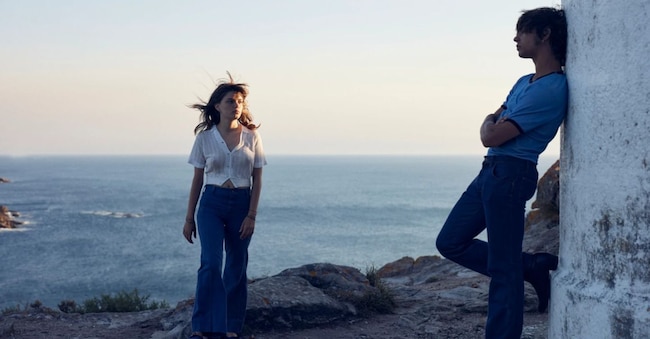
Once again, Simón focuses on an intimate story, directly linked to her personal memory: Marina, an eighteen-year-old girl (explicitly an alter ego of the Spanish director), was orphaned when she was a child and embarks on a journey to get to know figures from her family with whom she has basically never dealt.

The meetings will be an opportunity to rethink her blood ties, trying to piece together fragments of her and her family's memory, impossible for her to know and remember.
It is definitely a film of strong emotions 'Romería', emotions in which the desire to be able to embrace (new?) relationships, which could be decisive for the protagonist's future, alternates with a necessary resistance that keeps Marina from being able to let go completely in the face of so much newness.

In these feelings, whether positive or negative, are mixed affections and fears, hopes and traumas that one has tried to remove over so many years.


A training course without any major highlights


Carla Simón entrusts the cinema with a witness's eye in order to understand what surrounds the young protagonist: from the very first sequence, it is noticeable how Marina uses a video camera in order to imprint and memorise the journey she is making.

Hers is above all a symbolic journey, marked by the passage of time through the various chapters that make up the film, in which one feels the sincerity of the Spanish director, but perhaps not entirely the urgency of such an intimate and profound story.

There are no great flashes to remember and the pace is so erratic as to make the viewing less engaging than it could and would have been.

It's a pity, because the premises for doing something important were there.


The History of Sound

.


Another unconvincing title presented in the competition is 'The History of Sound' by Oliver Hermanus.

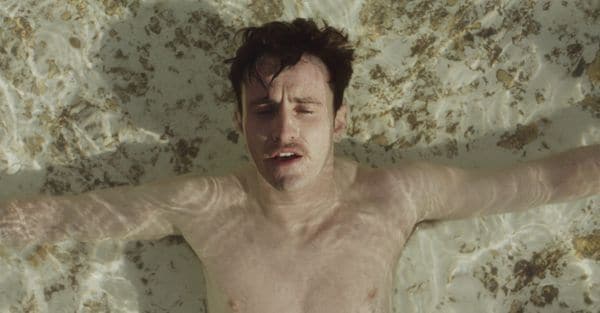
Set in the years of World War I, the film tells of two young men, united by a common passion for music and a desire to pass on the stories of their homeland. Driven by a strong connection, they decide to document the lives, voices and songs of their fellow Americans.

A bit like 'Romería', 'The History of Sound' is also a trip down memory lane, with the two protagonists in this case aiming to collect and record the folk songs of ordinary people, although their journey will soon turn into something more meaningful.

Taking his cue from Ben Shattuck's novel of the same name, Oliver Hermanus takes a sharp step backwards from his previous 'Living' (2022), this time producing a sluggish melodrama in which rhetoric and blackmail sequences abound.

Too schematic in its screenplay and glossy in its direction, 'The History of Sound' is one of the lowest points of this year's Cannes competition, and two fine actors like Josh O'Connor and Paul Mescal are not enough to hide the many underlying flaws.

Copyright reserved ©
Loading...

Brand connect

Loading...

Newsletter

Notizie e approfondimenti sugli avvenimenti politici, economici e finanziari.

Iscriviti