Rosas showcases Bolzano Danza

Few contemporary dance performances have become so ‘iconic’ as to inspire movement patterns that anyone can replicate, thanks to tutorials readily available online. The most famous example is Pina Bausch’s Nelken, created in 1982 and which has become so deeply ingrained in the collective imagination that, following the choreographer’s death, the Pina Bausch Foundation authorised the global distribution of the Nelken Line, allowing everyone to try their hand, to the tune of Louis Armstrong’s West End Blues, at the famous walk accompanied by arm and hand gestures symbolising the four seasons.
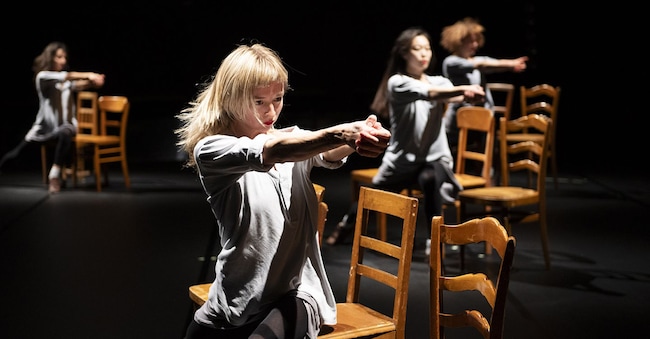
A year after the debut of that landmark work of dance theatre, Anne Teresa de Keersmaeker presented her *i* *Rosas danst Rosas* in Brussels, a production destined to become a legendary show in its own right, from which anyone can learn the sequence of the second movement – the ‘chairs’ movement – via a tutorial available on the company’s website. Performed countless times by the Rosas company – which takes its name from the production itself – it was restaged in recent days at the Bolzano Danza festival in a new production featuring four extraordinary ‘fifth-generation’ dancers: Jasmine Achtari, EvaGalmel, Nina Godderis and Momiji Kuromaru.
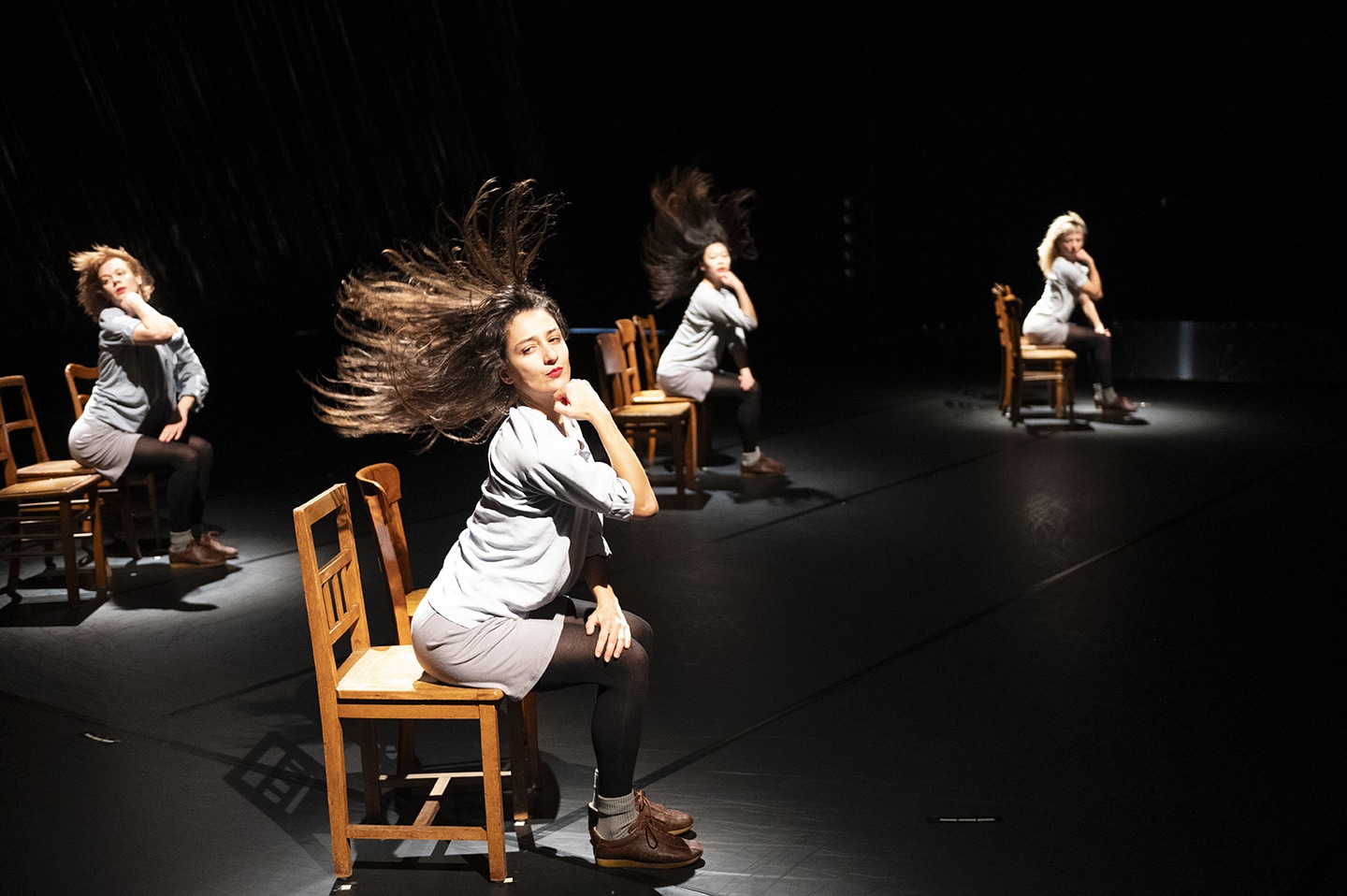
Like any masterpiece that takes its place amongst the pantheon of classics, Rosas danst Rosas offers, with every performance, the pleasure of discovering new details and meanings. Beyond the astonishing technical mastery and the meticulous architecture that de Keersmaeker has constructed by interweaving diagonals, vanishing lines and dynamic balances, and by dividing the piece into four parts representing the phases and different moods of a day, this dense and multi-layered production still retains a certain air of mystery to this day.
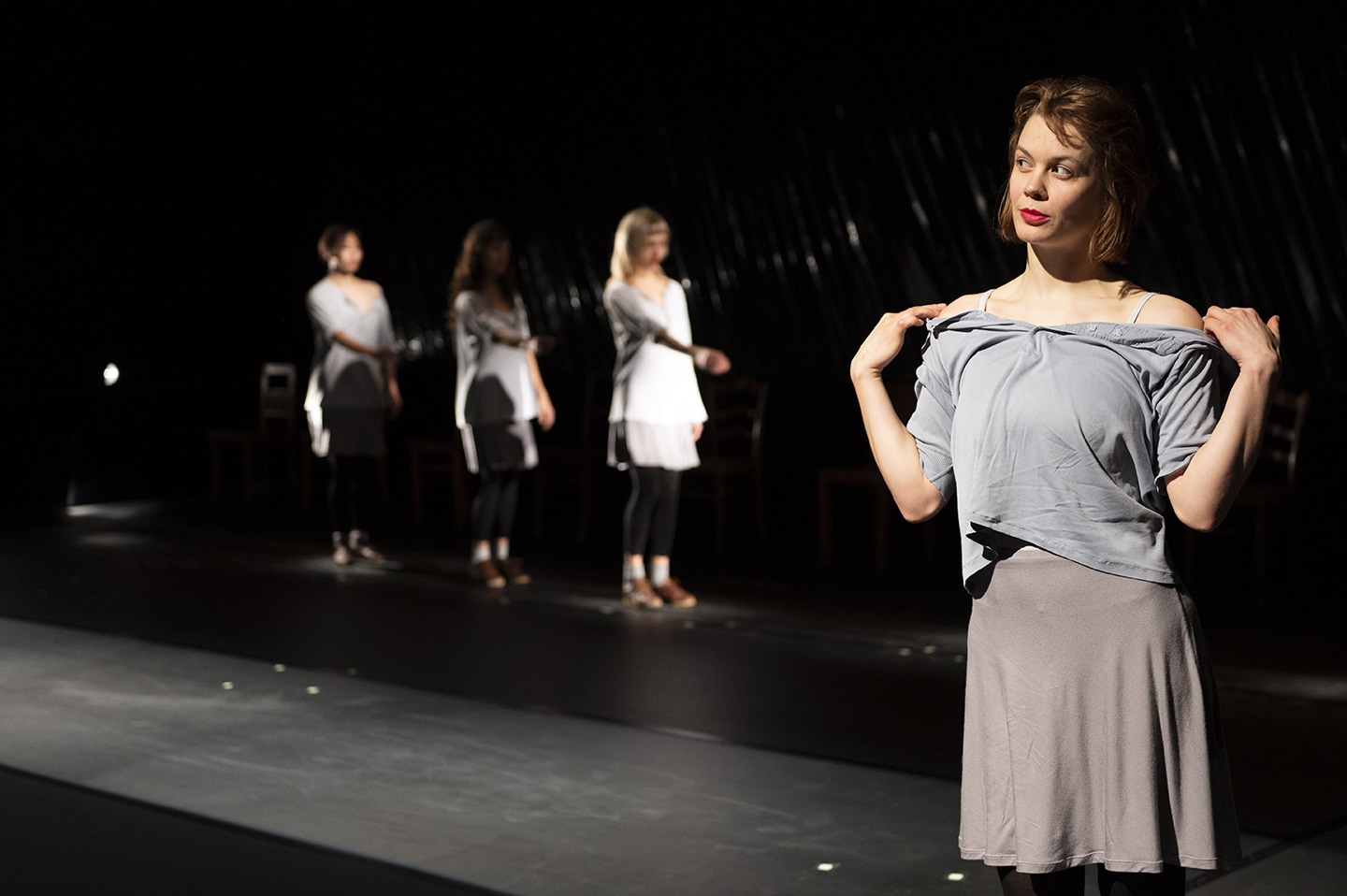
Set to the rhythm of the dancers’ breaths and then to the icy, pounding music of Thierry De May and Peter Vermeersch, the choreography is the very essence of that minimalist aesthetic which influenced much of contemporary dance in the 1980s. An abstract style with a human heart, which, within the rigour of its geometric framework, leaves room for hints of sensuality and delicacy. The alternation of falls and recoveries, the whirling leaps and gestures of everyday simplicity – such as tidying one’s hair, baring and covering a shoulder, exchanging knowing glances, crossing one’s legs, resting one’s chin on one’s hand – constitute that repertoire of minimal gestures and that concentration of vital energy which have led to Rosas danst Rosas being regarded as a hymn to femininity, a sort of secret code available to anyone who wishes to decipher it. Indeed, the work is not limited to its captivating gestural score; one senses something more elusive and, at the same time, empathetically powerful: the obsessive repetition of gestures verging on industrial mechanisation, the motor hyperbole culminating in exhaustion, and the alternation between ecstatic exaltation and prostration, between stillness and din, produce a sense of unease that invites a deeper exploration of the work’s layers of meaning.
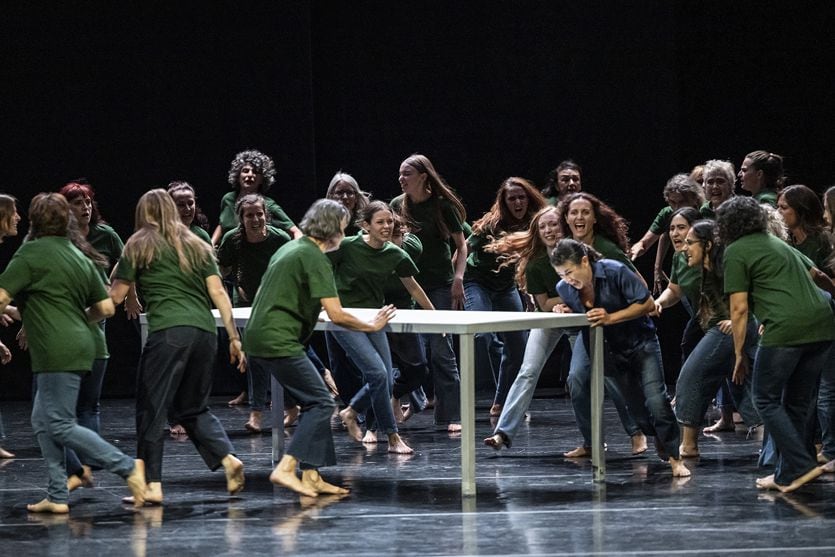
The reenactment of choreographies from the past is becoming an increasingly common phenomenon and should prompt reflection on the need felt by dance artists to examine the past in order to make sense of a complex and problematic present.