
Rubio: 'US children of Europe, but we will not stand idly by and watch the decline of the West'
In his speech at the Munich Security Conference, the US Secretary of State used more conciliatory tones and was greeted by a liberating standing ovation, after the fears of the eve. There was no lack of criticism on migration and de-industrialisation. Von der Leyen 'reassured'. The French foreign minister: 'Paris strategy does not change'
from our correspondent Gianluca Di Donfrancesco
 Aggiungi Il Sole 24 Ore
ai preferiti su Google
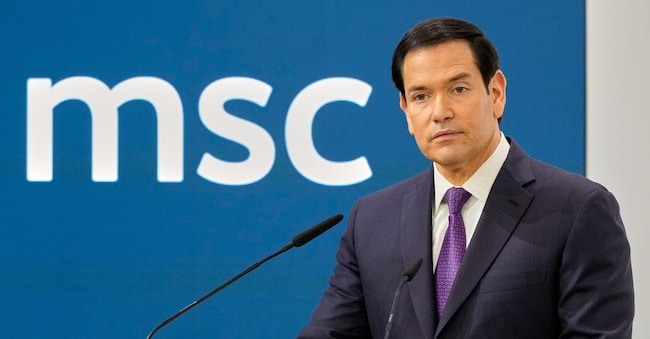
MUNICH - It was the most eagerly awaited speech of the Munich conference, that of US Secretary of State Marco Rubio. It ended with a liberating standing ovation when he closed his speech by assuring that 'the United States and Europe are meant to be together'. The 'European friends' feared a repetition of Vice-President JD Vance's shock attack at the last conference, when the rift between the Trump administration and the liberal democracies of the old continent became glaring.
The Expectations
Adding to the worries, came Rubio's decision on Friday night (13 February) to cancel his meeting with and Volodymyr Zelensky, a gesture that was received as a slap in the face. However, a remedial meeting was announced. Given the expectations, the American's speech was considered reassuring, even though it lacked concrete commitments and references to Russia. Of course, criticism of Europe has not been lacking and will never be lacking from this US Administration. At least they have not translated into scathing attacks, like those of Donald Trump in Davos, for example. And if on Friday the German Chancellor, Friedrich Merz, had explicitly spoken of 'the end of the old world order' and of a 'rift' between the shores of the Atlantic, Rubio emphasised that 'the end of the transatlantic era is neither the goal nor the desire of Americans, because our home is in the western hemisphere, but we will always be children of Europe'.
The reactions
EU Commission President Ursula von der Leyen said she was 'very reassured' and German Foreign Minister Johann Wadephul called Rubio a 'true partner'.
Others were less convinced. Time will tell whether the alliance can be 'restarted' and trust 'rebuilt', as Merz proposed on Friday.
The French Foreign Minister, Jean-Noël Barrot, said that Rubio's intervention 'will not change the strategy of Paris', which wants a strong and independent Europe 'regardless of speeches'.


