Energy

Russian gas, exports to Europe at their lowest since the 1970s: now production also falls

The European Commission aims to ban the purchase from 2027. But Moscow's difficulties are already evident and if in 2024 it had unexpectedly managed to regain market share it now seems to have few cards left to play

by Sissi Bellomo

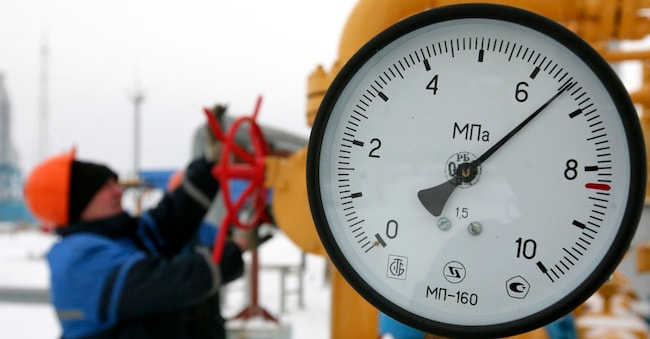
(REUTERS/Sergej Vasiljev)

3' min read

3' min read

Gas production and exports from Russia have fallen again after a resounding recovery in 2024. And this time Moscow may have come to the end of the line, regardless of the success of the plans of the European Commission, which in June presented a proposal to ban purchases by EU countries from 2027 (except for some extensions, limited to residual cases).

Even now, Russia seems to have more gas available than it can sell. With the end of transit via Ukraine at the end of 2024, Gazprom's exports to Europe - now only possible through TurkStream - plummeted 47% in the first half of this year, to just 8.33 billion cubic metres (Bcm), according to data compiled by Reuters. Volumes that if replicated in the coming months would lead to a total of about 16 Bcm by 2025: the lowest since the 1970s, when the first contracts with European customers, including Eni, had just been signed (and were not yet fully operational).

Loading...

Eni itself recently stopped selling Russian gas to Turkey (it was 6.2 Bcm in 2024, while deliveries to European customers had ceased in 2023) and in June closed its representative offices in the country.

At their peak in 2019, European pipeline imports from Russia had reached 179 Bcm: ten times more than current flows. The descent - Covid aside - began in 2021, when Gazprom had started to restrict supplies even before Moscow invaded Ukraine.

In 2023, EU purchases had already been reduced to 25 Bcm by pipeline, joined by 18 Bcm in the form of LNG. Both, surprisingly, increased in 2024: to 32 Bcm for pipeline gas (a 28% rebound) and to 20 Bcm (+11%) for liquefied gas. The trend is now reversing: the EU Commission expects European purchases of Russian gas this year to fall by almost a third overall, from 52 to 37 Bcm.

Gazprom's supply contracts for just 15.1 Bcm remained active, concentrated mainly in Hungary, Slovakia and Serbia, estimated in March an Oies study: since April 2022 the Russian company has lost - as expired, terminated or suspended - contracts for 135 Bcm.

As far as LNG is concerned, there remains a hard core of long-term contracts linked to Novatek's Yamal Lng plant, which oblige (for more than 10 years yet) the withdrawal of cargoes and in part also the delivery to Europe: Brussels would like to terminate these too from 2027. In particular, the obligations concern the French TotalEnergies (for 5.5 Bcm), the German Sefe (4 Bcm) and the Spanish Naturgy (3.4 Bcm).

For Russia, the situation is already becoming difficult. Due to falling prices and a weak rouble, state revenues from oil & gas are projected to fall by 37% in July, to 680 billion roubles ($8.7 billion), Reuters estimates.

The country's gas production - about two-thirds of which is accounted for by Gazprom - is also slowing down, because it cannot find sufficient outlets on either the domestic or export markets: in the first half of the year it stood at 334.8 Bcm per Bloomberg, down 3.2% year-on-year and by more than 10% compared to 2021 (when it had stood at 763 Bcm for the whole year).

Moscow has spared no effort to find new markets, but replacing Europe is not realistically possible. And further progress in diversifying customers is difficult, not only because of sanctions.

The only pipeline to China that Gazprom has built so far - the Power of Siberia 1 - has been running at full capacity since this year, but with a capacity of only 38 Bcm: less than a fifth of the volumes that reached Europe until a few years ago. Another pipeline in the direction of China, with a capacity of 10 Bcm, is expected to come on stream in 2027. Negotiations with Beijing for the Power of Siberia 2 (another 38 Bcm) instead seem to have stalled.

In the meantime, Moscow has signed new contracts with Uzbekistan, Kyrgyzstan and even Iran (which also has some of the richest gas reserves in the world): but these are modest volumes and the possibilities of increasing them are very limited with the current pipeline network.

That leaves the domestic market. But developing consumption is not proving easy and in any case the potential is not infinite. The government is trying (so far with little success) to naturalise cars, trucks and even trains.

Some officials have recently put forward further proposals, including the construction near gas fields of super energy-intensive data centres for artificial intelligence and cryptocurrency mining. Ideas that remain on paper for now, and which give a measure of the degree of concern, which is also growing rapidly at the political level.

Copyright reserved ©
Loading...

Brand connect

Loading...

Newsletter

Notizie e approfondimenti sugli avvenimenti politici, economici e finanziari.

Iscriviti