
Russian shadows loom over the Latvian election, amid security concerns and disinformation
The favourite is the outgoing Prime Minister Kulbergs, who took the reins of government following a succession of unstable administrations, but forming a coalition will be difficult in a fragmented Parliament

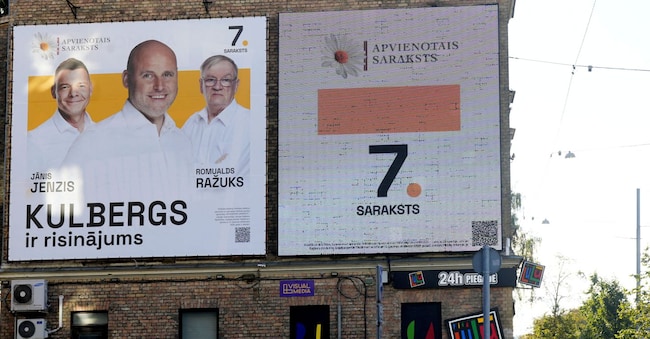
With the border with Russia and Belarus under close surveillance and the constant spectre of Moscow’s hybrid war looming, Latvia is heading to the polls at the most delicate moment in its recent history. On Saturday 3 October, 1.5 million citizens will be called upon to elect the 100 members of the Saeima, Riga’s unicameral parliament. And although the economy is showing some cracks – with inflation at 3.5 per cent and purchasing power below the European average – voters have just one priority: national security.
Riga’s uncompromising stance on the war in Ukraine – as one of Kyiv’s most staunch supporters, with defence spending approaching NATO’s target of 5 per cent of GDP – has brought trade with Moscow, once a mainstay of the economy, to a standstill. This stance has turned the Baltic country into a target of the Kremlin’s hybrid warfare. It is precisely fears of retaliation at the ballot box that have prompted the government to request the OSCE’s intervention to monitor the vote.
The State Security Services (Vdd) “will step up security measures to ensure free and fair elections”. The aim is to identify and prevent attempts to unlawfully influence the conduct and outcome of the elections. According to the Vdd, Russia may step up its disinformation campaigns, with individuals attempting to spread false news.
One factor to consider is the Russian population within the country. Although it remains a minority, it is the largest Russian-speaking community in the Baltic states and accounts for almost 25 per cent of the population. This is a large section of the electorate, which Moscow’s disinformation campaigns can easily manipulate. This is made easier by the instability of the political class, which has led to disillusionment and, as reported by Reuters, has resulted in a third of Latvians stating that they are undecided or do not wish to vote.
Over the past three years, Latvia has seen a succession of unstable governments. Following its election victory in 2022, New Unity (Jv) was hit by a series of scandals that led to a loss of support. It is a centre-right alliance comprising five parties (Unity and four regional parties). Krisjanis Karins, elected in 2022, resigned the following year due to internal conflicts within the coalition. Evika Siliņa replaced him as Prime Minister, but she in turn resigned from the post last May. Fierce controversy erupted following her decision to dismiss the Defence Minister, Andris Spruds, over the slow implementation of the anti-drone defence system. Such mistakes are taking their toll at the polls, with state TV polls placing the party below the 5 per cent threshold, at 4.3 per cent of the vote.

