Casablanca: The Film Industry / The Documentary-maker

Ruth Beckermann: the subjective perspective in my documentaries

A journey through the career of the Viennese director, who, with passion and humour, tells stories of identity, politics and memory through arthouse films

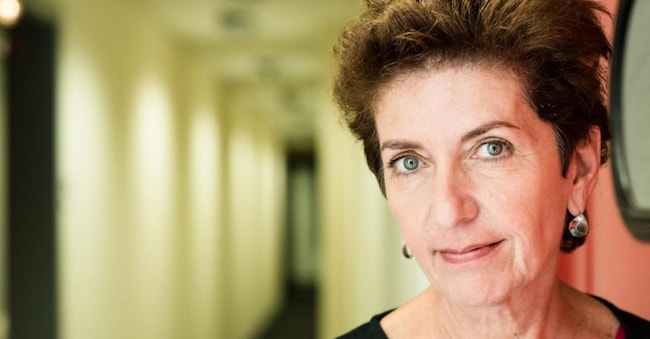
Ruth Beckermann (Copyright Maria Kracikova)

9' min read

Translated by AI
Versione italiana

9' min read

Translated by AI
Versione italiana

Ruth Beckermann is one of the most refined contemporary documentary filmmakers. Her documentary essays are free-flowing, unconcerned with fast-paced editing, allowing the subjects she explores to breathe. Her camerawork is both political and personal, without any pretence of objectivity. She examines the subjects she chooses to explore with the depth and irony of someone who knows how to challenge both herself and what she sees. She allows herself the luxury of time – plenty of it: as in *i* *Favoriten* */i* (2024), her most successful documentary, where she spent three years building the relationship between pupils and their teacher at the Viennese school she chose to explore. A film – highly relevant to us today – about teaching and learning amongst pupils at a state primary school in Vienna, where the mother tongue of over 60 per cent of the children is not German.

Biography and filmography

Born in Vienna in 1952 to Jewish parents who were both Holocaust survivors, she is a witty woman with the physique and gaze of a young girl: it is impossible to believe she is 74 years old. She lives and works between Vienna and Paris and has won several awards at the Berlinale, the most important and artistically focused European film festival, alongside Venice and Cannes. In 2018, she received the award for best documentary in Berlin, The Waldheim Waltz, which tells the story of Kurt Waldheim, the former UN Secretary-General, who became entangled in a web of lies after concealing two years of his wartime history.

Loading...

In 2022, again at the Berlinale, he won the award for Best Film in the Encounters section for Mutzenbacher, , which features a cast consisting exclusively of men who had responded to a newspaper advert to read and discuss excerpts from the controversial anonymous erotic novel of 1906, Josefine Mutzenbacher.

But it was Filmmaker, the Milan Real Cinema Festival, where the director won the competition in 2016 with The Dreamed Ones, a film about the love story between the two poets Ingeborg Bachmann and Paul Celan.

His previous films were The Paper Bridge (1987), which tells the story of his family and that of the wider community of Central European Jews, and East of War (1996), which deals with the war crimes committed by the German Wehrmacht on the Eastern Front and the views of former soldiers on the history and memory of the Second World War.

The Milan festival was among the first to dedicate a retrospective to Beckermann’s filmography in 2022. In the 2026 edition, Filmmaker screened, following its premiere in Berlin, Wax and Gold, filmed in Ethiopia and based on Ryszard Kapuscinski’s book, Il Negus (Feltrinelli, 2014). Here, Beckermann takes up residence at the Hilton in Addis Ababa and crafts an essay on collective memory and Ethiopian national identity, including Italian colonialism.

We meet her at Filmmaker’s offices in Milan.

When did you start doing this job?

For me, being a documentary-maker isn’t a job – it’s a passion.

Her background lies in journalism and art history...

Loading...

I studied journalism and art history in Vienna and Tel Aviv, and took a photography course at the School of Visual Arts in New York. When I returned to Vienna, I worked as a journalist. I started out at an Austrian monthly finance and economics magazine called ‘Trend’. I didn’t attend a proper film school.

Like *Il Sole 24 Ore*?

Yes, at the age of 19, I was writing rather substantial articles on the economy and economic issues. Then I met two people of the same age, Josef Aichholzer and Franz Grafl, and together with them I founded the production collective Arena Videogroup and later the film production and distribution company Filmladen. Together, in 1977, we made Arena besetzt (Arena Occupied) about the occupation of the Arena in Vienna in the summer of 1976. We wanted to document the organisation of collective work, a political and cultural utopia, and its decline. (Among those present was Leonard Cohen editor’s note).

The first production company

Filmladen had been set up to make political films. We were completely broke.

Two friends who were doctors each gave us a sum that would be worth around 500 euros today. So that was our starting capital. On top of that, we put in whatever we could from our own earnings, because we were working too. We bought a camera, and film directors would often give us analogue film for free. It was the 1970s; there was a lot of talk about collectivity, and nobody was thinking about making a profit. At that time, no political films were being made in Austria, and that’s how we got started, without knowing anything about cinema or filmmaking techniques. We shot a couple of short films about a strike and other labour disputes at a company, using a 60 mm camera.

Flower power...

Not only that, we wanted to change the world; we were fighting against capitalism and apartheid in South Africa. Filmladen still exists today, but I’m no longer part of it and, of course, it makes a profit these days. I worked there for the first seven years.

Have you re-watched those films? What do you think of them now?

They’re fantastic. The more time passes, the more these films become extraordinary records. Some fade into obscurity, whilst others end up being categorised as ‘flyer films’. They may not be great works of art, but they offer a glimpse into a particular time and place.

After that, we decided to make a proper film.

The first film

But how did you decide how to divide the work between the three of you? How did you manage, if none of you knew what to do?

We found someone who knew how to handle a camera. At the end of filming, someone let us use an editing suite for free, which cost 60 million at the time. We didn’t know how to edit the film, so it took us a while to work out how to operate a small machine where you feed the film in, cut it and then stick the pieces together.

And then when did she start on her own?

When I shot my first feature film, Wien retour (1983), I had a crew and, at last, a bit of money. So I was able to afford a cameraman, a camera assistant and a sound technician, who behaved in a truly unpleasant manner towards me. The cameraman kept asking me: ‘How did you manage to get the funding? I should be the one with it, not you, as I’m a professional.’ The fact that I didn’t come from the world of cinema and was a young woman threw him off balance. And this general mistrust meant that it took me a long time to really feel like a director. I’ve always thought: ‘Well, I’m a lucky person. And it was luck that enabled me to create something people want to see.’

What is a documentary?

How would you define ‘cinema of the real’? How would you define a documentary?

I think it’s important to start from the premise that films are shown in a cinema, because it’s a different experience when you’re sitting in a darkened theatre, fully focused, for an hour and a half or two hours.

I make what are known as ‘creative documentaries’, and I always try to make it clear that what you see in the film is my perspective. It is not an objective truth. Some people would have us believe that an objective perspective exists: it doesn’t, and I think it’s important to make that clear rather than hide it.

Are you trying to make this clear by using a voice-over, a voice narrating from off-screen?

Not always. My latest film, Wax and Gold, is a film-essay with a voice-over. In contrast, The Dreamed Ones, which explores the relationship between Ingeborg Bachmann and Paul Celan and their correspondence, does not feature my voice. The film features two actors in a studio, Anja Plaschg and Laurence Rupp, who read the letters from their manuscripts directly into the microphones, as if it were a documentary about the making of an audiobook. The film’s power lies entirely in its montage, editing and style. And everyone would say it’s my film. There are various ways to leave one’s personal mark without resorting to something structural like a pre-established format.

When a film begins

When does a film begin, according to his way of working? 

That’s a very interesting question. I start with certain topics, issues that are close to my heart. They can remain on the back burner for a long time, and then suddenly an idea strikes me – though in reality, it’s already there. I’m not quite sure why, but I make up my mind: ‘I’m going to make this film.’ Sometimes it’s because I manage to raise the money.

What’s the next step?

I set off with the crew – just a handful of people, the bare minimum. These days, for example, with digital technology, we no longer need a camera assistant for the camera’s built-in sound. So all we need is a single cameraman, the sound engineer and the production assistant. As I also handle the production of my films, I’ve streamlined the team and now have just one colleague. Sometimes we even start filming before we’ve secured the funding. For a couple of days, if it’s important, if something happens that won’t happen again.

I act on instinct, but, as I said earlier, when I look back on my career in film, I realise that these themes have been present for a long time, as in the case of Mutzenbacher. It was a book that my generation had read when we were very young, because it’s about sex. Just for a laugh, whilst I was with my editor – whom I’ve been working with since 2000 – I said many times: ‘My next film will be Mutzenbacher…’. But then, during the Covid pandemic, I thought: ‘Well, now’s the right time to make it’, and so it was, and it remains, amongst my own films, my favourite. Whilst we were editing it, I thought that no one could ever match the skill of those two men reading from the book of poems and talking about sex...

 In the end, it was a success....

Yes, so you never know from the outset whether something will be a success or not. And to be honest, I don’t really care that much; obviously, once it’s finished, I’m pleased if anyone wants to see it, but when I decide to make it and whilst I’m making it, I don’t give it a second thought… In short, it’s just another project. Naturally, I’m well aware that it’s a luxury and that the way I’m able to make my films is a real privilege. My films aren’t actually that expensive, but it’s a luxury not to have to worry about, or even think about, the commercial side of things.

It all began with a book

Does it start with a fascination or a book?

From a book. In the case of Wax and Gold, from Kapuściński’s book. It is an exceptional book and I realised that, despite it being a bestseller, translated into almost every language in the world, there was no version in Amharic, which is the language of Ethiopia, the country the book is about. It’s worth adding that, as a child, I was also fascinated by the figure of the Negus, Haile Selassie, who appeared in the pages of certain magazines about monarchs, which my mum loved. The book is set entirely at court, with ministers, servants, cleaners and writers. And I have recreated this palace inside the Hilton in Addis Ababa, where there are servants, concierges, cleaners, people coming and going, managers: every kind of hierarchy amongst people.

How did you manage to find such an important witness as the Negus’s butler? 

It was pure luck. When you’re making a film, you have to write a concept outline to secure funding. Sometimes you simply set out your wishes; with a documentary, you never know in advance what you’ll find. So, in the concept, I wrote that we wanted to interview Selassie’s butler, without even knowing if he existed. And in the end, we got lucky.

Incredible... It wasn’t a foregone conclusion, nor was it easy

I always teach my students that a documentary concept is simply a pitch to win over funders. Then, once you’ve secured the funding, you can do whatever you like. That’s my principle.

I’ve never made a film that turned out exactly as I’d written it in the script. I think it’s boring to be slavishly faithful, because what’s interesting about filmmaking is the element of surprise. Being surprised.

And do your films always have surprises in store? 

I always, always try in some way to find a concept similar to a space, like that of a hotel: you don’t know what’s going to happen there and suddenly… a princess turns up and the princess tells me about the butler she brings with her when she arrives at the hotel. I wasn’t expecting that at all. When I met the princess, I never would have thought I’d actually come across the Negus’s last servant.

But it had already happened to me on my second film, Paper Bridge, which deals with Jewish identity. We drove to Romania in winter and I’d made a list of things I wanted to film. One of them was to film a horse-drawn carriage disappearing into the fog. And that was actually the very first shot we filmed in Romania. It just appeared in front of us out of the blue. Don’t look at me like that, I’m not a witch...

No, more like a sorceress...

No, but I did meet a magician once. I reckon that if you really prepare yourself, as well as hoping, then you’ll receive some gifts.

Copyright reserved ©
Loading...

Brand connect

Loading...

Newsletter

Notizie e approfondimenti sugli avvenimenti politici, economici e finanziari.

Iscriviti