Rutte: 'More intense relationship between Japan and NATO needed'. The sixth-generation fighter project and Italy's role
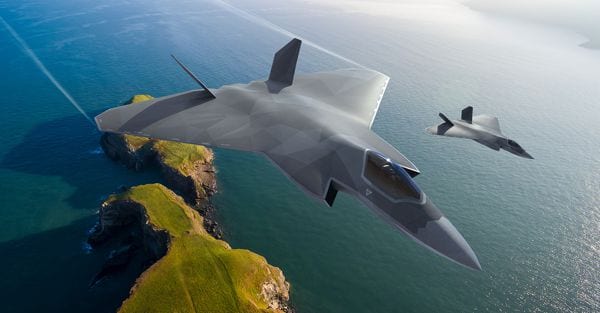
The Gcap involves two countries that are part of the Atlantic Alliance, the United Kingdom and Italy, and Japan. The international collaboration programme aims to develop a next-generation aircraft system by 2035

3' min read
Key points
- The Gcap project
- The "system of systems"
- Japan's growing alignment with the Atlantic Alliance and cooperation in the Indo-Pacific
- Italy's participation in the Rising Sun 2024 exercise in Japan
- With this project, stronger bilateral relations between Italy and Japan
- In the long run, the Gcap will replace the Eurofighter
3' min read
'In an increasingly dangerous world, a stronger relationship between NATO and Japan is necessary'. This has been emphasised in recent hours by NATO Secretary General Mark Rutte. The occasion was provided by a meeting with the Japanese defence minister in Tokyo. "Russia's invasion of Ukraine," Rutte added, "shows that we cannot take our security, which is indivisible, for granted, because what happens in the Indo-Pacific impacts the transatlantic region and vice versa. The secretary emphasised that cooperation in the defence industry should also be increased.
The Gcap Project
.One area where this dialogue is already a reality is that of the Gcap (Global Combat Air Programm), the sixth-generation fighter. It is a project involving two countries that are part of the Atlantic Alliance, the United Kingdom and Italy, and Japan. The international collaboration programme aims to develop a new-generation aircraft system by 2035. Italy's Leonardo is a strategic partner together with Britain's BAE Systems and Japan's Mitsubishi Heavy Industries. It is an equal joint venture (each holds 33.3 per cent). Alongside Leonardo, other leading companies in the sector, such as Avio Aero, Elettronica and MBDA Italia, and their related chains (universities, research centres, SMEs and start-ups) are involved.
The "system of systems"
.The future combat aircraft system, which insiders have christened the 'system of systems', will operate in the five domains, air, land, sea, space and cyber, according to a star structure in which the next-generation fighter will be the 'core platform' connected with other peripheral 'systems', piloted and unmanned.
Japan's growing alignment with the Atlantic Alliance and cooperation in the Indo-Pacific
.The Gcap, point out Alessandro Marrone and Michele Nones in a recent in-depth study by the Institute of International Affairs ('The new partnership between Italy, the UK and Japan on the Global Combat Air Programme') has 'broad geopolitical implications, particularly in shaping the trilateral dynamics between the UK, Italy and Japan. While the first two states share NATO membership, Japan's increasing alignment with the Atlantic Alliance and strengthening bilateral ties with both countries reflect the growing importance of security cooperation in the Indo-Pacific. The programme requires compatibility with NATO standards while incorporating the specific requirements of its founding members, thus adding further complexity to its management'.
Italy's participation in the Rising Sun 2024 exercise in Japan
.The report explains that "Rome's main geopolitical focus remains the so-called 'extended Mediterranean', but Tokyo's involvement in the Gcap broadens its strategic perspective towards the Indo-Pacific. This enlargement is reinforced with increased interregional military cooperation, including Italy's participation in the Rising Sun 2024 exercise in Japan. The tripartite nature of the Gcap also indirectly supports NATO's growing interest in cooperation in the Indo-Pacific and contributes to bringing Tokyo closer to Europe in the defence sector, as also underlined by Japan's new observer status in the Eurodrone project."