
Ryanair seesawing in Dublin, 2025-26 OK but Middle East uncertainty weighs on 2026-27
The conflict 'has created economic uncertainty and we still do not know when the Strait of Hormuz will reopen'. The price of paraffin has 'risen to over $150 a barrel'
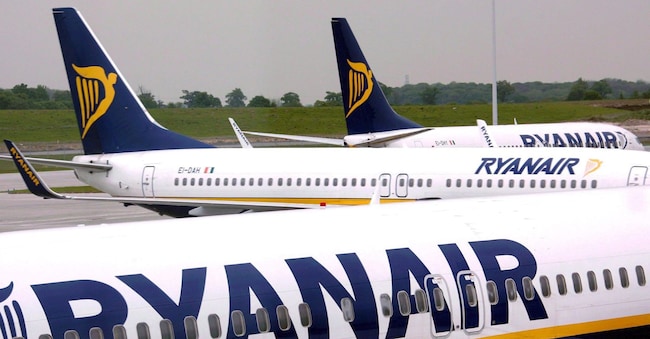
(Il Sole 24 Ore Radiocor)- A swinging session for Ryanair on the Dublin Stock Exchange, following the release of positive 2025-26 accounts, accompanied however by the warning that uncertainties related to the war in the Middle East could weigh on the current financial year and therefore make guidance premature. However, analysts remain mostly positive on the company and this has allowed the share price to recover from its initial losses. Ryanair ended the 2025-26 financial year (as of 31 March) with net profits of EUR 2.17 billion, up 35%. Excluding extraordinary items, including a provision for a penalty from the Competition Authority, the result jumped 40% to EUR 2.26 billion, exceeding the consensus of EUR 2.16 billion. Operating profit was positive at EUR 2.4 billion (+52%) on revenues up 11% to EUR 15.54 billion. Passengers carried increased by 4% to 208.4 million. For 2026-27 the group aims to carry 216 million passengers, an increase of 4%. However, Ryanair warns that the conflict in the Middle East 'has created economic uncertainty and we still do not know when the Strait of Hormuz will reopen'. The price of paraffin has 'risen to over $150 per barrel' and global prices are expected to 'remain high compared to pre-war levels for several months'.
The company points out that while approximately80% of the jet-fuel needed for the 2026-27 financial year is covered at USD 67 per barrel (thus a lower price than the previous year), the remaining 20% is not covered and has therefore been affected by the price surge caused by the conflict. In view of the higher taxation in Europe, increased maintenance costs (given the increasing age of the fleet) and increases in crew salaries, "if uncovered fuel prices remain at their current high levels, unit costs could increase" by around 5%. In addition to this, although at the moment 'demand for travel remains robust, bookings are closer to the date of travel and this reduces visibility. Prices have fallen somewhat in recent weeks due to economic uncertainty, concerns about fuel shortages and the risk of inflation weighing on consumer spending'. The group estimates thatfares for the first quarter ending June will be lower by an average single-digit percentage compared to the same period last year (which, however, included Easter), while prices for the quarter ending September are expected to remain broadly stable. Previously, the company had predicted an increase in fares for the summer season, but made it clear that the final outcome will depend on bookings and last-minute offers during the peak season. In this context, "with zero visibility on the second half of the year and given the high volatility of fuel prices and supply risks, it is too too early to provide meaningful profit forecasts at this stage," the group added. "The final results for FY2027 remain highly exposed to unfavourable external developments, including escalating conflicts in the Middle East and Ukraine, risks of fuel supply shortages, higher prices for longer for 20 per cent unhedged fuel, macro-economic shocks, strikes and poor traffic management in Europe," is the concluding warning.
Ryanair hopes 'to be able to provide shareholders with a clearer picture of first-half fuel prices and costs when it presents its first-quarter results at the end of July'. Analysts at Bernstein focus on the lack of guidance and the outlook showing pressure on fares and rising costs. Moreover, the Irish air carrier's fourth-quarter net loss was larger than expected because ancillary revenue declined and unit costs were largely unchanged. Analysts at Ubs point to slightly better-than-expected 2026 results, but accompanied by greater uncertainty about 2027, which tests estimates for the year. The Swiss bank's experts nevertheless maintain the 'buy' rating with a price target of EUR 33.15. Deutsche Bank also maintains its 'buy' recommendation on the stock with a target price confirmed at EUR 31.50. The recommendation of JP Morgan also remains positive, with a target price confirmed at EUR 35.

