
Ryanair is focusing on training centres. A cornerstone of growth
In an interview with Radiocor, Dara Brady, the airline’s Chief Marketing Officer, sets out the company’s future plans

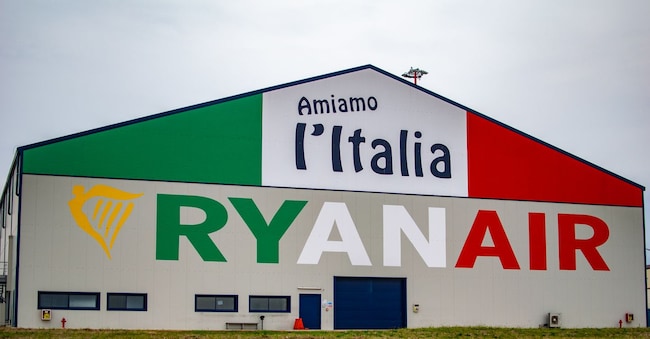
(Il Sole 24 Ore Radiocor)- “Ryanair’s training centres represent a cornerstone of the airline’s growth strategy, supporting the expansion of its fleet – which comprises over 645 aircraft – and its network of over 223 destinations, whilst ensuring safety standards are among the highest in the industry’. This is according to Dara Brady, Ryanair’s chief marketing officer, in an interview with Radiocor, emphasising that ‘thousands of simulator training sessions are delivered every year across the Group’s entire European network. At the Milan Bergamo centre alone, nearly 3,300 training sessions were completed in 2025, demonstrating the strategic importance of the facility within Ryanair’s European training infrastructure”.
Ryanair currently operates six training centres in Europe : Dublin, London Stansted, Milan Bergamo, East Midlands, Kraków and Madrid, which opened in 2025. “All centres are equipped with Boeing 737 simulators and support training on the B737-800 and B737-8200 fleets. Milan Bergamo continues to be a strategic hub within this network, confirming Ryanair’s long-term commitment to the Italian market.”
Economic value generated
“Training centres generate significant economic value at both national and regional levels, creating highly skilled jobs and supporting the entire aviation ecosystem,” continues Brady. In Italia in particular, the Ryanair Training Centre in Milan Bergamo plays a key role in developing professional skills within the sector and in training pilots across the entire Group. “The centre currently employs 31 instructors, including 20 Type Rating Examiners and 11 Simulator Flight Instructors/Type Rating Instructors. The centre runs an intensive training programme: in 2025 alone, nearly 3,300 simulator training sessions were conducted to support the initial and recurrent training of pilots. These activities contribute to the development of highly qualified professionals and generate economic benefits for the local area, supporting employment, accommodation, transport and related services’. More generally, ‘Ryanair is the largest airline in Italia, carrying over 65 million passengers each year and operating an extensive network of domestic and international routes. Its operations promote tourism, connectivity and the economic development of local areas, whilst investments in training and maintenance further contribute to the growth of local economies.”
Future plans
“Ryanair continues to invest significantly in its training infrastructure as part of the Group’s long-term growth strategy, by expanding simulator capacity, the opening of new centres and collaboration with leading training providers”, emphasises the senior executive, who adds that “these investments form part of a broader development plan covering the fleet, staff and infrastructure across Europe, including Italia”. Against this backdrop, “Ryanair is continuing to expand its training capacity to support fleet growth and meet the rising demand for qualified pilots”. During 2026, through its six training centres, Ryanair plans to train over 1,250 new trainee pilots; promote over 350 First Officers to the role of Captain; deliver over 17,000 recurrent simulator training sessions; and expand its centres in Madrid and Kraków with the installation of four new full-flight simulators by the end of the year, bringing the total simulator fleet to almost 40 units.
“The company,” Brady assures us, “will also continue to assess further opportunities for expansion of its training infrastructure in line with its future growth plans. Alongside its investment in training centres, Ryanair is also continuing to strengthen its maintenance infrastructure, which brings similar benefits in terms of skilled employment, skills development and regional economic growth. The new maintenance facility planned for Calabria will further contribute to the region’s economic development, creating highly skilled technical jobs and consolidating Ryanair’s long-term commitment to Italia. In this context, measures such as the abolition of the municipal surcharge can play a decisive role in encouraging new investment and supporting further growth, connectivity and tourism development at a regional level.”


