Libya

Saif Gaddafi killed during militia clashes in Zintan

This was reported by Al Arabiya citing a source close to the Gaddafi family. The news was reportedly confirmed by his lawyer ‍ Khaled el-Zaydi.

Aggiornato alle ore 20:48

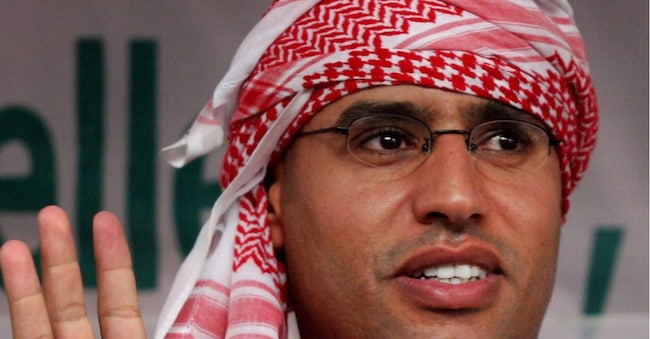
Saif al-Islam Gheddafi in un'immagine del 2004. ANSA/MAST IRHAM

3' min read

Translated by AI
Versione italiana

3' min read

Translated by AI
Versione italiana

Saif al-Islam Mu'ammar Gaddafi, the most prominent son of the late Libyan leader Muammar Gaddafi, was reportedly killed following heavy armed clashes that began early this afternoon in the al-Zintan area of Libya.
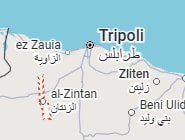
al-Zintan

This was reported by Al Arabiya and Libya al-Ahrar citing a source close to the Gaddafi family. The news was reportedly confirmed by his lawyer ‍ Khaled el-Zaydi.

Loading...

Media reports have it that the perpetrators of the attack, four in number, allegedly injured him seriously while he was in the garden of his home and quickly fled the scene immediately after the raid.

According to the same source, armed clashes between local militias and militias loyal to the former Gaddafi regime continued for several hours in the afternoon in the desert area of al-Hamada and near Zintan.

Three sources close to Saif Gaddafi also confirmed to the Alwasat news outlet his killing, without specifying the circumstances under which it took place.

Mohammed Abdul Muttalib al-Huni, former advisor to Saif Gaddafi, wrote on his Facebook page: "The hand of betrayal struck down and murdered a man who loved Libya and dreamed of its prosperity and rebirth. He was Saif al-Islam Gaddafi'. Confirmation of his death also came from his advisor Abdullah Othman Abdurrahim

Long regarded as his father's successor, Saif Gaddafi announced his candidature for the presidency in 2021, but the elections were later postponed.

Who was Saif al-Islam Mu'ammar Gaddafi

Saif al-Islam Mu'ammar Qaddafi (Tripoli, 25 June 1972 - al-Zintan, 3 February 2026) was a Libyan politician,second son of Libyan leader Muʿammar Qaddafi.

Since the day of his father's death, he has been considered the leader of the national resistance of the Libyan Jamāhīriyya to the National Transitional Council (NTC). The Socialist People's Libyan Arab Jamāhīriyya was the official form of government and name of Libya under the dictatorship of Muʿammar Gaddafi from 1977 to 2011.

Long considered one of the most influential political figures in Libya after 2011 but also among the most divisive in the country, despite being wanted by the International Criminal Court for crimes against humanity, Saif, whose full name means 'The Sword of Islam', 53, reportedly lost his life in the city of Zintan in clashes between opposing militias.

By the 2000s, Saif al-Islam had built up a profile distinct from the traditional centres of power, with a strong external projection, relations in Western circles and a public image associated with gradual 'reforms' and philanthropic initiatives, in particular through the family-related foundation.

At that stage, analysts and observers described him as a possible successor to his father, who contended with his brother Mutassim Gaddafi, and as a more expendable interlocutor with foreign countries.

On the academic side, he is associated with the London School of Economics, not least because of the affair of relations between the university and the system of donations and collaborations linked to Libya at the time, which was the subject of an independent investigation commissioned by the same university.

At the outbreak of the Libyan civil war in 2011, he sided with his father, becoming, together with Musa Ibrahim, the government's official spokesman, the preferred interlocutor between the former government and the international press.

As the civil war became more radicalised, Saif al-Islam Gaddafi gained more and more importance as the reference point for the all-out resistance against the Transitional National Council militias and against NATO.

A brash character, a skilled speaker, the Colonel's second son was arrested on 19 November 2011 while trying to flee to Niger, a month after the death of his father. Since his capture, the international media, but primarily the Libyans themselves, have followed the trial with great interest. Held in Zintan prison until 5 July 2016, he was sentenced to death in July 2015 by a Libyan court on charges of war crimes and repressing protests during the 2011 revolution. On 5 July 2016, the day of the end of Ramadan, Saif was released from prison by the government in Zintan, under an amnesty passed in 2015 by the Tobruch government.

Then, unexpectedly, things changed when on 14 November 2021 he announced his candidature for Libya's next presidential election, which had never been held before. A move he made despite still being wanted by The Hague.

Copyright reserved ©
Loading...

Brand connect

Loading...

Newsletter

Notizie e approfondimenti sugli avvenimenti politici, economici e finanziari.

Iscriviti