
Saks Global files for bankruptcy. Out goes CEO Baker, in comes van Raemdonck
Burdened by debts after the purchase of Neiman Marcus and slowing luxury sales, department store chain Saks had not honoured a $100 million payment due on 30 December. Its debt now totals about five billion dollars

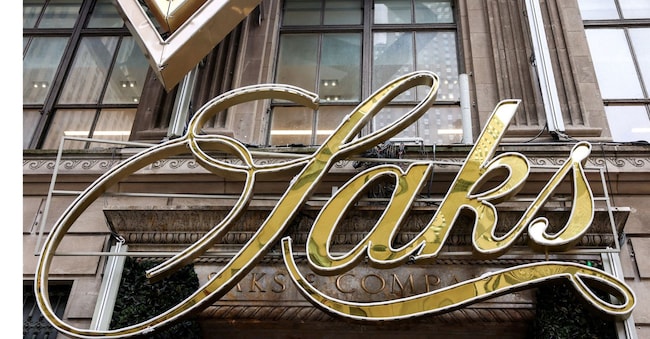
Saks Global has filed for bankruptcy (under US Chapter 11) in the US Bankruptcy Court for the Southern District of Texas (case 26-90103) and at the same time, its ceo - appointed on 2 January, less than a fortnight ago - Richard Baker, says goodbye to the luxury shopping giant. In his place comes Geoffroy van Raemdonck, currently a member of the board of directors of Moncler Spa, who said he was "looking forward to taking on the role of CEO and continuing the transformation of the company so that Saks Global continues to play a central role in the future of luxury retail," reads the release.
Clouds are gathering over the prospects of US luxury fashion, not least because the list of 30 largest creditors - contained in the application filed on 13 January - includes not only the big fashion giants such as Chanel ($136 million), Kering ($60 million) and LVMH ($26 million), but also several Italian fashion houses, such as Gruppo Ermenegildo Zegna ($26 million, but which still considers Saks a "key strategic partner"), Brunello Cucinelli ($21 million, which said it was "confident in the new management"), Armani ($10.7 million), Roberto Coin, Sisley and Dolce & Gabbana (just under 10 million). However, Saks Global said - in a note - that its shops will remain open for now after finalising a $1.75 billion financing package from its creditors and that the plan 'will provide the necessary liquidity to fund Saks Global's operations and turnaround initiatives'. The group has, however, assured that it will "honour all customer programmes, make future payments to suppliers and continue to provide salaries and benefits to employees". The court proceedings should give the iconic luxury retailer the chance to negotiate a debt restructuring with creditors or find a new owner. Otherwise, the company may be forced to close down.
By the way, Saks Global has estimated, in documents filed with the US bankruptcy court in Houston, Texas, that its assets and liabilities are between $1 billion and $10 billion.
The Financing Agreement
The financing agreement - the company's own note explains - provides for an immediate cash injection of USD 1 billion through a so-called debitor-in-possession loan from a group of investors. According to the company, financing worth $240 million would be available through an asset-backed loan from creditors based on the company's assets.
In addition, it will have access to $500 million in financing from the investor group once it successfully emerges from bankruptcy proceedings, expected by the end of the year, said the Saks Global note, which also asked the court to postpone the filing of the group's financial statements by 45 days to 13 March 2026. In total, about USD 1.75 billion.
Crisis: from covid to purchase of Neiman Marcus
But how did it come to this? Already struggling with the pandemic as competition from online outlets increased and brands started selling more items through their own shops, the real blow came with the Neiman Marcus takeover. Outgoing ceo Richard Baker was chairman of Hudson's Bay Co. when it bought Saks Fifth Avenue in 2013 and was the main architect of Saks' acquisition of rival Neiman Marcus Group for $2.65 billion in 2024, creating Saks Global.
In 2024, in fact, Baker masterminded the acquisition of Neiman Marcus by the Canadian Hudson's Bay Co., which had owned Saks since 2013, and subsequently spun off the US luxury business to create Saks Global, bringing together three names that have defined American high fashion for more than a century. The $2.7 billion deal relied on about $2 billion in debt financing and equity contributions from investors including Amazon, Salesforce and Authentic Brands, listed in the court filing as equity investors in Saks Global.
The deal burdened the new company with over $2 billion in new debt, just as global luxury sales slowed. Suppliers began withholding supplies when Saks was unable to pay them in full and on time, exacerbating the company's problems and contributing to low inventories. Saks had also failed to honour a $100 million payment, due on 30 December, related to its acquisition of Neiman Marcus. Its debt now stands at about five billion dollars, against annual sales of less than six billion. Unlike its competitors Bloomingdale's and Nordstrom, Saks was not interested in chasing the slightly more affordable luxury market. Even this choice would not have been good for the accounts. The curious thing is that replacing Richard Baker at the head of Saks Global is Geoffroy van Raemdonck, CEO of Neiman Marcus Group from 2018 to 2024 and who had resigned just as the company was acquired.

