
Saline candidate Unesco, in Trapani the clash over the future of the port
The project for the Biosphere Reserve between Trapani and Marsala opens the confrontation between environmental protection and port development. Entrepreneurs ask for clarification on the possible effects for the port.
by Nino Amadore
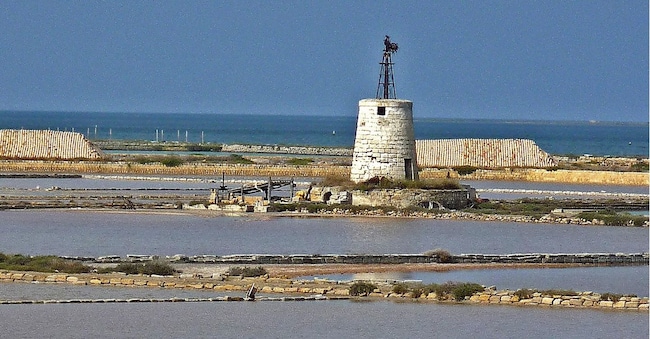
A port that handles, according to estimates, at least two million tonnes of goods a year, guarantees connections with the Egadi Islands and Pantelleria with around a million passengers, and in recent years has also begun to intercept a growing share of cruise traffic. A few hundred metres away lies one of the Mediterranean's most delicate ecosystems: the salt marshes of Trapani and Paceco, a protected wetland and fundamental habitat for migratory birdlife. It is along this coastline that a debate is opening in Trapani that is destined to affect the future of the area: the candidature of the area for UNESCO's MaB - Man and Biosphere programme.
The Dossier
The dossier for recognition as a Biosphere Reserve aims to enhance the environmental system of the salt pans and wetlands between Trapani, Paceco and Marsala. The objective is to promote a sustainable development model that integrates environmental protection, tourism and traditional economic activities related to salt production. The project was publicly presented last December, when the promoting committee illustrated the contents of the dossier and the preliminary perimeter of the candidate area. However, the candidature has not yet reached the formal international stage: the dossier must be sent to the Ministry of the Environment and then forwarded to Unesco. According to the preliminary perimeter, the area of the future biosphere reserve should include the entire system of salt marshes and coastal wetlands between Trapani and Marsala, even touching the city's urban and port area. This has helped fuel the debate on the relationship between environmental protection and port development.
Port operators' concerns
It is precisely the relationship with the port of Trapani - one of the main economic infrastructures in western Sicily - that is the most delicate knot that has emerged in recent weeks. The first critical stances have come from the port world. Among these is that of maritime entrepreneur Gaspare Panfalone, who has raised doubts about the method followed in the candidature process. "Environmental protection is an objective that no one questions, but it must arise from a serious and transparent debate with the territory. In the case of the salt pans' candidature as a Unesco Biosphere Reserve, the fear is that the path has been built without a real involvement of a fundamental part of Trapani's economy: the port,' he says. Panfalone, who is aligned in this battle with Sicindustria Trapani, meanwhile poses a problem of method: 'It does not appear that the Port Authority, the Maritime Authority or the port's operators have been involved in the comparison tables, despite the fact that the port represents one of the city's main economic engines. It is difficult to imagine a project that redesigns the area's territorial and environmental balance without opening a dialogue with the port community, which guarantees jobs, businesses and development to the area'. And then there is the question of the impact that Unesco recognition could have on the port's future. "The port is a strategic infrastructure for Trapani and for the entire economy of western Sicily. Before proceeding, it is essential to clarify whether and how any new environmental balance could affect interventions such as dredging, the modernisation of the quays or the development of traffic. These are issues that concern the future of the port and therefore deserve an open and transparent debate with the port community'. A position shared by the port operators, who pointed out that neither the Maritime Authority nor the Port Authority of the Western Sicilian Sea would be involved in the candidature process. The fear is that the Unesco candidacy could result in new environmental or landscape constraints capable of affecting interventions considered strategic for the port's development, such as the dredging of the seabed, the modernisation of the quays and the strengthening of cruise traffic.
What Unesco Recognition entails
In reality, recognition as a Biosphere Reserve under the UNESCO MaB programme does not automatically entail new legal constraints on economic activities or infrastructure.
Unlike World Heritage sites, biosphere reserves do not introduce direct planning bans or change existing regulations. Rather, they aim to promote sustainable development models through spatial planning tools and shared management projects. The biosphere reserve model envisages a subdivision of the territory into three levels: a core area, for maximum environmental protection; a buffer zone, for ecological protection; and a transition area, where cities, productive activities and infrastructure are located and where economic development must be compatible with sustainability goals. In the MaB model, important economic infrastructures can also be part of the transition area. In various European contexts, ports and maritime infrastructure have been involved in environmental innovation programmes, from reducing emissions to experimenting with more sustainable energy systems. According to some observers, this could also represent an opportunity for the Trapani port of call, favouring projects related to the sustainability of maritime mobility and the development of sustainable tourism initiatives linked to connections with the Egadi islands.


