
Salt pans, that's why they want to be recognised as an agricultural activity
Confagricoltura project with the 'salt farmers' of Sicily, Sardinia, Apulia and Emilia-Romagna to obtain an ad hoc measure from the government
2' min read
2' min read
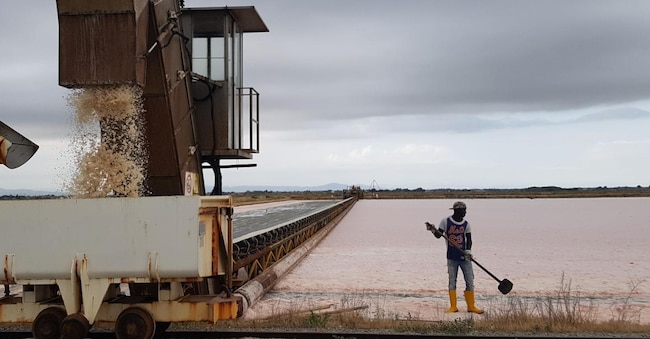
After Trapani, Margherita di Savoia and Cagliari, it is in Cervia (Ravenna) that Confagricoltura's tour of Italy's salt pans comes to an end, with the aim of obtaining government recognition of 'saliculture' as an agricultural activity, in the wake of the French model, because the 300 operators of this niche activity follow seasonal cycles and the vagaries of nature just like farmers in the fields and are key players in safeguarding the natural environment and enhancing ecotourism.
Salt-pan 'farmers' tend dedicated areas of sea water and exploit the action of sun and wind to harvest natural salt. There are about 10 thousand hectares of salt marshes cultivated in Sicily, Sardinia, Apulia and Romagna and they produce 1.2 million tonnes of salt (out of a total of 4.2 million tonnes of salt 'Made in Italy' with rock salt and brine) for over 60 million euro in value.
Nature Conservation
.Already at the 'kick-off' event in Rome last autumn, Under-Secretary for Agriculture Patrizio La Pietra had expressed his support for the initiative, and the bill is now in his hands.
"If we had the agricultural year, we could budget the actual salt harvest, which for us takes place between August and September, and the actual value, which this year was disastrous due to the rainfall and suffered 9 million euro in flood damage. In addition to the fact that, as an agricultural activity, we would benefit from facilitations and opportunities to enhance the environmental and nature conservation work we do in this 827-hectare oasis," explains Giuseppe Pomicetti, president and CEO of the Parco della Salina di Cervia. The company was set up in 2002 under public control to safeguard an ecosystem that is a natural population reserve for migratory and resident birds (as well as a wetland of international importance) and where an ancient tradition of harvesting the 'sweet salt of Cervia' is perpetuated, almost completely free of bitter chlorides and with a very high concentration of sodium chloride (99%), thanks to the microclimate. With small volumes and margins, we are talking about 150,000 quintals of salt per year for not even 2.5 million euro in value and 25 people employed in the salt mine, which has so far been counted as a trade activity, attracting 30,000 tourists/visitors each year.
The advantages of agritourism
."Bringing marine saliculture closer to farming would further enhance tourism, strengthening the link between land and agri-food products. We would work together in favour of the environment and sustainability, also to the advantage of the agrotourism sector," emphasises Nicola Gherardi of Confagricoltura, the country's oldest agricultural organisation representing 45% of the primary sector's production and added value, and the project leader for including sea salt farming among agricultural activities.
"Integration is not only logical and rightful, but also profitable for the country's economy," added Gherardi, speaking at the Magazzino del Sale in Cervia at the conference 'Agriculture cultivates salt', which closes the tour of Italian salt pans and now passes the ball to Masaf for approval of the law text.


