
Salva casa, Sardinia blocks mini-houses but now there is a challenge
The Regional Council approves the draft law transposing Decree 69

2' min read
Key points
2' min read
Sardinia freezes mini-houses. And it assumes the risk of a forthcoming, very probable appeal by the government to protect the unitary application of theSave Home (Decree no. 69/2024) throughout the country.
This is the outcome of several months of in-depth study and of a week dedicated by the island's regional council to dismissing a bill that, in essence, tweaks and updates several aspects of the Sardinian town-planning and building law (dated 1985) and, at the same time, incorporates the Salva casa (Save house), although it does not do so en bloc. Yesterday afternoon saw the approval of the regulation, which is already a case in point: it is the first heavy derogation that a local government decides to adopt to the decree on sanatoria and regularisations, wanted by the Infrastructure Minister Matteo Salvini.
It is no coincidence that, a few weeks ago, the minister himself wrote to the Alessandra Todde-led council, calling for corrective measures and explaining that "building standards are an essential level of services concerning civil and social rights, to be guaranteed throughout the national territory, since it is not possible to accept, on aspects of primary social and economic importance, a fragmentary and diversified protection of the sector's regulations". Words that hint at a forthcoming challenge by the executive. A step feared by many in the Regional Council and discussed at length during the two days of debate and voting in the assembly.
Accessibility
.At the centre of the dispute is Article 11 of the bill. "On the subject of possibility of buildings and exceptions to health and hygiene requirements," says the first paragraph, "Article 24, excluding paragraphs 5-bis, 5-ter and 5-quater, and Article 26 of Presidential Decree no. 380 of 2001, and subsequent amendments and additions, apply. The exclusion, out of technical language, concerns the passages of the Salva casa that, when the decree was converted, started the process of rethinking the criteria for the habitability of buildings, now dating back to 1975 and considered anachronistic by many.
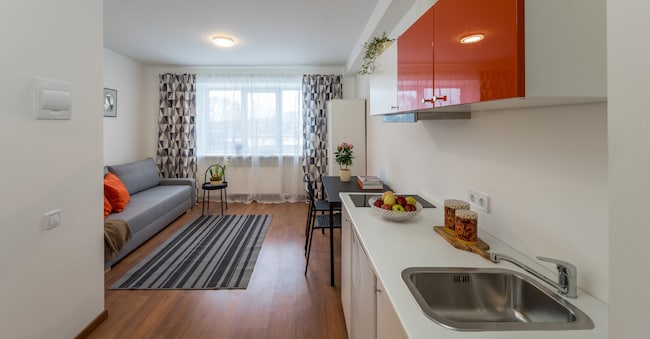
In those passages it says that the qualified designer is authorised to certify the conformity of the project with the hygienic-sanitary regulations in the case of rooms with a minimum internal height of less than 2.70 metres, up to a maximum limit of 2.40 metres, and 'of single-room accommodation, with a minimum surface area, including services, of less than 28 square metres, up to a maximum limit of 20 square metres, for one person, and less than 38 square metres, up to a maximum limit of 28 square metres, for two people'.


