
Sam Altman monetises: €8 'Go' plan arrives. And ChatGPT discovers the commercial
Sam Altman monetises: €8 'Go' plan arrives. And ChatGPT discovers the commercial

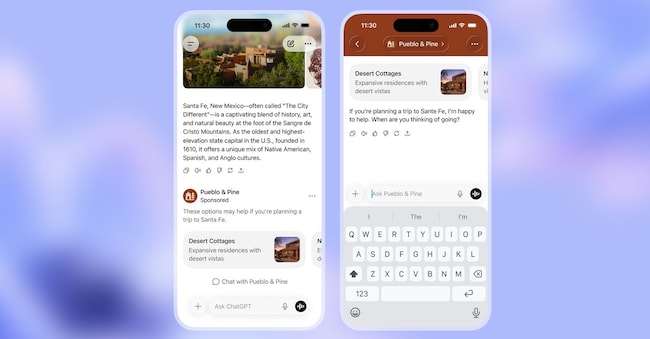
Sam Altman has decided to break the mould. Silicon Valley does not give gifts and the 'bubble' of computing costs must be deflated with turnover. ChatGPT Go arrives: 8 euros per month. At the same time it has started testing in the US for users of the free version with advertising. Ads will be shown in a separate section, labelled and linked to products or services relevant to the chat topic, This is the democratisation of the chatbot, or rather, the assault on the mass market.
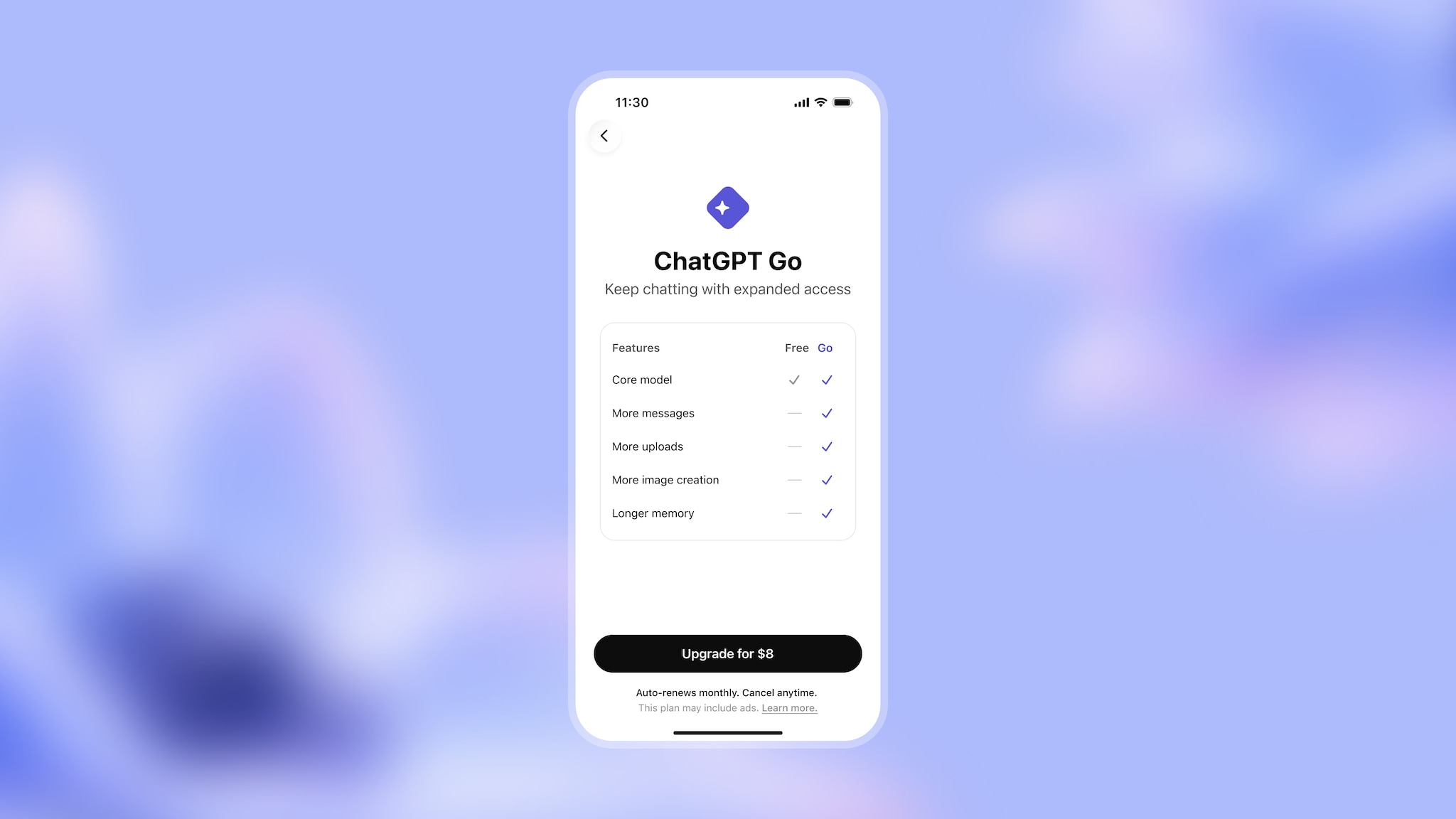
Why ChatGPT Go?
Running language models costs money. A lot. We are talking billions of dollars in Nvidia chips and data centres that heat up like a small star. OpenAI realised that between the 'Free' (limited) plan and the 20 euro 'Plus' (a luxury for many) there was a black hole. The Go plan serves to suck in those users who want more, but don't want to give up their Netflix subscription to talk to an algorithm. When we talk about memory in an LLM (Large Language Model), don't imagine a dusty archive. It is more like a dynamic context. ChatGPT Go recognises you, remembers that you hate coriander or that you write code in Python. This transforms the software from a simple encyclopaedia to a personal assistant that knows who you are. A huge competitive advantage: if the AI knows you, it's hard to give it up for the competition.
Why advertising?
The real news, however, is another: OpenAI is opening up to advertising postits. For now only in the US and only for the Free and Go plans. The metaphor is simple: ChatGPT is becoming the new television. Here are Altman's stakes so as not to scare the market. How does it work? OpenAi makes it known that the bot's answers will not be bought. If you ask 'what's the best car', it won't answer 'Tesla' just because Elon (or rather, Elon certainly didn't) or Toyota paid for it. The data will not go to advertisers. They stay in house. OpenAI also states that it does not sell data to advertisers and that it offers user controls, such as the possibility of deactivating personalisation and managing advertising-related data. Furthermore, advertisements should not be shown to minors and should be excluded from areas considered sensitive, with a focus on topics such as health and politics. Finally, those who do not pay, as also happens on the web, will have access to the service in exchange for exposure to the advertisement. If they wish, by paying, they can switch to a plan without advertisements. Basically, the advertisement will not interrupt the 'chat' with the Ai, it will merely accompany the conversation depending on the context. The latter should be the real novelty.
How will it end?
We started with the idea of pure, almost divine intelligence, and we end up with banners. It is the capitalist realism of technology. OpenAI has to bill to feed the research monster. If you don't pay enough with your wallet, you pay with your attention. The Go plan is the horse's move: lower the barrier of entry to armour hegemony before Google and Apple close the loop. The game is wide open.


