
Samsung soars in Seoul (+8.5%) on the back of Nvidia's accounts and agreement with trade unions
The tech company benefits from the Santa Clara giant's above-expected results and the agreement reached on pay bonuses that put a planned strike on hold

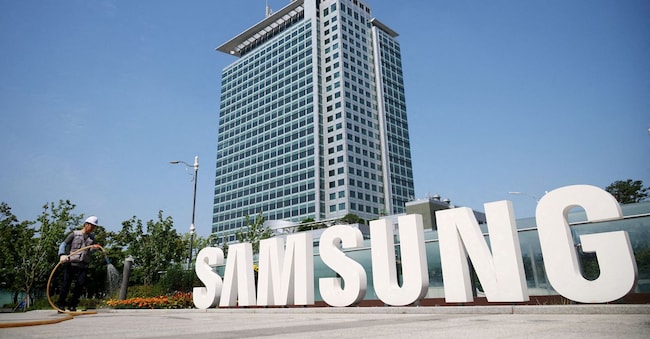
(Il Sole 24 Ore Radiocor) - Samsung Electronics posted a gain of 8.51% on the Seoul Stock Exchange (+8.4% Kospi Composite) on the back of the US technology giant Nvidia's results and the agreement reached with trade unions.
In order, the electronics company, like other Asian tech stocks, benefited from the Santa Clara-based group's outperformance numbers, which more than tripled net profit to USD 58.3 billion in the first quarter and increased revenues by 85% to USD 81.6 billion. Also lending confidence to the industry were the words of the CEO, Jensen Huang, who spoke of an "extraordinary acceleration" in infrastructure projects to meet the ever-increasing demand for artificial intelligence. Huang went on to say that, in the long run, the economics of artificial intelligence will change and that the second category (his term for the use of technology outside of hyperscalers, ed) will become more important. "And I hope that within the next five years the physical AI and robotics segment will grow incredibly fast," he said. These comments have given confidence to investors for the future of the sector, as the narrative is shifted beyond data centres (the source of huge investments and - consequently - the source of doubts about the sector's resilience) to robotics.
But also boosting Samsung's stock is the agreement on pay bonuses reached by the group with its union, which puts a planned strike on hold. This agreement, 'should shift investors' focus to fundamentals', points out Ricky Seo of Hsbc Global Research in a note. The analyst expects Samsung to regain leadership in chip products such as high-bandwidth memory4, double data rate5 and triple cell solid-state drive. Hsbc raised its operating profit forecast for Samsung's second quarter by 16% to 87 trillion won, citing higher chip prices and increased demand for data servers. According to Hsbc, this projection would be up 21% from the previous quarter and more than double from a year earlier.

