
Samsung, from noodles to chips: the AI challenge for the 233 billion giant
The former Daegu trading company closes a record 2025, but remains caught between Apple's lead and the advance of Chinese brands. New strategy focuses on global design and semiconductor integration to defend leadership in the centenary year of its founding.

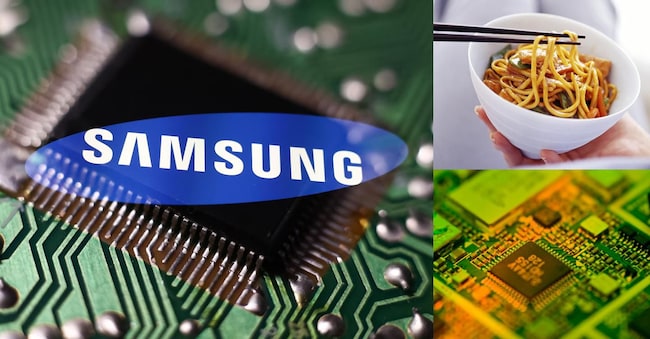
On 1 March 1938, a young Korean entrepreneur, Lee Byung-chul, registered a small trading company in Daegu selling noodles, dried fish, dried fruits and vegetables. Eighty-eight years later, Samsung is at the heart of South Korea's largest private conglomerate, producing memory chips, smartphones, televisions and refrigerators, and at the centre of the global race for artificial intelligence. In 2025, the group ended the year with more than $233 billion in revenues, a new all-time high, and continues to vie with Apple for world supremacy in smartphones, while a generation of Chinese competitors erodes its market share.
As Mehran Gul, author of The Geography of Innovation, also recounts, 'Samsung's story is that of a company that was born in the scarcity of colonial Korea, grew up under the protection of the state, became a world champion of consumer electronics, and is now committed to proving that an almost 100-year-old giant can still reinvent itself in the age of AI'.
From noodles to "three stars"
The name Samsung means 'three stars' in Korean, a symbol of greatness and longevity. The company started out as a food trading company, based in Daegu. In the early years, the business was simple: import-export of food products, particularly to Manchuria and Beijing.
After the end of World War II and the Korean War, Lee shifted the group's centre of gravity towards activities considered strategic for the country's development: sugar, textiles, insurance, logistics. This was the beginning of the transformation into chaebols, the family-controlled industrial conglomerates that were to become a feature of the South Korean economy.
The leap into electronics

