San Pietro di Positano: family history and excellence in luxury hospitality Made in Italy
Hotel San Pietro in Positano, a successful family legacy, is distinguished by its luxury hospitality and fascinating history and is the hotel that has made the Amalfi Coast famous throughout the world, run for 55 years by the Cinque family
by Sara Magro
4' min read
Key points
4' min read
We will never tire of saying this. There are five stars and five stars. And the San Pietro di Positano is part of those chapters in the history of Italian tourism that have placed it at the top of the luxury hospitality pyramid. First of all, it is part of our heritage of family hotels that not only endure, but in some cases perform better than the big international companies. If the family works, it is an added value. But it has to work. "It takes discipline, as in all things," says Vito Cinque, co-owner with his brother Carlo and mother Virginia. And with its 97% occupancy, San Pietro works.
The beginning of a long adventure
.Her story begins with Uncle Carlino, a legend on the Amalfi Coast. He lost his mother at the age of nine and went to live with his older sister, who went back and forth to Positano where her husband had land bordering the present hotel. When he grew up, his father gave him a small house to keep him from an inevitable emigration to America. And he immediately transformed it into a hotel - the Miramare - the second one opened in Positano. (It still exists, and is run by the cousins of the Cinque, who also own Palazzo Murat in the centre). In the 1940s, the Miramare became Positano's most famous hotel. Carlino spared no expense in pampering his guests - English lords and Indian princesses - and bought two Riva motorboats, a Tritone and an Aquarama, to take them around. Everything goes swimmingly until relatives who had made their fortunes in America return home, claiming their inheritance and eroding the kingdom that Carlino had built for himself. So, a piece here, a piece there, he finds himself with the debts he had accumulated, and almost nothing in his pocket. Saving him is his sister, Vito and Carlo's grandmother, who buys all the shares in the hotel, and sells him a rocky piece of land near the fishermen's church dedicated to St Peter.
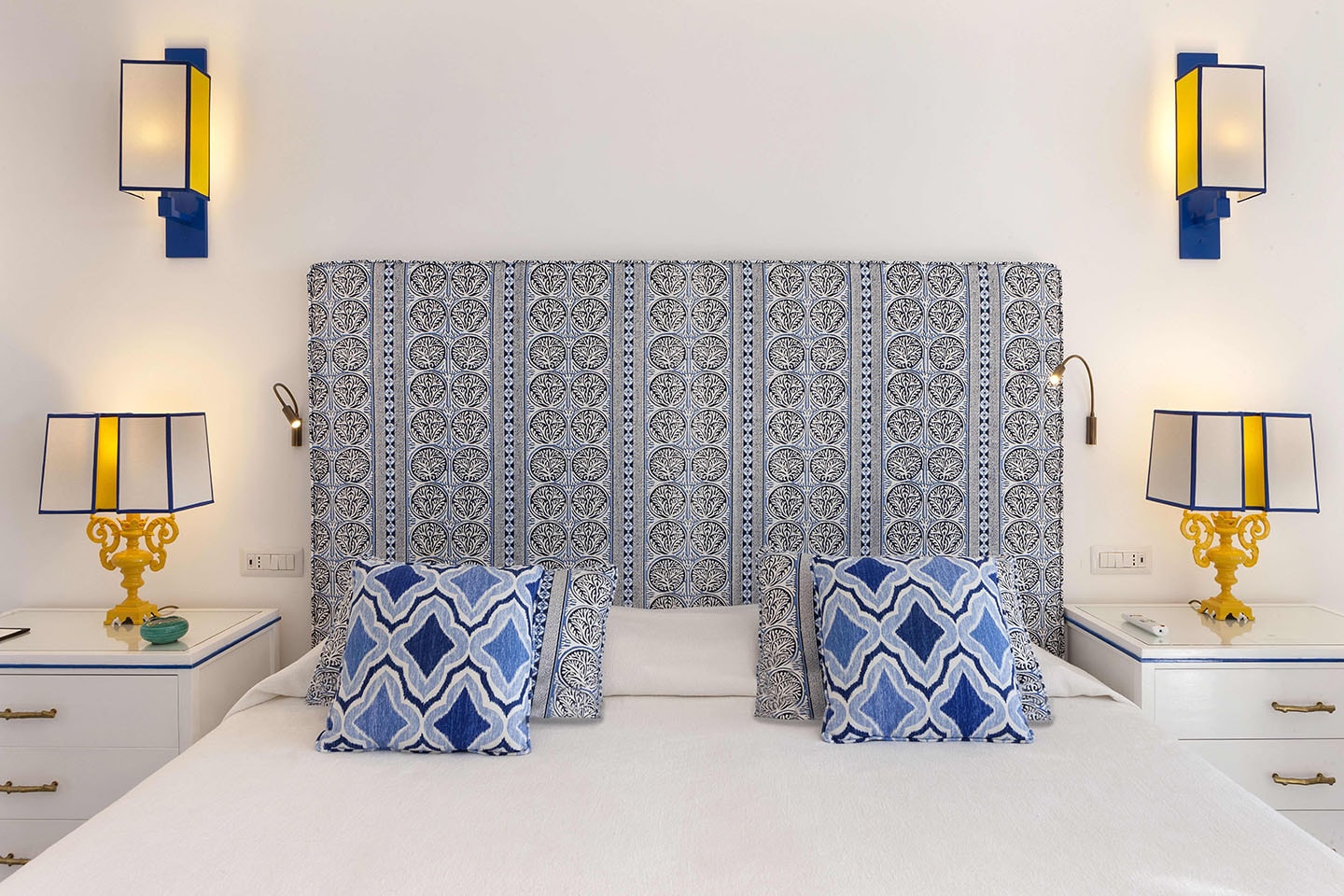
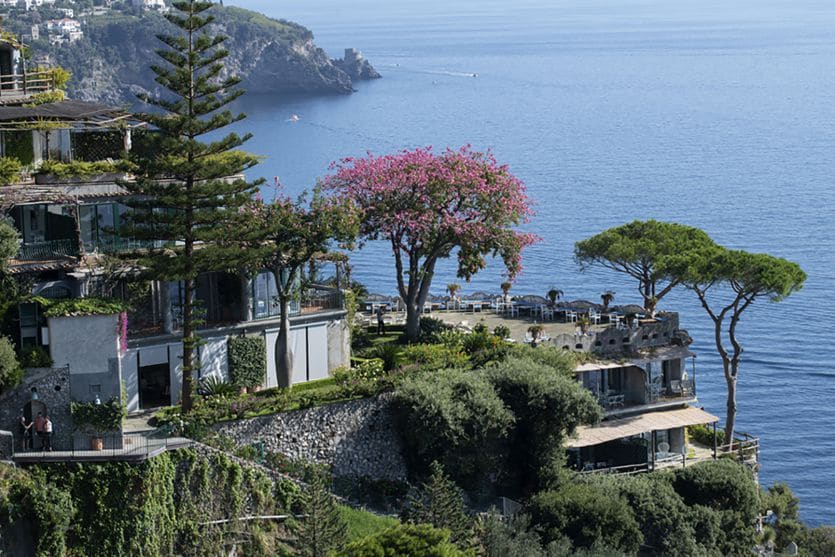
Here, in 1962, Carlino started from scratch by building his own house (now room number 23), with a large terrace on which he organised the most mundane parties as usual, and soon a new hotel with the help of his grandchildren Salvatore and Virginia. Thus begins the story of San Pietro. In his whimsical and incorrigible confusion, Carlino wrote a will in which he declared the two nephews universal heirs. Too bad that, instead of signing it at the bottom, he did so on the envelope, invalidating the document. Upon his death, it took almost twenty years to settle the 32 relatives from all over the world. The same thing happened when Salvatore died, before making his will. Since he had no offspring, Carlo and Vito, Virginia's sons, were the obvious heirs to the estate, but they too had to deal with debts and other heirs. In the end, the two brothers managed to liquidate everyone with the power of the hotel: 18 billion in one year. Vito explains: 'San Pietro forces you to choose the management. You wanted to do one thing? He forces you to do another. Twenty-six years I and 29 my brother, we rolled up our sleeves to carry on the business. We grew up here, the old customers knew us since we were children. Then we studied, I also went to hotel school in Switzerland, and two years of military service, where I learnt discipline'.
At St Peter's today there is still mother Virginia, ever present at just 90, and her two sons.
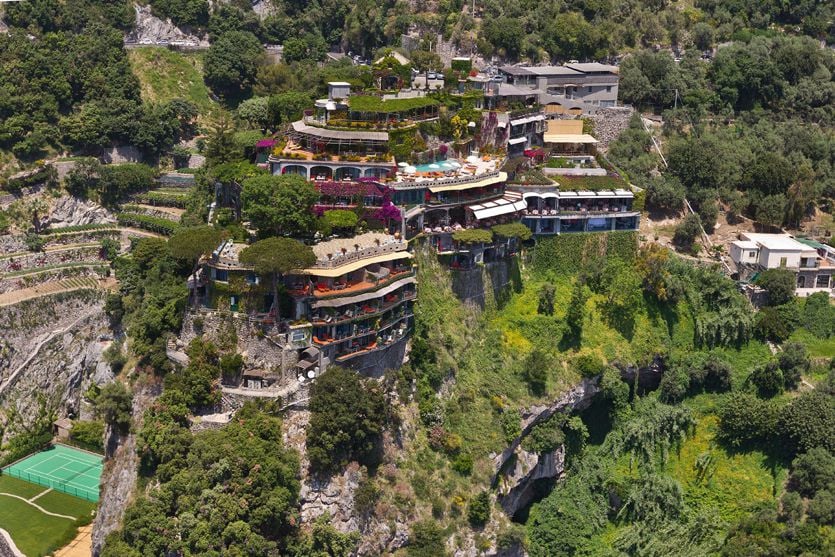
But what is Positano like today? 'Before the pandemic, there were many more Italians and Europeans. Americans were 45%. The problem was afterwards. It's true that prices went up, but so did services. To be the best player you have to train, right? You never stop investing. Before we had 137 employees, now there are 202,' explains Vito. Where they have found in an industry where finding qualified personnel, especially after the pandemic, seems to have become impossible. The point is that the employees are treated with the utmost care. A hotel has been bought for staff accommodation, shifts are well thought out, and there are annual bonuses. This year they organised a refresher course for heads of department at Cornell University in the United States, the most important for the hotel industry. "For us, continuous training is fundamental," explains Andrea Zana, director of San Pietro. "Soon we will start doing in-house academies."