Farewell to the champion

Sandro Mazzola: from son of the ‘Grande Torino’ to the ‘Baffo’ of the ‘Grande Inter’

Mazzola, who passed away at the age of 83, was, alongside Gianni Rivera, one of the greatest players to come out of Italian football

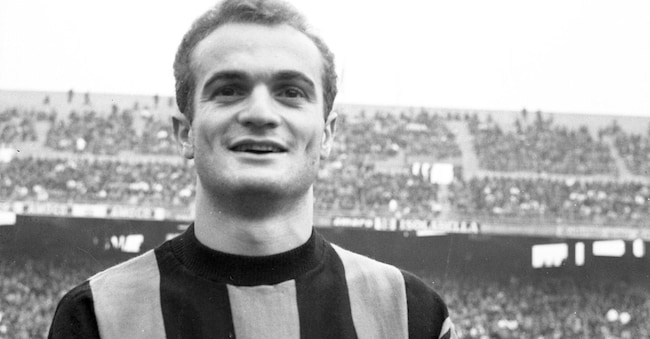
In una foto di archivio di Sandro Mazzola. ANSA

6' min read

Translated by AI
Versione italiana

6' min read

Translated by AI
Versione italiana

It may be a coincidence, though… Sandro Mazzola, the most famous ‘moustache’ in Italian football, has passed away on the very day that San Siro Stadium celebrates its 100th anniversary. Of course, it may be a coincidence, but one cannot help but feel that the two are inextricably linked. They are both symbols, both protagonists of a Milan that reached its zenith in those now legendary 1960s, when Mazzola’s Inter – the team of the secular prayer (“Sarti-Burgnich-Facchetti-Bedin-Guarneri-Picchi…”) was recited like the Lord’s Prayer during Mass.

Sandrino, who turned 84 on 8 November, had not been well for some time. Everyone knew it; the end was drawing near. But we hoped that with one of his trademark ‘serpentine runs’, ‘Il Baffo’ would manage to escape it, just as he had done in Budapest in 1966 against Vasas, dribbling past five opponents, including the goalkeeper. It was an extraordinary goal because it seemed as though Mazzola was enjoying dragging it out indefinitely. “Come on, put it in!” everyone shouted, caught up in that unforgettable moment of magic.

Loading...

Sandro Mazzola, una vita in nerazzurro

Photogallery14 foto

In the end, he scored, but more than the goal itself, it was that magnificent run that remains etched in the memory – a symbol of Juventus’ style of play that is difficult to explain to those who did not experience it first-hand. Nowadays, of course, there are Yamal’s dribbles, Mbappé’s bursts of speed and Messi’s acrobatic feats. But that goal by Mazzola, in the years when Italia was savouring its rebirth after the disasters of fascism and the war, was something more. It was a sign that we’d made it, that we’d regained our standing, that we still counted for something in the world.

Sandro Mazzola, like Gianni Rivera, captain of the Rossoneri, was one of the finest players to emerge from Italian football during that era. Two captains, almost bound by an invisible thread, representing that effervescent and unique Milan of the Inter–Milan derbies immortalised in Adriano Celentano’s song (“There were a hundred thousand of us at the stadium that day”) – a Milan whose vibrant splendour, through some miracle of time, can still be felt today.

Mazzola’s career record is extraordinary: with Helenio Herrera’s Inter, he won four Scudetti, two European Cups and two Intercontinental Cups. He played 70 matches for the Italian national team, scoring 22 goals. In 1968, he was European champion and in 1970, he was runner-up in the World Cup, losing 4–1 to Pelé’s Brazil in Mexico after beating Germany 4–3 in the much-celebrated semi-final.

And here we come to the heart of the rivalry with Rivera – the famous substitution between the two star players that split the country in two. “Something that could only have happened in Italia,” Mazzola would later say. The controversy reached its peak in the final against Brazil when, with the score at 4–1, Valcareggi brought Rivera on for the final six minutes. An inexplicable act of madness. “When Valcareggi told me to come off so he could bring him on, I refused; it would have been a cowardly thing to do… “Sandro later said. “It was Boninsegna, winking at me, who agreed to the substitution in my place.... I never had any problems with Rivera. We were different but friends, yet they did everything they could to turn us against each other…”

Those were remarkable years. It is striking, when looking back at Mazzola’s biography – and indeed that of Rivera – how Sandro seemed to have been born ‘ready’, thrown straight into the fray almost from the outset. Nowadays, before a young person comes of age, they have to face a thousand tests, a thousand judgements and prejudices. For them, it all happened very quickly, despite a difficult apprenticeship, especially for Sandro, who carried the weight of a surname – Mazzola – that was certainly no light burden.

Sandro was destined for greatness: he followed in the footsteps of his father, Valentino, captain of Grande Torino and a victim of the Superga tragedy (4 May 1949), in which all the Granata players lost their lives whilst returning from an away match in Portugal. A storm, accompanied by extremely strong winds, caused the aeroplane to crash into a hill near Turin. There were 31 people on board and none survived. It was a collective shock, a national tragedy, one that has never been fully come to terms with.

Alessandro Mazzola, known as Sandrino, was the mascot of that unforgettable team. A team of giants. Sandrino would walk onto the pitch at the Filadelfia stadium, clutching his father Valentino’s hand, and he scored his first goals against Valerio Bacigalupo, the Granata goalkeeper who, to keep him happy, would dive in the opposite direction to where that scrawny little lad – as thin as a blade of grass and who never stopped running – was shooting.

After his father Valentino passed away, Providence gave him a second father. It was Benito Lorenzi, the indomitable Inter striker nicknamed ‘Veleno’ because he never minced his words. “Yes, but off the pitch he was a wonderful person. He was very religious,” said Sandro. “He was convinced that by looking after two little orphans – me and my brother Ferruccio – God would reward him.”

Loading...

And so, thanks to Lorenzi, Mazzola joined Inter. However, he had to overcome a great deal of scepticism. He was tall and thin, better suited to basketball than football. But his passion and the memory of his father were too strong. And in the youth teams, he could count on two important mentors: Giovaniino Ferrari and the unforgettable Giuseppe Meazza, after whom the San Siro stadium was later named. Meazza was a strict mentor. Once, he gave him a proper telling-off because Sandrino had raised his voice at a team-mate on the pitch. “Oi, you little wimp! I’ve won two World Cups and I’ve never dreamt of acting like a bully. If I catch you criticising a team-mate again, you’ll be drawing a cross on the ball.”

On the contrary, there was no such thing. On 10 June 1961, Mazzola Junior made his debut against Juventus. But chairman Angelo Moratti, in protest against the Bianconeri’s league title – which he claimed had been ‘rigged’ by Umberto Agnelli’s Italian Football Federation – ordered Halenio Herrera, the legendary HH, to field a youth team for the rescheduled match. And against Omar Sivori’s Juve, it ended 9–1 to the Bianconeri. But guess who scored Inter’s only goal from the penalty spot? Mazzola, of course. His first official goal.

This is where the long career of Sandro Mazzola, born in 1942 and nicknamed ‘Il Baffo’, began. He remained with Inter until 3 July 1977, making 417 appearances and scoring 116 goals. A lively striker, who later moved into midfield, he is remembered for the fastest goal ever scored in a derby. On Sunday 24 February 1963, Milan and Inter were battling it out for the Scudetto. Mazzola beat Buffon with an unstoppable right-footed shot. Only 13 seconds had passed. His brace against Real Madrid in the 1964 European Cup final at the Prater in Vienna was also unforgettable. The match ended 3–1 to the Nerazzurri, and the great Ferenc Puskás, on his way off the pitch, embraced him: “Well done! You played just like your father, a true champion – you’re clearly his son.”

Mazzola was not just a great footballer. Like Rivera – and here the baton is passed on – he was an excellent manager, almost always at Inter: first from 1977 to 1984. Then again from 1995 to 1999 alongside Massimo Moratti. In this case too, as in all families, there was a row.

“During a television programme, the journalist Giorgio Tosatti criticised Moratti for not appointing Capello as manager. To avoid fuelling the controversy, I pretended nothing had happened. Moratti, however, didn’t take it well. He said I hadn’t defended him. And that was the beginning of the end…” Mazzola himself recounted to his colleague Gianni Mura.

Time passes, wearing everything away – sometimes even the fondest memories. Mazzola went on to work as a pundit, then returned to a management role at Genoa and Torino, whilst remaining closely linked to the world of football. However, he no longer approved of certain extremes, certain excesses, or the excessive amounts of money involved. There is much to be said, but now is not the time. He remained one of the old guard, part of that Inter side of which, as custodians of its memory, only Domenghini, Guarneri and Bedin remain. As we bid farewell to Mazzola, one cannot help but think once more of the San Siro stadium, its lights, its triumphs, and the fact that it has borne witness to 100 years of dreams and emotions. Even though – forgive the exaggeration – San Siro is as famous worldwide as the Duomo, it will soon be demolished. And for Sandro, it will be like dying all over again.

Copyright reserved ©
Loading...

Brand connect

Loading...

Newsletter

Notizie e approfondimenti sugli avvenimenti politici, economici e finanziari.

Iscriviti

Tutto mercato WEB