
Sandro Veronesi wins the Lattes Grinzane Prize
It was chosen by 400 students from 25 high schools. The other finalists were Mathieu Belezi, Jenny Erpenbeck, Paul Lynch and Alia Trabucco Zerán. The lifetime achievement award to the Ethiopian writer Maaza Mengiste

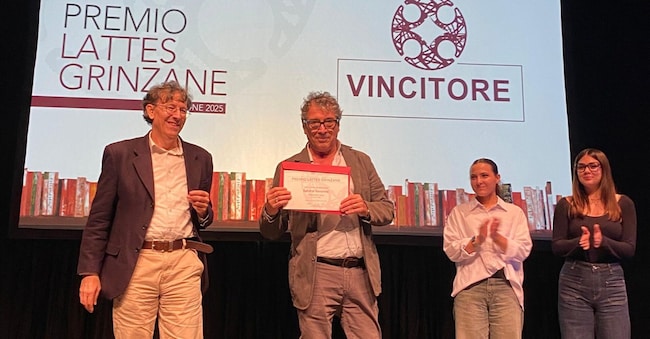
È Sandro Veronesi con Settembre nero (La nave di Teseo) il vincitore della XV edizione del Premio Lattes Grinzane, annunciato durante la consueta cerimonia affollata di studentesse e studenti al Teatro Sociale G. Busca di Alba. «L’unico modo per ritrovare il futuro è accettare l’inaccettabile, io scrivo solo di quello - aveva spiegato in mattinata Veronesi ai liceali che fanno parte della giuria del premio -. In esergo a tutti i miei romanzi metto sempre una frase di Beckett che dice “non posso continuare, continuerò”. La storia può finire come vuole, ma il senso è sempre quello. Accettare non vuol dire subire. Pensiamo a Fenoglio per esempio, durante il fascismo molta gente non accettava quel che stava succedendo, faceva finta che non ci fosse, o la subiva. Fenoglio invece l’accetta, e proprio perché l’accetta va in collina a combattere».
The other finalists were Mathieu Belezi with To attack the earth and the sun (Gramma Feltrinelli, translation by Maria Baiocchi), Jenny Erpenbeck with Kairos (Sellerio, translation by Ada Vigliani), Paul Lynch with The song of the prophet (66thand2nd, translation by Riccardo Duranti), Alia Trabucco Zerán with Clean (Sur, translation by Gina Maneri). For her work, the Ethiopian author Maaza Mengiste received the Lattes Grinzane special prize,
Founded 15 years ago and dedicated to Mario Lattes, painter, writer and publisher, by his widow Caterina Bottari Lattes, the award is decided by high school students (400 in this edition) from a shortlist of five international and Italian authors selected by a technical jury composed of literary critics, writers and journalists (this year Loredana Lipperini, who was the president, Marco Balzano, Valter Boggione, Anna Dolfi, Giuseppe Langella, Alessandro Mari, Luca Mastrantonio and Francesca Sforza). Five thousand students in fifteen years: they are the real protagonists of the award and before the award ceremony they are invited to ask questions to the authors in the large conference hall of the Grinzane Cavour castle. "In books we find ourselves, on social media we risk losing ourselves," said one of them during the ceremony.
"I hope that with my novel you will become more aware of the manipulation tactics that there can be in a relationship," Jenny Erpenbeck told the girls when asked who is the real victim in her novel, the story of a toxic love affair between a student and a 50-year-old writer in the years of the dissolution of the GDR. "I am aware that one cannot transfer one's own experience to others, but I invite you to observe what the power dynamics are in a relationship. I think it is Hans who is abusing Catherine, he does not do it overtly, but slowly, so it is not easy to know when to say no when the abuse is in slow motion?"
«Scrivere per me non è un processo razionale - ha detto Paul Lynch a uno studente che gli aveva chiesto perché avesse deciso di descrivere nel Canto del profeta l’ascesa di un totalitarismo: scritto nel 2018-2019 il libro è stato profetico -. Scrivere è qualcosa che viene da un’altra parte del mio cervello, le cose migliori che ho scritto sono venute da quella che definisco la “porta sul’oscurità”, l’inconscio. Bisogna lasciare quella porta aperta, lasciare che vi porti e vi conduca parlandovi. Ma posso dire cosa pensavo quando ho avuto l’idea del libro. Mi ero rimesso a leggere un bellissimo testo di Hermann Hesse, Il lupo della steppa, che avevo letto quando avevo vent’anni. C’è una pagina in cui Harry Haller guarda alla Germania del 1927 e ne vede la completa frammentazione della politica, vede nei media l’incitazione all’odio, l’antisemitismo, vede la xenofobia ovunque nelle strade... Haller dice: “la prossima guerra è inevitabile, è qui”. Allora, negli a


