
Sanremo 2026, record number of songwriters: 107. Here's who writes the most
Seven have written more than one of the Big's songs in this year's competition. Edwyn Roberts the most prolific, then the usual Federica Abbate and Davide Petrella

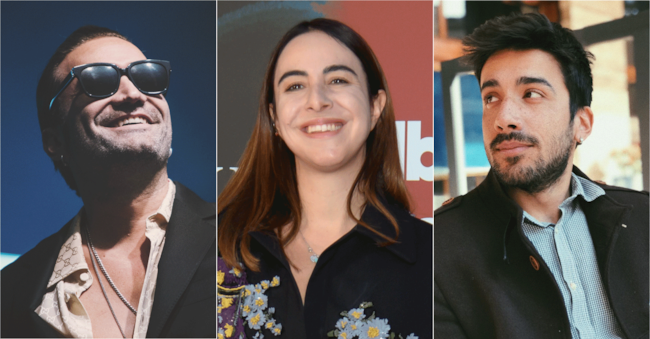
Before it has even begun, Sanremo 2026 has already broken a record. It will be the Festival with the most songwriters among the last thirty Big editions in the competition: in fact, there are 107 who have contributed to the writing of lyrics and music of the bands selected by artistic director Carlo Conti.
Last year there were 90, in 2024 - the last of the five consecutive editions led by Amadeus but also the first with 30 Bigs - there were 95. Numbers that did not differ much from those of the 28 contestants edition of 2023 (94 authors), also led by Amadeus. The comparison with the 2018 Festival, the first directed by Claudio Baglioni, which featured twenty Bigs, is impressive: there were just 54 authors. Practically an era ago.
If you ask those in the industry to explain the trend, they will surely refer to how writing techniques have changed in the era of 'liquid music', with the urban genre establishing itself as the new mainstream: you have those who write the verses, topliners who take care of the melody lines, maybe beatmakers who work on the backing tracks, and, like nothing else, you find yourself credited with six or seven people for the same song. A working method that didn't take long to infect even the pop world. And the results can be seen punctually at Sanremo.
In the 2026 edition we do not find a concentration of authors comparable to that of the Festival that preceded it, when the same 11 authors wrote 66.6% of the songs in the competition, a circumstance that also led to a Codacons complaint to the Antitrust that a month later was filed. In the Sanremo to be held from 24 to 28 February there are seven authors who have written more than one song.
The most prolific this year is Edwyn Roberts, 34 years old, born in Cremona to Argentinian parents of Welsh origin, who worked for a long time with the stable of Maria De Filippi's Amici and then with Edizioni Curci: his signature is on the songs of Malika Ayane, Dargen D'Amico and Elettra Lamborghini.


