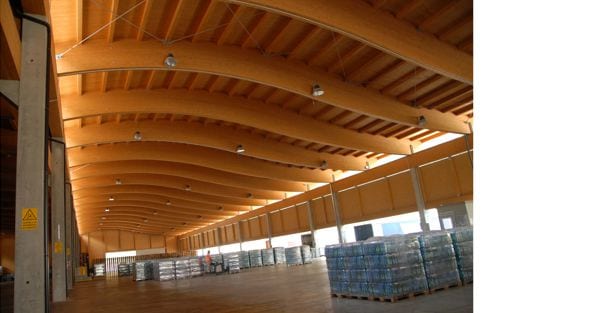
Sant’Anna: innovation, efficiency and environmental measures in processes and logistics
From automated production to rail logistics, right through to the first electric lorries entering service in the summer of 2026: Acqua Sant’Anna is taking action on specific aspects of its industrial processes and its relationship with the local community. In Vinadio, innovation and efficiency underpin targeted initiatives relating to energy consumption, internal goods handling and transport

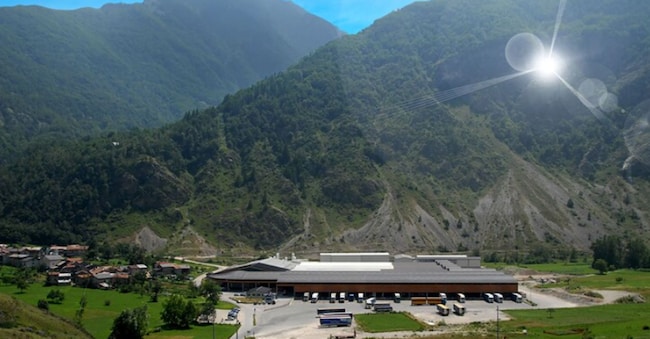
The mountains are not merely the source of water: the topography of the area can contribute to the efficiency of certain solutions adopted for production and transport. This is the approach adopted by Acqua Sant’Anna in Vinadio, where technological innovation and production efficiency guide investments and initiatives relating to specific stages of the company’s operations, from the plant to goods handling and logistics. Among the initiatives launched are rail transport, the use of bio-LNG-powered vehicles and, from summer 2026, the first electric lorries on the route between Vinadio and the Magliano logistics hub.
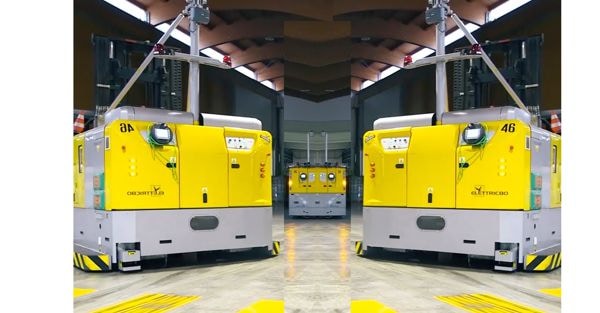
The focus also extends to production and internal handling. At the Vinadio plant, goods are handled by laser-guided electric robots, fitted with lithium batteries that are recharged via induction to enable continuous operation. The system guarantees an accuracy of over 99.5 per cent and contributes to high standards of automation and safety in warehouse operations.
The newly designed wrappers allow the amount of plastic film used in packaging to be adjusted and optimised. The bottling lines are also cleaned using dry ice, without the use of chemical detergents in the process.
Logistics is also the subject of specific initiatives: around 20 per cent of water transport from Vinadio to the rest of Italia is carried out by rail and ship, and the fleet comprises around one hundred bio-LNG-powered lorries. In the summer of 2026, the company also launched a pilot project, in partnership with a local logistics operator, using new-generation electric lorries to link the Vinadio plant with the Magliano logistics hub. Currently, three electric lorries each make five journeys a day. The project enables the collection of operational data on energy consumption, direct emissions and noise levels along this specific route, in order to compare performance with that of the vehicles previously used. “The project is now underway: it is a first step towards logistics with lower direct emissions and reduced noise levels on the route in question,” explained Luca Cheri, Chief Executive of Acqua Sant’Anna. The electric vehicles are primarily intended for medium and short journeys, with an operating range of up to around 400 kilometres, depending on usage conditions. On this route, the lorries travel empty up to the plant and return fully laden; on the descent, the regenerative braking system allows some of the energy to be recovered and the batteries to be recharged. The results of the project will be used to assess whether the solution can be extended to other suitable routes. “We carried out a study,” explained Cheri, “and the value of the mountain is that, whilst the climb is sometimes seen as a problem, in this case it is an opportunity.” Taken together, these initiatives combine technological innovation, process efficiency and a connection with the local area, in line with the pillars set out by the company for its growth: people, quality, technology and innovation.