
University, Sapienza first in the world for Classical Studies, PoliMi seventh for Art/Architecture
Qs ranking 2024 by discipline 2024 published. Luiss in the top 20 for Political and International Studies
4' min read
Key points
4' min read
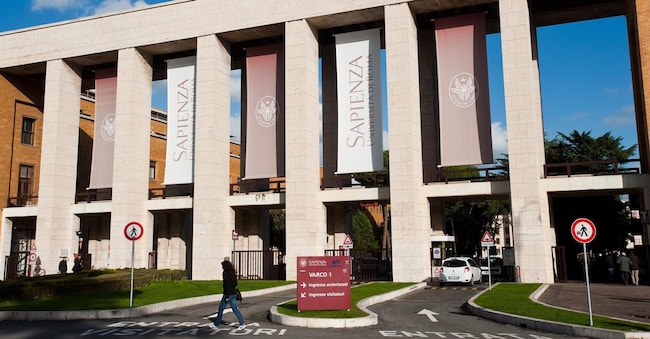
Sometimes even a confirmation can make the news. Especially when it comes to universities. We are talking about La Sapienza di Roma, which for the fourth consecutive year has been confirmed as the world's number one university for Classical Studies and Ancient History. This is stated by the QS ranking of universities for discipline 2024 which, overall, places the Italian university education in seventh place globally, second in the European Union. Other noteworthy placings are those of the Scuola Superiore Normale di Pisa, which loses one position compared to 2023 but still remains fifth in the same field in which the capital's university excels, and the double seventh position that the Politecnico di Milano brings home for Architecture / Built Environment (where it was tenth last year) and for Art and Design (here it was eighth, ed.). In turn, the Free International University of Social Studies (Luiss) is confirmed in the world Top 20 and first nationally for Political and International Studies.
The other Italians in the top 10
.Overall, there are eight Italian universities in the top 10 in the various disciplines. In addition to the four we have already seen, there is also the double result brought home by Bocconi of Milan, which becomes seventh for Marketing and ninth for Economics and Management Studies as opposed to the eighth and seventh places conquered in the same subjects 12 months ago. PoliMi and Sapienza complete the group again: the former drops from seventh to ninth place for Mechanical, Aeronautical and Manufacturing Engineering; the latter rises instead from eleventh to tenth place for Archaeology.
The Country System
.The QS ranking now includes 56 Italian universities, with a total of 577 placements (47 more than in the previous edition) in 55 academic disciplines, including Music, this edition's new-entry. In total, there are 71 new Italian entries. As far as overall performance is concerned, 45% of the Italian places in the rankings remained stable, 19% showed an improvement, and 24% experienced a decrease, with a slight overall drop of 5% compared to last year. In addition, Italian universities took 99 places (three more than last year) in the five major areas of study: arts and humanities, engineering and technology, life sciences, natural sciences and social sciences.
Globally, Italy ranks seventh in terms of the number of entries and eighth in terms of the number of universities present. In a comparison restricted to the EU, on the other hand, Italy ranks second in terms of the number of entries in the global top ten of subjects, with eight entries, just behind the Netherlands, in the lead with 13.
In particular, Italy is the ninth best university education system globally among the 96 countries ranked in the Top 10. Its eight placements equal those of China - despite having less than half the number of Chinese universities - and are three places higher than those of Germany, France and Japan.
The Areas of Excellence
Among the Italian excellences, Medicine stands out in the first place, with 30 Italian placements in the rankings, led by the Statale di Milano, which asserts itself as the national leader in this field. This is followed by Biological Sciences with 29 Italians, led by the University of Padua, and Physics and Astronomy, with the Sapienza University of Rome asserting itself as the best Italian in this field.
Sapienza is also the university most represented in the ranking, given that its name appears a total of 47 times; behind it Bologna and Padua appear in 46 and 37 situations. Milan Statale (32 citations) and the Federico II in Naples with 30 complete the top five placings.
The Qs focus on our country deserves a mention for the major improvements compared to last year of Italian universities with more than five entries in the ranking. First again is La Sapienza, with an increase of 21%, ahead of Luiss Guido Carli and Politecnico di Milano, both of which improved by 17% from one edition to the next.
New entries
.The Politecnico di Milano stands out for having the highest number of new entrants in Italy this year, a total of eight, bringing its total to 23. In particular, it enters 12th place for Petroleum Engineering, 23rd for Data Science and Artificial Intelligence and falls in the 51-100 bracket for Development Studies. In turn, Bocconi also sees significant expansion with the addition of six new diciplines, bringing its total to 11. It debuts among the world's top 50 in Politics and Social Administration, with 38th position, and in Law, with 57th.
Brand connect


Newsletter Scuola+
La newsletter premium dedicata al mondo della scuola con approfondimenti normativi, analisi e guide operative
Abbonati