
Sapienza as a protagonist in the new European Digital Academies
The only European university present in all three EU Digital Skills Academies on AI, quantum and virtual worlds

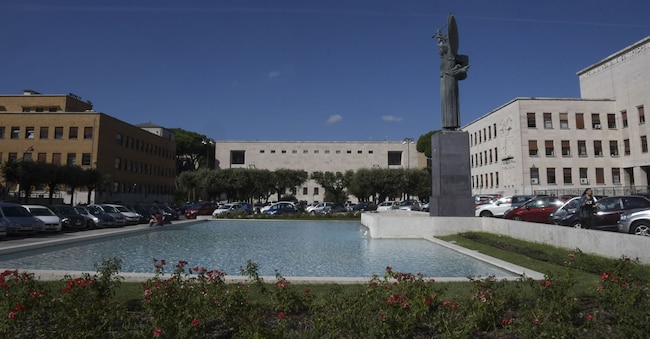
The European Commission is setting up 3 new digital skills academies to address critical talent shortages in key technology areas and to further boost the EU's innovation capacity by offering specialised education and training in strategic areas: quantum technologies, artificial intelligence and virtual worlds. The total funding amounts to EUR 27 million and is part of the Advanced Digital Skills 2025 call promoted by the Digital Europe programme. In this context, Sapienza is the only one among European universities participating in all three Academies, with funded proposals for which it will receive a total of 720 thousand euros.
The Academies
The Academies aim to co-ordinate digital education and training in the EU, promoting an integrated approach between education, industry and public administrations to strengthen European leadership in emerging digital technologies and ensure the skilled workforce needed to thrive in the digital era. Each academy will act as a specific reference point, identifying skills gaps, developing cutting-edge training programmes, scaling up successful initiatives and creating strong ecosystems through partnerships.
The Rector
"Being the only European university to be present in all three of the new Digital Skills Academies is a very important recognition, which confirms the quality of Sapienza's research, teaching and design capacity in areas that are decisive for the future of Europe," says Rector Antonella Polimeni. "Quantum technologies, artificial intelligence and virtual worlds are strategic frontiers of contemporary transformation, in which competitiveness, autonomy and sustainable development will be measured. Participating as a protagonist in these initiatives means making a concrete contribution to the construction of new skills, strengthening the dialogue between universities, businesses and institutions, and offering the new generations advanced tools for interpreting and guiding change. This result - concludes the Rector - further increases the international profile of our University and enhances the work of professors, researchers and staff who every day make Sapienza a point of reference on the world scientific scene."
EQA
Sapienza participates in the European Quantum Academy (EQA), focused on quantum technologies. EQA aims at creating a pan-European ecosystem for education and training, ensuring a continuous flow of talent from school to PhD and lifelong learning. EQA involves 71 partners in 6 Regional Quantum Academies that coordinate national systems within a European framework. Strategic objectives include the creation of a sustainable European structure for education and outreach, the design of harmonised curricula, the expansion of access to experimental and digital infrastructures for hands-on learning, and the continuous monitoring of job needs in the field of quantum technologies. Fabio Sciarrino, lecturer in the Department of Physics and Sapienza project manager, emphasises that "Italia is strongly represented in the European Quantum Academy, which involves 11 institutions including Sapienza. The education and training initiatives are fully consistent with the Italian Strategy for Quantum Technologies, recently developed by the MUR in synergy with other ministries and bodies involved in these issues."
ViWAS
The Virtual Worlds Skills Academy (ViWAS) aims to bridge the skills gap in immersive, virtual, augmented and extended reality technologies by creating a European Academy that ensures interoperability, inclusiveness and scalability between education, training and industry. With 39 partners in 16 countries, ViWAS will develop a pan-European framework of competences and qualifications for professions related to virtual worlds, accompanied by a catalogue of more than 100 modular training offers, from degree courses to micro-credentials co-designed with industry, with the aim of training more than 5,000 people and reaching 100,000 beneficiaries over the next five years. The project, funded with 8.56 million euro, sees Italia as the country with the strongest representation in the consortium: 7 partners for a total funding of over 2 million euro, an important signal of the ability of our research system to lead European innovation in Web 4.0." Sapienza participates with around €420,000 under the responsibility of Ioannis Chatzigiannakis, professor in the Department of Computer, Automatic and Management Engineering (DIAG), who explains: "Virtual worlds and immersive technologies are redefining the way we design, produce and collaborate in industry and education. However, their potential remains largely untapped due to the fragmentation of skills and lack of shared standards. ViWAS was created to bridge this gap by designing the Academy's interoperability infrastructure and developing advanced courses in VR on topics such as XR-driven design, cultural heritage, manufacturing 5.0 and cybersecurity."

Brand connect


Newsletter Scuola+
La newsletter premium dedicata al mondo della scuola con approfondimenti normativi, analisi e guide operative
Abbonati