Sardinia and Sicily, a single mythical island in the art of Michele Ciacciofera
The poetic and protean exhibition 'Lettere Mediterranee' can be visited until 20 December at the Building Gallery in Milan

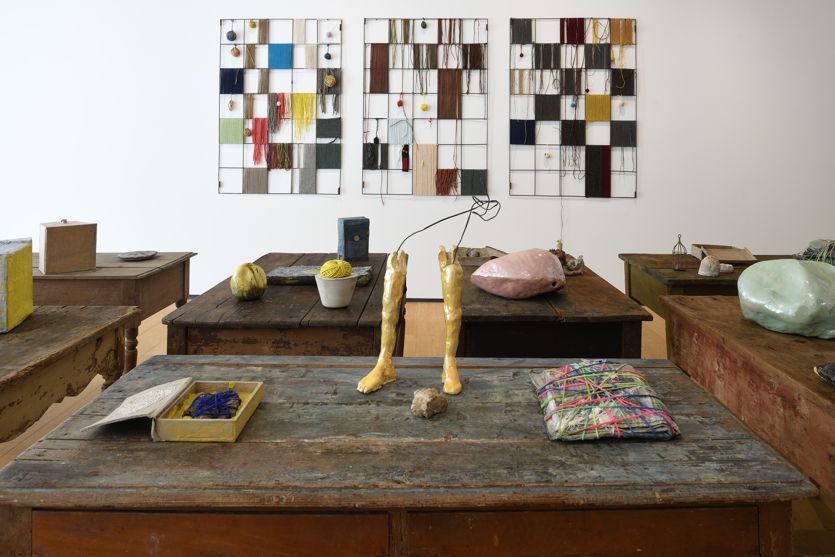
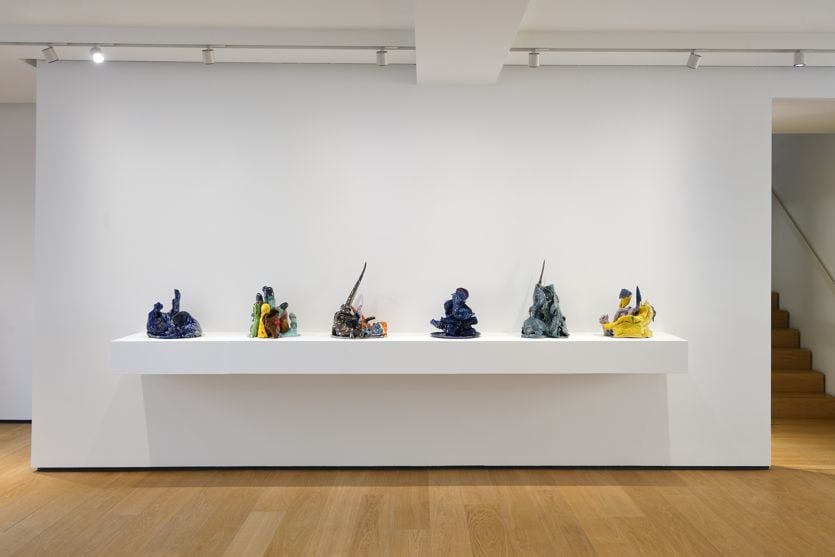
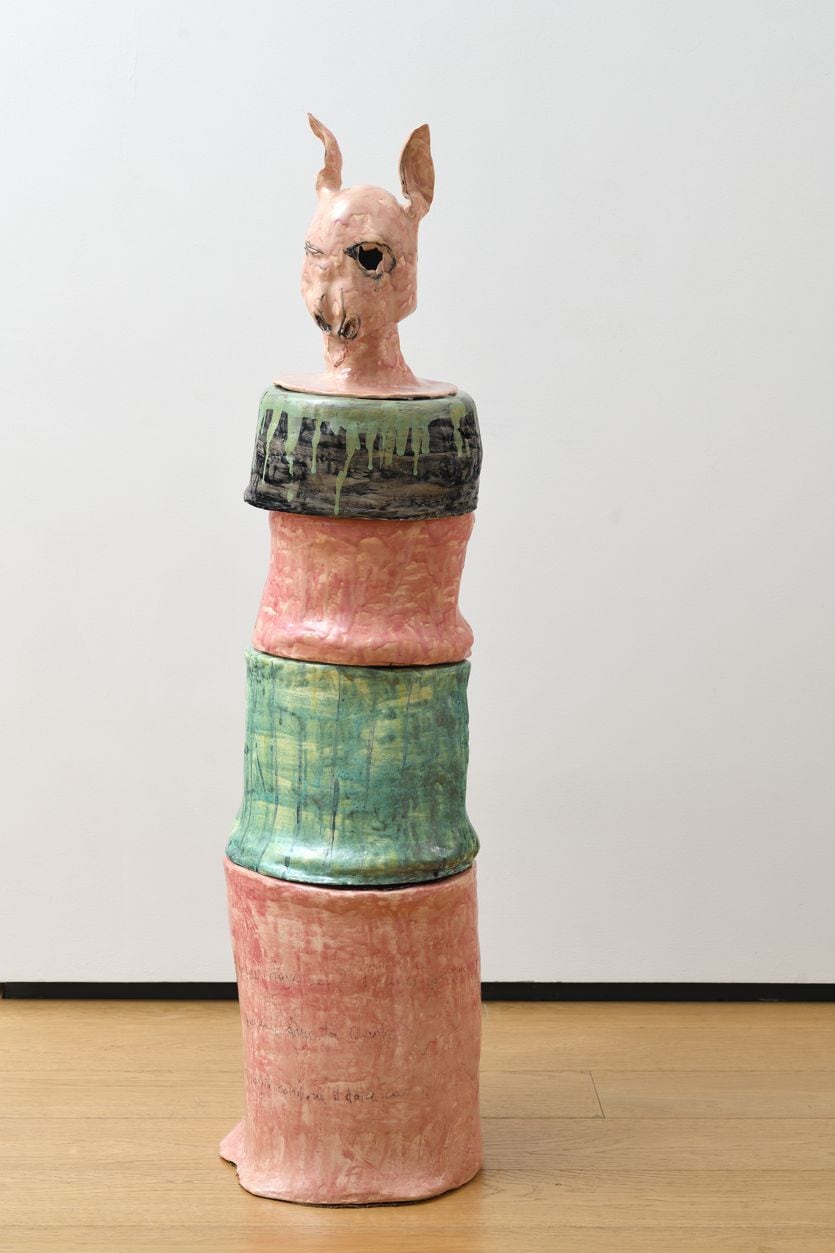
His 'Lettere Mediterranee' are a protean concentrate of even waste materials, of woods and stones, of earth and clay, of wool and wax, flanked by fossils and stones, coloured from the tenuous to the violent. And so, traversing the historical farsightedness of Fernand Braudel, passing through the patient archaeological wisdom of Giovanni Lilliu, and then adding the mythical fascination of Jean-Pierre Vernant, one arrives straight at the heart of the poetics, densely dipped in the salty water of Mare Nostrum, of an artist like Michele Ciacciofera.
Because his is an alchemist's distillate, which feeds on anthropology to take on archaic forms and humanoid echoes, to the extent that the distant shores of Sardinia and Sicily, intimately ingrained in his biographical story, almost seem to touch each other in the mnemonic sedimentation of this artist's reliquary, who, with poetic levity, gives form to anthropomorphic oddities that resonate with the depths of the sea and the cavities of dark and bewitching caverns, with mysterious Dionysian rites and the ambiguous mellifluous hum of angelic fairies in the guise of horrid herins or royal Persephone. Because Ciacciofera's art, so fiercely Mediterranean and lyrical, is an intoxicating and all-encompassing oinopa ponton, capable of blending the sweetness of honey with the saltiness of the sea, and in whose horizon everyone can glimpse the nostalgic echoes of their own Ithaca.
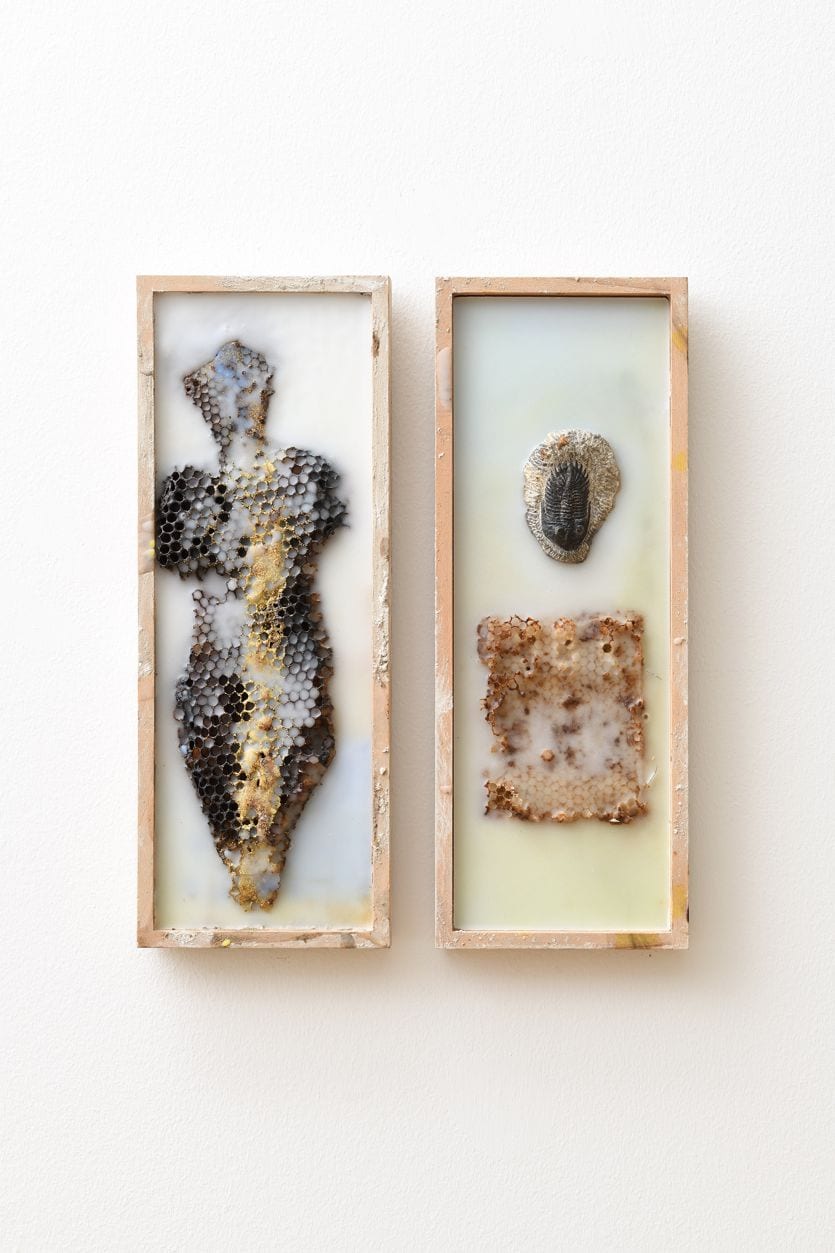
In the diptych "The Honey Couple" we find a poetic set of cells and entire beeswax honeycombs with mythological echoes. Explaining its origin is the curator of the exhibition, Elena Gervasoni, who accompanied us along the way...
"The 2016 diptych refers to the complementarity of the male and female elements," says the curator, "and represents, in the right-hand element, the body of a female figure ideally dancing, dressed in a golden mantle, thanks to the pigment that the artist has spread on the body of a honeycomb with the features of a mother goddess, which converses instead with the male element on the left of the diptych, consisting of a much more geometric and rectangular body, again honeycombed, whose head is instead a fossil'.
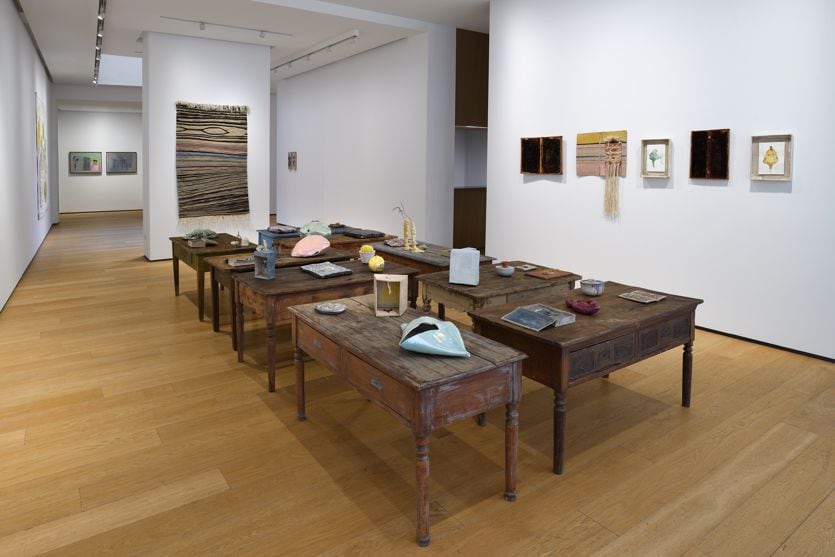
As for the 2016 installation 'Janas Code', which feeds on the distant, ancestral echoes of Sardinia, can you tell us exactly what it is about?