
Sardinia, more than 600 requests but decisions stand still
After the regional challenge to the law on eligible areas, it is a race against time: the island is lagging behind in the transition, with two coal-fired power stations and an unfinished methanisation project

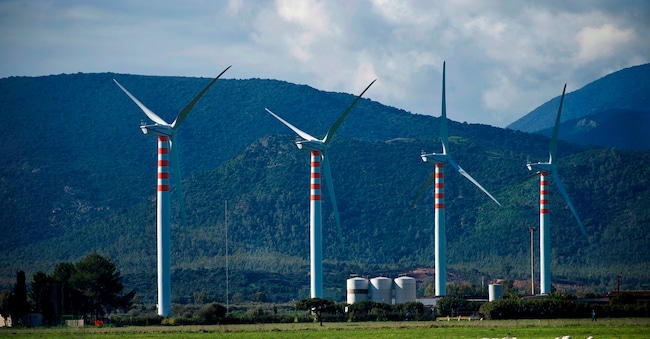
Renewables do not start. The requests are there and exceed 600, but Sardinia's energy transition is slow to take shape. Because not only is there still no methane, but the projects for the construction of new wind and photovoltaic plants have to deal with the blockage of procedures. The latest in order of time is the halt to 30 initiatives for the construction of plants subject to national environmental impact assessment, which have been 'frozen' by the National Assessment Commission (the Ministry of Culture expressed a contrary opinion) and sent back to the Council of Ministers, which will have to decide after a further passage by the Region.
Specifically, the councillors for Industry, the Environment and Local Authorities, and Town Planning will have to meet with the municipal administrations in which the projects fall, ranging from the construction of wind farms to photovoltaic or agri-voltaic plants. It is the last stretch of an obstacle course. Because it is not only the last 30 postponed to the decision of the Council of Ministers that are being blocked, but many other projects. Hundreds of other initiatives launched in previous years hang in the balance. This is because the requests, once submitted to Terna for connection, must then go through the various institutional levels, starting with the municipalities.
As of 31 March this year, there were 637 connection request files sent to Terna for a total of 44.62 GW. Of these, 404 for 16.63 GW are for solar, 209 for 14.11 GW for onshore wind, 23 for offshore wind for 13.89 GW, and one for hydro. Not all procedures, it is physiological, will go all the way to realisation. However, those that do go on to eventual construction will then have to deal with blockades.
Yet in Terna's latest survey (as of 31 March) Sardinia lacks 461 MW to reach the intermediate target (from January 2021 to March 2026) of new renewable installed capacity established by the dm Aree idonee. It is lagging furthest behind the other regions, followed by Calabria (-383 MW) and Tuscany (-225 MW).
The picture concerning these projects in Sardinia is intricate. The 'renewables case' in the region erupts when hundreds of connection requests are submitted to Terna for onshore (photovoltaic and wind) and offshore projects. Mobilisations to 'block' the phenomenon began. In the meantime, the Region's government changed and Christian Solinas was succeeded by President Alessandra Todde. Among the supporters of the 'no' vote, or rather among those who over time launch campaigns against projects to build renewable energy plants, there are movements that supported the centre-left, which in turn elected the president. The first measure of the new executive, we are now in 2024, also on the emotional push of the ongoing mobilisation, is that of the moratorium that freezes all projects until the entry into force of the regulation on suitable areas for the installation of renewable energy plants. In the meantime, except for the initiated projects, the other applications are blocked. However, the national government challenges the rule. It was 2025 when first the regional executive and then the Regional Council passed the regulation on suitable areas, the so-called Law 20. The areas where plants for the production of green energy could be built were identified: from degraded industrial areas plus other sites, excluding coastlines and protected areas. Among the new features are guarantees with end-of-life plant surety policies. The entry into force of the regulation cancels the first moratorium.

