
Sardinia: over 600 applications, but decisions are on hold
Following the regional challenge to the law on suitable areas, it is a race against time: the island is lagging behind in the energy transition, with two coal-fired power stations and an unfinished natural gas conversion project

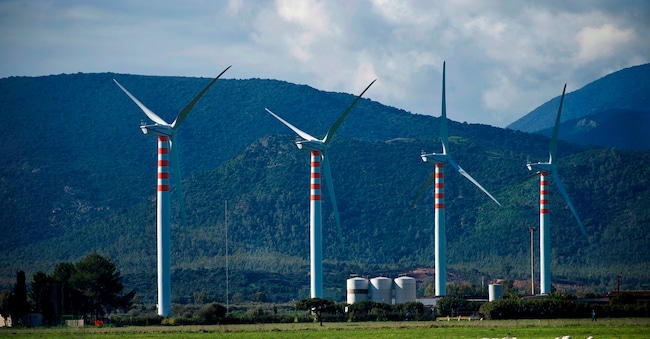
Renewables are failing to get off the ground. There are over 600 applications, yet Sardinia’s energy transition is slow to take shape. This is because not only is there still no natural gas, but projects to build new wind and solar power plants are being held up by procedural delays. The most recent development is the suspension of 30 initiatives for the construction of plants subject to a national environmental impact assessment, which have been ‘frozen’ by the National Assessment Commission (with the Ministry of Culture expressing its opposition) and referred back to the Council of Ministers, which will have to decide after a further review by the regional government.
Specifically, the councillors for Industry, the Environment, and Local Authorities and Urban Planning will have to meet with the local councils in whose areas the projects are located, which range from the construction of wind farms to photovoltaic or agrivoltaic installations. This is the final stretch of an obstacle course. For it is not only the last 30 projects, which have been deferred pending a decision by the Council of Ministers, that are currently on hold, but many others as well. Against this backdrop, hundreds of other initiatives launched in previous years remain in limbo. This is because, once an application for connection has been submitted to Terna, the applications must then be scrutinised by the various institutional levels, starting with the local councils.
As at 31 March this year, 637 connection applications had been submitted to Terna, totalling 44.62 GW. Of these, 404 applications, totalling 16.63 GW, are for solar power; 209, totalling 14.11 GW, are for onshore wind power; 23, totalling 13.89 GW, are for offshore wind power; and one is for hydroelectric power. Not all of these applications will, naturally, proceed to the construction stage. However, those that do move forward towards potential construction will then have to contend with potential obstacles.
Yet, according to Terna’s latest figures (as at 31 March), Sardinia is 461 MW short of the interim target (from January 2021 to March 2026) for new installed renewable capacity set out in the Ministerial Decree on Suitable Areas. It is the region furthest behind the others, followed by Calabria (-383 MW) and Tuscany (-225 MW).
The situation surrounding these projects in Sardinia is complex. The ‘renewables issue’ in the region came to a head when hundreds of connection requests for onshore (solar and wind) and offshore projects were submitted to Terna. Protests began to ‘block’ the development. Meanwhile, the regional government changed, with President Alessandra Todde taking over from Christian Solinas. Among those opposed to the projects – or rather, among those who, over time, launched campaigns against plans to build renewable energy plants – were movements that had supported the centre-left, which in turn had elected the president. The new executive’s first measure – in 2024, partly driven by the emotional momentum of the ongoing protests – is a moratorium freezing all projects until the regulation on suitable areas for the installation of renewable energy plants comes into force. In the meantime, with the exception of projects already underway, all other applications are put on hold. However, the national government challenges the legislation. It is 2025 when first the regional executive and then the Regional Council pass the legislation on suitable areas, the so-called Law 20. Areas where green energy plants can be built are identified: these range from derelict industrial sites to other locations, excluding coastlines and protected areas. Among the new provisions are guarantees in the form of surety bonds covering the end-of-life phase of the plants. The entry into force of the legislation lifts the initial moratorium.

