
Sardinia: restrictions on renewables are back under scrutiny by the Constitutional Court
Hearing on the constitutionality of the annexes to Regional Law 20/2024. Focus on the technical standards that render 96 per cent of the island’s territory unsuitable

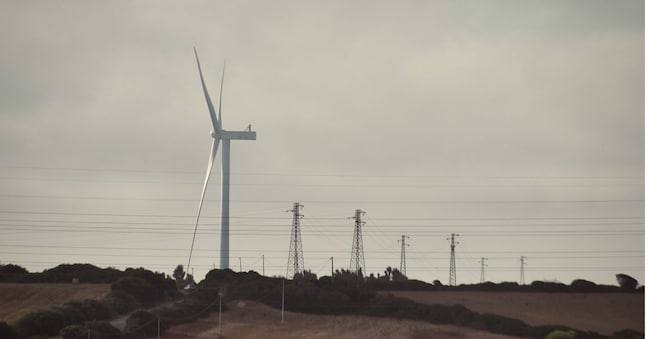
A new development in the regulatory saga surrounding the tangled issue of renewable energy development in Sardinia. Following Judgment No. 184 of 16 December 2025, which had declared several provisions of the Sardinian law on suitable areas – Law No. 20/2024 – to be unconstitutional, the law has once again been referred to the Constitutional Court for review. The focus is on the constitutional legitimacy of the annexes to the law, which specifically identify the unsuitable areas. In particular, ‘Annexes A, B, C, D, E and paragraphs 9 and 11 of Article 1 of the law’, as set out in the agenda for the Constitutional Court’s public hearing on 5 May, which concerned the questions of constitutional legitimacy referred by the Sardinian Regional Administrative Court and the Lazio Regional Administrative Court in relation to the objections raised by companies operating in the renewable energy sector such as Maple Tree Solar, RWE Renewables Italia, Sorgenia Renewables, Green Sole Renewables Italia 1, EF Agri Società Agricola and Edison Rinnovabili.
Carlo Comandè, of the Cdra law firm, is one of the lawyers handling the case: he had previously handled several appeals, including those that led to the rewriting of the Ministerial Decree on Suitable Areas last year. ‘The annexes to the Sardinian law had not been challenged by the Presidency of the Council of Ministers in the proceedings that led, in December 2025, to the Constitutional Court’s declaration of the law’s partial unconstitutionality. Now, however, they have been challenged by various operators. The hearing on 5 May focused precisely on the constitutional review of the technical rules, contained in the annexes, which define which areas are suitable. These rules currently classify 96 per cent of Sardinian territory as unsuitable, with the practical effect that the EU-based rules on simplification and acceleration do not apply in almost the whole of Sardinia,” explains Comandè.
Meanwhile, the Constitutional Court has also ruled on the merits of the various appeals between the Region of Sardinia and the Ministry of the Environment. In its judgement number 88 of 2026, filed on 25 May, it emphasised that the state administrative authority (the Ministry) must apply the regional legislation currently in force (specifically Law 20/2024), as only the Constitutional Court can declare it unlawful. The Court upheld the appeals brought by the Region of Sardinia seeking the annulment of several MASE decrees containing environmental impact assessments relating to the construction of agrivoltaic plants in the provinces of Oristano and Sassari, which had been adopted without taking into account the provisions of Law 20/2024, relating to the identification of areas suitable and unsuitable for the installation of renewable energy plants. In the Ministry’s view, the Sardinian regional law should have been deemed unlawful and, therefore, inapplicable, as it would have severely restricted the roll-out of renewable energy installations in the region, jeopardising the achievement of European targets for renewable energy.
‘The Ministry has issued decrees declaring a favourable environmental impact, setting aside the Sardinian law which it deemed unconstitutional. The Region of Sardinia lodged an appeal on the grounds of a conflict of jurisdiction, and the Constitutional Court has now reaffirmed that it alone has the power to declare a law unconstitutional, ruling in favour of the Region of Sardinia by deeming the Ministry’s decision to set aside the provision to be unlawful. However, in essence, the impact of this ruling is very limited, as in December 2025 the same Court declared Sardinian Law 20/2024 – which had been disregarded by MASE – to be partially unconstitutional”, consequently, Comandè emphasises: ‘At present, there are no practical consequences for operators or implications for similar situations involving other regions.’


