
Sardinia: the ancient tradition of using mud bricks to beat the extreme heat
Rediscovered in Sardinia, rammed earth construction combines tradition and sustainability

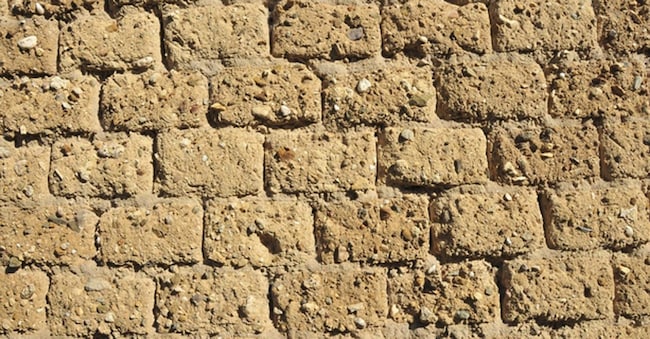
The new frontier for sustainable building in Sardinia’s small towns lies in the use of rammed earth. That is, houses built using bricks made from straw and mud, which are then dried in the sun without being fired in a kiln. An ancient tradition, particularly widespread in the Campidano and Medio Campidano regions, which is now being rediscovered, partly in response to the need to combine sustainability with comfort, with homes that stay cool in summer and warm in winter.
The rediscovery over the last 10 years
“Over the last 10 years, there has been a rediscovery of this material, which is found mainly in the Campidano region,” says Sara Collu, an architect whose research focuses on this very topic – ‘it is no coincidence that other professionals and colleagues working in the field of restoration and renovation are also paying close attention to this type of technique, which is gaining ground in various European countries as well’.” That is, the construction of houses where the building materials are predominantly ladiri (unfired bricks made by mixing mud and straw and then leaving them to dry) and wood.
A rather unindustrial process
“Raw earth houses are the result of a process that is not very industrialised and produces few pollutants, but is highly competitive,” adds the architect, who is the author of the book Ladiri (published in Italian and English), “because they offer excellent thermal performance.” The presence and thickness of the rammed earth bricks facilitate the process that keeps houses cool in summer and warmer in winter.
A sustainable choice
Then there is another aspect, and it concerns sustainability. ‘In the production of a raw earth brick,’ he adds, ‘there is no combustion process. The brick does not go into a kiln as with fired bricks, but is left to dry in the sun.’ And then there is the issue of circularity. “Ladiri bricks can be 100 per cent recycled,” he argues. “During the renovation of a building, we actually reused the mud from a wall to make new bricks from that very earth. This is a very important step in terms of the circular economy and the environment.”
Security node
Then there is the question of safety and stability. “There are houses built with ladiri bricks that are as much as 200 years old,” he continues, “and the strength of ladiri bricks lies in their compactness and cohesion. Ultimately, it all depends on how well they are maintained and looked after. Of course, if a building is abandoned and the roof isn’t checked, it’s clear that problems can arise. But this happens with other construction techniques too.’ The rediscovery of this technique has also led to the emergence of small companies that have started producing unfired clay bricks. ‘There are a few in Sardinia,’ he adds, ‘and a few others on the mainland, where, however, they use clay and a different technique.’

