
Satoru Iwata's legacy, the Blue Ocean strategy and the new Nintendo Switch
The big N is 135 years old and 2025 will be the year of truth for the world's most incredible video game company.

3' min read
3' min read
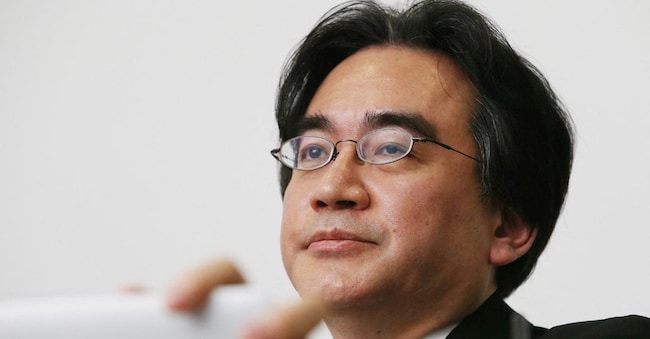
In the 2000s, Nintendo for the first time felt the pressure of competition from Sony and Microsoft, who dominated the console market with PlayStation 2 and Xbox. It is from this period that we have to start in order to tell the story of the 134 years of life of a company that has produced and lived from video games for the longest time. A story that starts in 2000, a time when the company seemed destined to disappear. And it begins with one man, Satoru Iwata, one of the video game industry's most incredible and brilliant managers, who passed away in 2015 before the launch of Nintendo Switch. The latter console is probably his last and most inspired legacy to a company that has sold over 577 million consoles throughout its history, reaching a market capitalisation of $50-60 billion. A record, considering that the Big N is not an IT giant lent to video games like Sony and Microsoft, but a quasi-craft company that uses technology to create entertainment.
But let's go back to 2000, when what five years later would be defined by economists W. Chan Kim and Renée Mauborgne of the French institute INSEAD as the 'Blue Ocean' strategy was born. We were at the end of the life cycle of the GameCube home console; the Game Boy, having achieved incredible sales numbers, was beginning to lose momentum, while outside the Xbox was raging the sci-fi best-seller 'Halo' and the PS2 was confirming itself as the most technologically advanced gaming machine of the time, with a built-in DVD player and the ability to reproduce high-quality 3D graphics. It was during those years that Satoru Iwata conceived something new. The code name was 'Revolution'. "I don't believe that the next-generation consoles that Sony and Microsoft are considering have a future," he declared before unveiling what would be the video game industry's greatest singularity.
While the world of technology was outlining a technology-intensive future for video games with streaming, 3D and very high quality graphics, Nintendo came out with a console with cheaper and outdated hardware, but with an innovative gaming idea. Thanks to the intuition of Iwata and his team, for the first time video gaming expanded its traditional audience of very young people. The controller, which until then had too many sticks and was too complicated for the parents of the time, became a kind of remote control, something familiar, capable of detecting hand movement. Thanks to its innovative motion-based control system, it turned into a tennis racket, a gun or a fishing rod.
The result? The Nintendo Wii, launched in 2006, conquered the console market, beating PS3 and Xbox 360 to a record 100 million units sold. Thus took shape the Blue Ocean strategy, explained in a remarkably simple way in the autobiographical book 'Ask Iwata'. Nintendo, instead of sailing through red seas full of fish and competition, chose to take a different approach, creating a new market aimed at a wider audience, including non-gamers. It played a different game, focusing on innovation, a sense of play and fun, thanks in part to the child-like talent of a genius like Shigeru Miyamoto, the inventor of, among other things, Super Mario.
In every product of the Big N, there is always something ancient and amazing that speaks more to our being children than the 'wow' effects induced by technological giants. It's a little magic that only Kyoto knows. When it no longer works, when Super Mario, Zelda and Kirby stop thrilling you, perhaps because you move on to other games, it means that you have become more grown up and perhaps you have missed something along the way.

