Architecture

Saudi Arabia runs and launches an all-out challenge for 2030

At Cityscape Global, the Kingdom's real estate fair, the focus is on experiments in residential, services, sports and culture in mixed-use areas

by Paola Pierotti

(Adobe Stock)

3' min read

3' min read

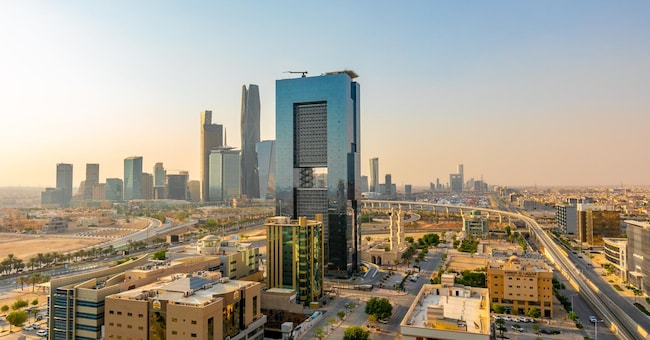
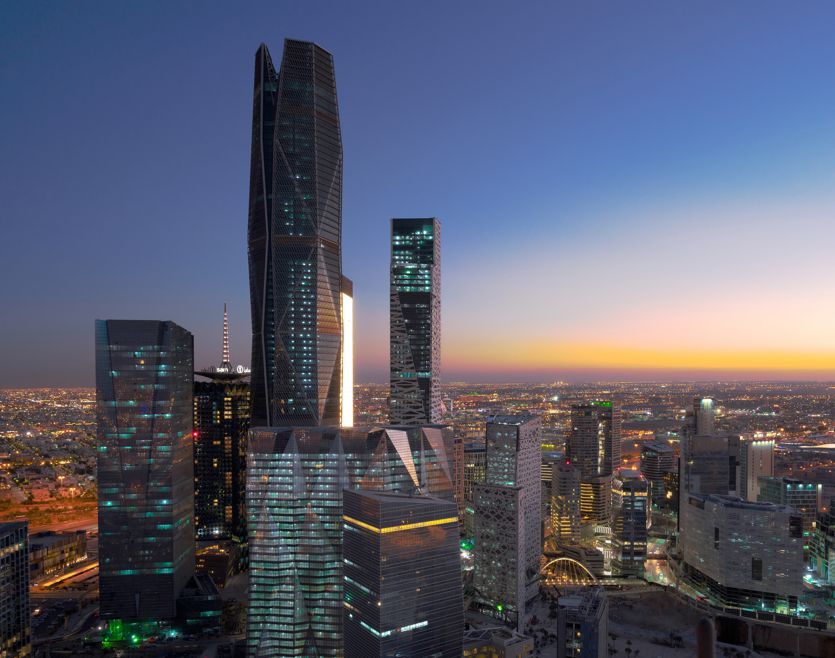
Kafd stands for King Abdullah Financial District and is a business destination as well as the most contemporary district in the city of Riyadh. The first phase is 90 per cent ready, with 95 buildings constructed and the Public Investment Fund (PIF), one of the world's largest sovereign wealth funds, leading its transformation from 2016.

It is the Italian Alberto Bounous, vice-president design and development Kafd, who heads the team that is working on future projects, who tells us that "next year the remaining construction sites of this 1.6 million square metre area, with the highest concentration of iconic architecture per square metre, will start. There are buildings by Foster+Partners, Zaha Hadid Architects, Som, Hok, Hanning Larsen among others.

Loading...

Born as a financial district, it has become a mixed-use part of town with offices, luxury homes, shops, hotels and entertainment venues. Two masterplans for another two million square metres of development are planned nearby, and the reference is the city of ten minutes, where a maxi metro station is also about to open, connecting with the airport and two other lines that will link Kafd with the rest of the capital. The plus is public space on three levels: the street level, a shaded lower level with a temperature of -5 degrees above zero, plus 48 sky-bridges connecting the entire district with commercial services and retail outlets.
(Credit: Kafd)

Part of Pif's extensive portfolio, Kafd is one of the drivers of 'Vision 2030', aimed at improving the quality of life of Saudi citizens. A perspective of change in which the real protagonists are the so-called 'giga projects', illustrated at Cityscape Global, the Saudi real estate kermesse, which last week showcased all the Kingdom's initiatives, joined by many others promoted by private operators, including international ones, betting on XXL-scale transformations.

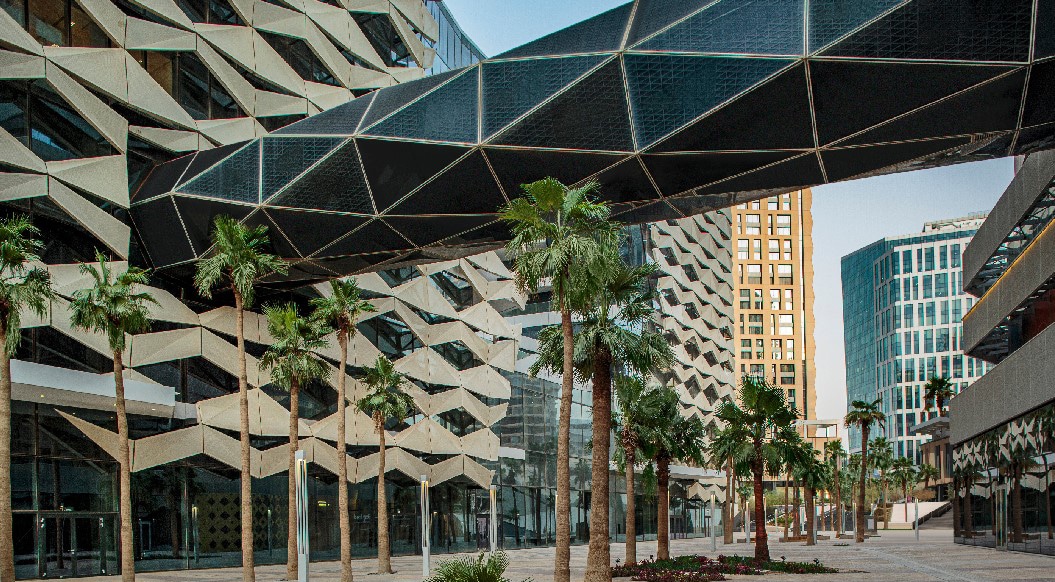
Lots of housing, but also lots of entertainment, driven primarily by sports and tourism. Culture is at the centre, as evidenced by the new King Fahad National Library, enlarged as 'a building within a building', clad with rhomboid fabric modules reinterpreting the Arabian tent tradition.
Speaking of entertainment, work has already started on the 'sports boulevard', a linear park that will connect the city from west to east for 135 km. There is great expectation for the simultaneous opening of the six metro lines, with the aim of bringing 100 per cent of the current mobility by road to a major diversification.

Riyadh is synonymous with speed and innovation, with a focus on the new generation, those young people under 30 who populate more than 60% of the country. But it is above all the destination for experimentation and the vocabulary of the new real estate hinged on the imagination coordinated directly by Prime Minister Mohammed bin Salman bin Abdulaziz Al Saud.

In the city, cranes dot the skyline, especially in those areas between the built-up city and the desert: from New Murabba (with a futuristic cube, the 'Mukaab', 400 metres on a side) to Diriyah (which focuses on cultural heritage and aims to attract 50 million visitors).

(Credit: Kafd)

In the country there are the better-known Neom: 26.5 square kilometres with the landmark of The Line, the new futuristic city, and Trojena which will be the mountain destination of the Asian Winter Games 2029, Oxagon with a floating industrial complex and Sindalah, the luxury island in the Red Sea which has already partly opened.

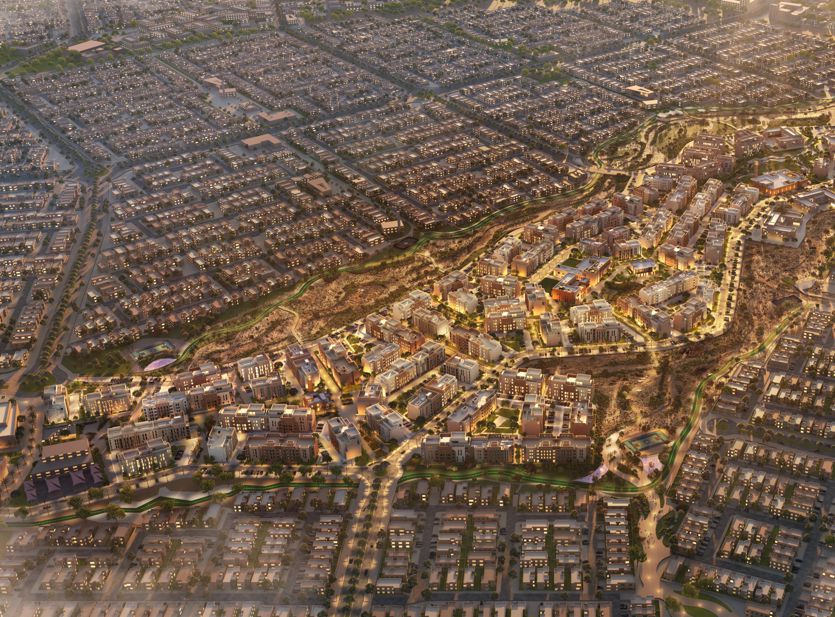
The population in Saudi Arabia is growing exponentially (by a factor of three in the last 12 years) and housing policies are imperative: several companies are working to secure new homes for Saudi citizens, and if the National Housing Company operates for social housing, on the subject of 'innovative ways of living' there is the Roshn Group which is Saudi Arabia's leading multi-asset real estate developer, another of Pif's companies.

(Credit: Roshn)

The challenge? Transforming the urban landscape with houses integrated with shops, mosques, parks and social infrastructure. Giovanna Carnevali, another Italian, who heads Roshn's Urban and Architectural Planning, highlights the importance of mixed use, proximity of services, walkability, social and green facilities, but also emphasises the role of technological innovations (water management, energy production, waste disposal, autonomous mobility), considering that these are all greenfield developments. Roshn owns more than 200 million sqm throughout the Kingdom. More than 1,600 houses have already been delivered by 2024 and the target is 200 thousand by 2030: these range from operations for more than 80 thousand houses and 170 thousand residents in Sedra in Riyadh - the first one already in the pipeline - to others such as Marafy in Jeddah in an area of 6.8 million sqm, next to an artificial canal, for 52 thousand houses and 131 thousand residents.

Copyright reserved ©
Loading...

Brand connect

Loading...

Newsletter RealEstate+

La newsletter premium dedicata al mondo del mercato immobiliare con inchieste esclusive, notizie, analisi ed approfondimenti

Abbonati