
Salva casa, maxi-discount on penalties also appears
A majority amendment proposes to further simplify Decree 69/2024. The hypothesis is to delete the double conformity and to greatly cut the amount to be paid for amnesty

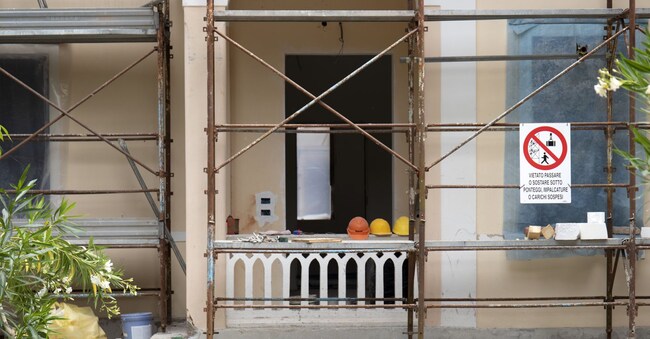
A cut to the Salva casa, the decree no. 69/2024 that, more than a year ago now, the government used as a vehicle to start tackling the great problem of small property discrepancies, widespread throughout Italy. There is also this among the hypotheses of changes that could enter the draft budget law for 2026 and that today come to life with the first step on inadmissibilities: the proposal has been included in the file of amendments reported by Fratelli d'Italia, and is signed by Matteo Gelmetti and Domenico Matera.
This time we are out of the condon vein, to which the executive has devoted no less than four proposals, with the possible reopening (in different ways) of the 1985 and 2003 amnesties and the rush to process pending applications. The Salva casa, on the other hand, aimed at strengthening the amnestibility of building discrepancies in millions of properties, without derogations from ordinary rules and special procedures. To do this, it inserted a long series of amendments into Presidential Decree no. 380/2001, the Consolidated Law on Construction.
Assessment of Conformity
Among the most relevant novelties of the Salva casa decree is the ascertainment of conformity, the new procedure inserted in Article 36 bis to rectify (against payment) partial non-conformities and essential variations. The first idea is to facilitate access to this amnesty, further softening the stake (already very blunted by the Salva casa decree) of double conformity. Currently, it is necessary to demonstrate the urban conformity of the work to be remedied at the time of submission of the application and the building conformity at the time of the realisation of the intervention.
The amendment aligns these two passages and says that 'the person responsible for the abuse or the current owner of the property may obtain the building permit and submit the certified report of commencement of activities as an amnesty if the intervention complies with the urban planning regulations as well as with the requirements prescribed by the building regulations in force at the time the application is submitted'. Thus, with a considerable simplification, one would only look at the moment of submission of the amnesty application, definitively cancelling double conformity.
New developments on the sanctions front
But the most incisive novelty could concern the penalties to be paid to rectify these discrepancies. This is a passage that, since the approval of the rule, has been among the most difficult for operators to digest, because it establishes rather complex calculation criteria on which, moreover, the Revenue Agency is also involved. On this point, not by chance, the Ministry of Infrastructure's clarifications intervened. The amendment, on the other hand, assumes a clear simplification.


